PreventionWeb
Navigation loading…

Navigation failed to load. If you are on the UNDRR office network, your browser may be blocking access to external resources. Learn how to allow access.

Menu
Last updated 30 Nov 2025

Recovery Collection: Great East Japan Earthquake and Tsunami 2011
Image
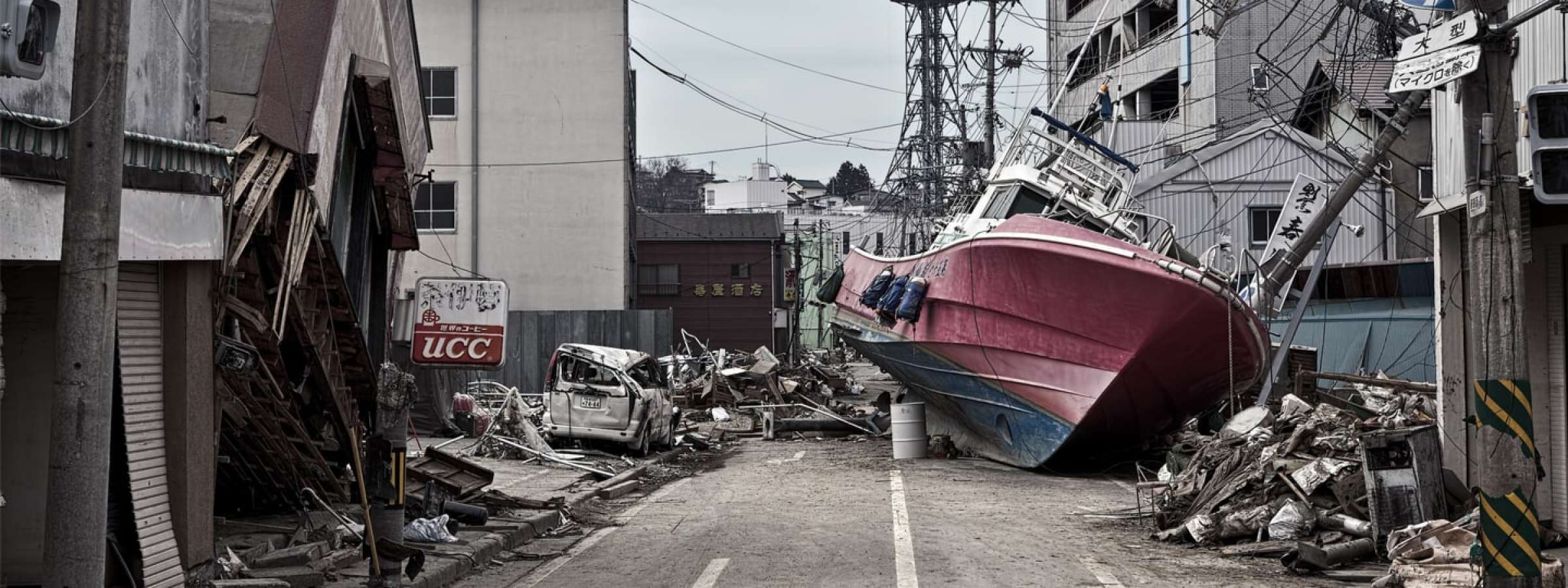
Tsunami : 04/30/2011 Fukushima japan
Fly and Dive/Shutterstock

Introduction

At 2:46pm on Friday, March 11, 2011, a Magnitude 9.0 earthquake struck off the northeast coast of Japan. This earthquake is the largest earthquake ever recorded in Japan, and the 4th largest earthquake recorded in the world. The earthquake caused a massive tsunami that devastated communities along Tohoku coastline, across many municipalities and multiple prefectures. The nuclear meltdown at the Fukushima Daiichi Nuclear Power Plant ranked as the highest level 7 on the International Nuclear and Radiological Event Scale (INES)  of the International Atomic Energy Agency, making the 3.11 Great East Japan Earthquake, tsunami, and nuclear disaster a complex mega disaster with equally large and complicated challenges for recovery. 

The damage from this complex disaster was widespread and devastating. As of June 2021, the official death toll includes 19,747 people who lost their lives in the tsunami[1], and 2,556 people whose remains were never found are listed as missing[2]. This includes 3,774 people who died later whose death have been official recognized as “indirect deaths”[3]  caused by complications or other impacts of their experienced during and after the disasters. In the first few days after the disaster, more than 470,000 people evacuated from their homes, and in the following weeks, more than 350,000 continued living in long term evacuation. 

The tsunami affected areas of Tohoku include the jagged rias coastline of the Sanriku coast to the north, dotted with fishing communities where steep mountains meet the see. Sanriku coastcommunities have experienced large tsunamis every 30-40 years in the last century, including the 1896 Meiji Sanriku tsunami, the 1933 Showa Sanriku tsunami, and the tsunami that occurred after the 1960 Chile tsunami.  Recovery after these historic tsunamis included rebuilding with partial or complete relocation of communities away from the ocean, but over generations, people moved back into many of these areas. Large tsunamis have occurred less frequently in history in the flat areas of the Sendai Plain, further south, but there are records in this area of the 1611 Keicho Tsunami, and experts consider that the GEJE is similar to the 869 Jogan tsunami.

Facing massive tsunami devastation that exceeded the expectations and expert predictions, recovery policy was shaped by the idea of reconstruction to reduce future tsunami risk, and especially the relocation of residential areas to higher elevations and/or inland locations. The government created a national Reconstruction Agency, and a menu of fully funded projects that municipalities could chose to include in reconstruction plans for their towns. Other new aspects of recovery after the GEJE included addition support for the private sector, such as the construction of temporary shopping arcades and subsidies for projects supporting groups of local businesses. In an area with many elderly residents, there were efforts to learn from previous disasters and provide support for the elderly, children, women, and psychosocial support in general. However, with the large scale of the disaster, affected area, and number of survivors, some problems already known from previous disasters, such as impacts of the loss of community and isolation were sadly experienced again.

Recovery after the nuclear disaster includes new challenges, for which there are no easy answers, including long-term displacement, uncertain futures, the loss of hometowns. 

Japanese policies for post-disaster housing support include three clearly-defined phases, with distinct systems and responsibilities for funding and management. In the initial emergency  phase, people stay in evacuation centers, often established in school gymnasiums or other large government own facilities.  The provision of emergency temporary housing is carried out by the prefectural government. Since the 1995 Great Hanshin AwajiEarthquake in Kobe, all of Japan’s 47 prefectures had established contracts with the prefabricated builders association for their member companies to provide quickly provided prefabricated temporary housing in case of a large disaster. After the GEJE, there were more than 50,000 units of prefabricated temporary housing build for evacuees. Along with challenges to provide the needed numbers of temporary housing, combined with effective support for the promotion of local timber resources, there were also a large number of wooden temporary housing, especially those built by local contractors in Fukushima, which created more pleasant living environments for evacuees. In addition, the system of “designated temporary housing” in which the government pays for  the rent of private apartment, was used for a large number of evacuees for the first time in Japan, for more than 70,000 households.

Policies supporting permanent housing recovery were similar to previous housing recovery projects in Japan, including the provision of Disaster Recovery Public Housing (government-subsidized rental housing) for disaster survivors, as well as provision of new residential lots provided for recovery.


[1] Japanese Reconstruction Agency 2021: https://www.reconstruction.go.jp/topics/main-cat1/sub-cat1-1/210601_genjyoutokadai.pdf

[2] Japanese Reconstruction Agency 2021: https://www.reconstruction.go.jp/topics/main-cat1/sub-cat1-1/210601_genjyoutokadai.pdf

[3] Japanese Reconstruction Agency 2021: https://www.reconstruction.go.jp/topics/main-cat2/sub-cat2-6/20210630_kanrenshi.pdf
Related links
Government of Japan Reconstruction Agency
Hazards
Earthquake NBC - Nuclear, Biological, Chemical Tsunami
Themes
Recovery Shelter and housing
Country and region
Japan

Knowledge base

Items: 146
Japan’s Post-Triple-Disaster Growth Strategy
Documents and publications
Publications
30 August 2012
Japan’s Post-Triple-Disaster Growth Strategy

This is an assessment of the scope of the challenges resulting from the Great East Japan Earthquake and suggestions for a long-term strategy for overcoming them and putting the Japanese economy on a stable growth path.

Asian Development Bank Institute
Documents and publications
17 July 2012
Tohoku research 1 (post-disaster recovery)

This research report is concerned with the purpose of disseminating experience and lessons learned from the East Japan Earthquake and Tsunami (EJET) to help strengthen disaster resilience of disaster prone regions in Japan and the world. It focuses on different aspects of disaster risk reduction (DRR) and environmental management.

Graduate School of Global Environmental Studies, Kyoto University 地球環境学堂・地球環境学舎・三才学林
Church World Service - Asia/Pacific
MERCY Malaysia
Documents and publications
27 June 2012
Road map of Natori emergency FM radio 'Natoraji'

This knowledge note addresses the transition between emergency FM to community FM radios in Japan following the devastation brought by the March 11, 2011 Great East Japan Earthquake, which destroyed the regional disaster prevention emergency communication. It explains that temporary emergency FM stations broadcasted detailed local information so that tsunami advisory and warning could reach the residents, but that they had to become community FM in order to continue broadcast after their operational expiration date.

Graduate School of Global Environmental Studies, Kyoto University 地球環境学堂・地球環境学舎・三才学林
International Environment and Disaster Management
MERCY Malaysia
Church World Service
City of Natori
Documents and publications
2 May 2012
One year later: lessons from recovery after the Great Eastern Japan Earthquake

This document presents the key lessons learned from a team of experts reassembled to evaluate Japan’s long-term efforts to recover from the Great Eastern Japan Earthquake and to prepare for future catastrophes. Based on extensive literature and interviews with Japanese officials and experts, it identifies four critical areas that affect response to a catastrophe: (i) recovery and resiliency of critical infrastructure, (ii) environmental remediation, (iii) compensation and disaster assistance, and (iv) population resiliency. In each area, it makes key observations, determines findings, and develops recommendations for learning from Japan’s experience.

Heritage Foundation, the
Japan Fukushima Families
Documents and publications
Publications
30 April 2012
Japan Fukushima Families

This report found children and parents overwhelmingly spoke of their fear and anxiety around the impact of the nuclear crisis, and a lack of reliable information to help them make informed decisions and move forward with their lives.

Save the Children International
Tsunami Evacuation: Lessons from the Great East Japan Earthquake and Tsunami of March 11th 2011
Documents and publications
Reports and analysis
1 April 2012
Tsunami Evacuation: Lessons from the Great East Japan Earthquake and Tsunami of March 11th 2011

This report provides insights and recommendations for enhancing tsunami evacuation procedures based on observations and interviews conducted in tsunami-affected areas following the Great East Japan earthquake and tsunami of March 11th, 2011.

GNS Science
Cover_ResearchGate
Documents and publications
Reports and analysis
30 March 2012
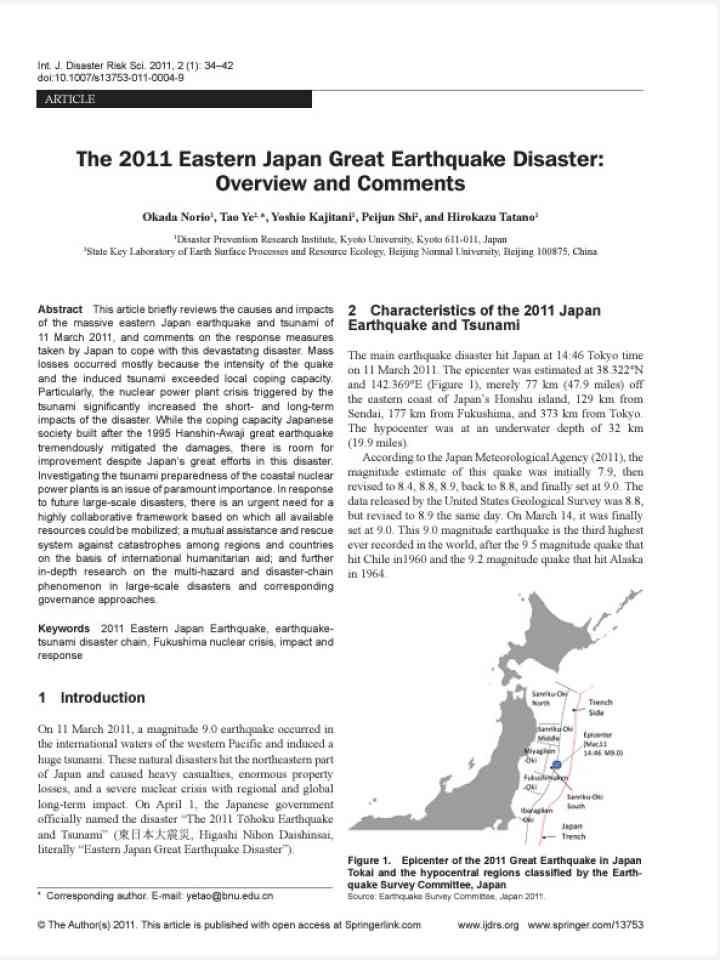
The 2011 Eastern Japan Great Earthquake Disaster: Overview and Comments

This article briefly reviews the causes and impacts of the massive eastern Japan earthquake and tsunami of 11 March 2011, and comments on the response measures taken by Japan to cope with this devastating disaster.

International Journal of Disaster Risk Science
Documents and publications
27 March 2012
The year that shook the rich: a review of natural disasters in 2011

This review analyses some of the major events and trends related to natural disasters and humanitarian disaster response and looks at the experience of developed countries with natural disasters in 2011.

Brookings Institution, the
Japan – One year on: Save the Children’s response and recovery program
Documents and publications
Publications
6 March 2012
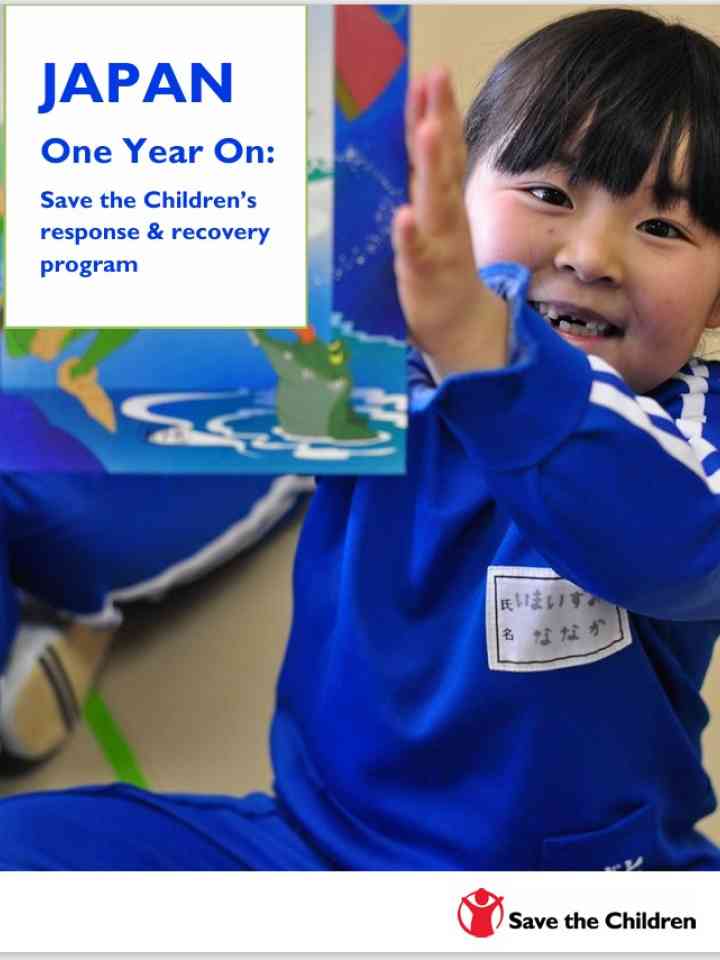
Japan – One year on: Save the Children’s response and recovery program

This report shows the progress made in the past year, and presents the next steps in the recovery program.

Save the Children International
Managing post-disaster debris:  the Japan experience
Documents and publications
Publications
5 March 2012
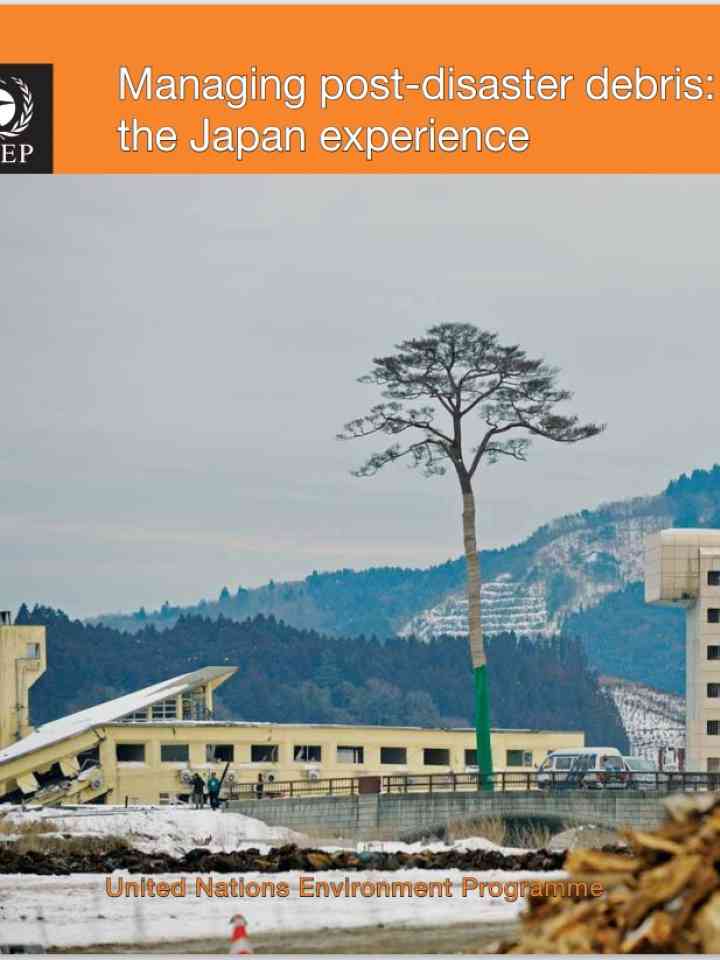
Managing post-disaster debris: the Japan experience

This report outlines Japan's approaches to the challenges of disaster debris management following the 2011 earthquake and tsunami. It offers insights and lessons on environmental sustainability and international cooperation in post-disaster recovery.

United Nations Environment Programme (UNEP)

Pagination

Showing results 111–120 on this page

  • Previous
  • 1
  • …
  • 7
  • …
  • 11
  • 12
  • 13
  • Next

Is this page useful?

Yes No
Report an issue on this page

Thank you. If you have 2 minutes, we would benefit from additional feedback (link opens in a new window).

The International Recovery Platform (IRP) is a global partnership working to strengthen knowledge, and share experiences and lessons on building back better in recovery, rehabilitation, and reconstruction.

Latest IRP videos and photos: YouTube Flickr Contact IRP

Loading