PreventionWeb
Navigation loading…

Navigation failed to load. If you are on the UNDRR office network, your browser may be blocking access to external resources. Learn how to allow access.

Menu
Last updated 19 Aug 2022

Recovery Collection: the Philippines: Mount Pinatubo Eruption 1991
Image
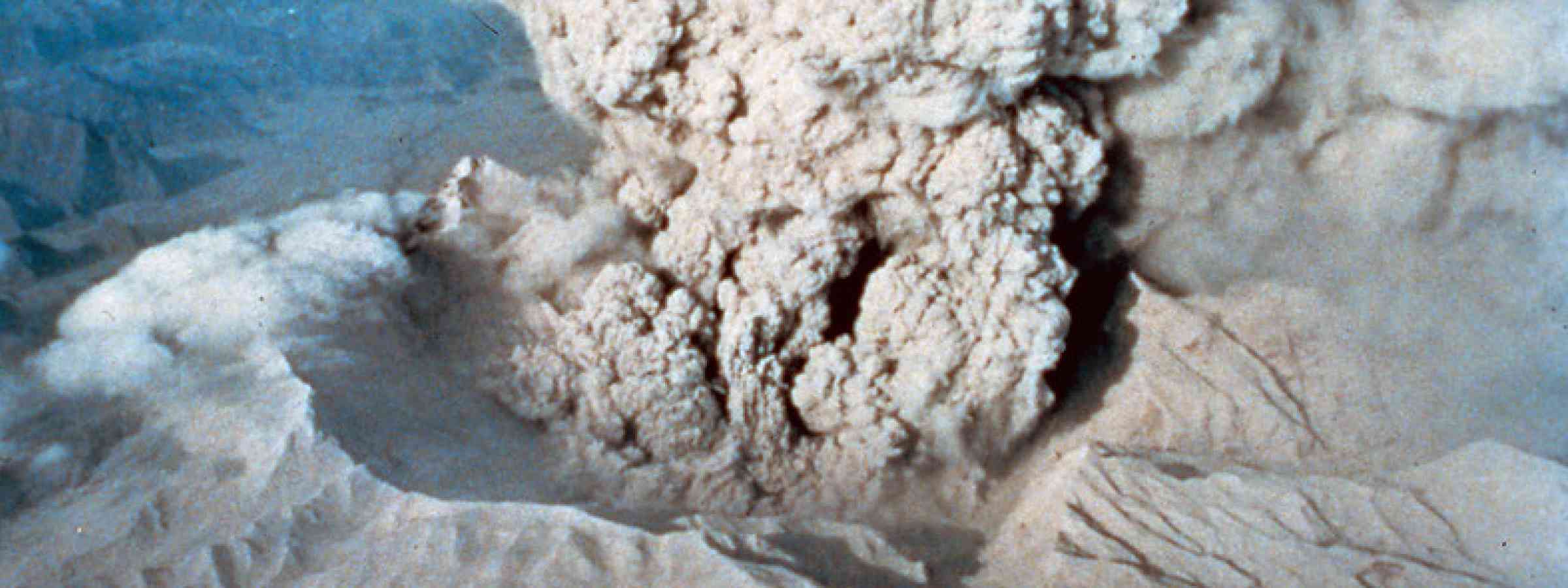
Mount Pinatubo Eruption 1991
James St. John / Flickr

In the 3 years after the 1991 eruption of Mount Pinatubo, the eruption plume decreased flooding in tropical regions but increased stream gauge readings in arid areas of each hemisphere.

Introduction

The eruption of Mt. Pinatubo in the Philippines in 15 June 1991 is considered one of the world’s largest volcanic eruptions in the past century. The eruption produced an ash cloud that rose 28 miles (40 km) into the air blanketing Central Luzon with volcanic ash and pumice. Pyroclastic flows roared down the slopes of Mt. Pinatubo creating new volcanic deposits as much as 200 meters thick. On the same day, Typhoon Yunya crossed 75 km northeast of Mt. Pinatubo with rain and high winds bringing ashfall to many areas including Manila and Subic Bay and as far away as the Indian Ocean. Between 1991 and 1993, approximately 20 million tons of sulfur dioxide were injected into the stratosphere and spread around the world temporarily lowering global temperatures by one degree Celsius.

Scientists from the Philippine Institute of Volcanology and Seismology and the United States Geological Survey had been monitoring the volcano since April 1991 and predicted the eruption, allowing for a massive evacuation to be undertaken and saving more than 5,000 lives and preventing property damage estimated at USD 250 million. Many of the deaths (over 840) and injuries from the eruption were due to roof failures caused by wet, heavy volcanic ash, which would not have happened without the typhoon. In the years that followed, the deposited volcanic ash remobilized due to rain generating secondary mudslides and damaging bridges, irrigation canals, roads, farmlands, and urban areas during the rainy season. Damage and losses resulting from the eruption and subsequent lahars were estimated at PHP 10.1 billion (USD 374 million) in 1991, and an additional PhP 1.9 billion pesos (USD 69 million) in 1992.

Memorandum Order No. 369 creating the Presidential Task Force on the Rehabilitation of Areas Affected by the Eruption of Mt. Pinatubo (Task Force Mt. Pinatubo) was signed into law in 26 June 1991. Task Force Mt. Pinatubo, chaired by the Department of Budget and Management, was mandated to guide and coordinate all rehabilitation efforts of the government, the private sector and the international humanitarian organizations. It was succeeded by the Mt. Pinatubo Assistance, Resettlement and Development Commission (Mt. Pinatubo Commission) in 1992 to 2000 which administered the initial PhP10 billion rehabilitation fund and formulated the Integrated Plan for the Mt. Pinatubo Affected Areas in July 1994 which comprised rehabilitation programs for infrastructure, livelihoods and resettlement. Non-structural measures prioritized were flood/mudflow warning and dissemination systems (i.e., warning equipment, public education about lahar hazard, and hazard mapping), resettlement and evacuation system, and livelihood support. As an ad hoc agency, Task Force Mt. Pinatubo faced issues such as confusion of roles of government agencies, lack of communication and coordination, inadequate staff and equipment, and limited financing, among others. Erosion and lahars that covered the lowlands at rates unprecedented in the history of volcanic hazards mitigation or sediment control affected many more people for a much longer period of time in the provinces of Pampanga, Tarlac, and Zambales delaying recovery in these areas. The government’s resettlement program led to cultural changes and the redistribution of the population of Aetas, an indigenous community living on the slopes of Mt. Pinatubo.

The eruption of Mt. Pinatubo broke ground in many ways changing the understanding and approach to volcanic hazards including new understanding of triggers for eruptions, the discovery that excess gas makes for more explosive eruptions, details about atmospheric circulation, evidence that humans cause global warming, the importance of effective communication, and being the first to successfully mobilize widespread evacuations. The recovery from the Mt. Pinatubo eruption provided many lessons which have informed actions by the government prioritizing preparedness and recovery from volcanic hazards in the years that follow. 


References:

ADRC. (no date). Eruption of Mount Pinatubo in the Philippines. URL: https://www.adrc.asia/publications/recovery_reports/pdf/Pinatubo.pdf

Wendel, J.,Kumar, M. 2016. Pinatubo 25 years later: Eight ways the eruption broke ground. Eos 97. https://doi.org/10.1029/2016EO053889
Hazards
Cyclone, Hurricane and Typhoon Volcano
Themes
Recovery Recovery planning
Country and region
Philippines

Knowledge base

Items: 18
Resettlers in Pampanga Are they finally settled
Documents and publications
Publications
18 August 2022
Resettlers in Pampanga: Are they finally settled?

The study is an assessment of the past and present conditions of the lowland and upland Mount Pinatubo victims presently residing in the nineteen (19) resettlement sites in Pampanga, Philippines.

University of the Philippines
Challenges and opportunities for sustainable post- disaster resettlement in the Philippines
Documents and publications
18 August 2020
Challenges and opportunities for sustainable post-disaster resettlement in the Philippines

This study examines people’s experiences in post-disaster resettlement in the Philippines, focusing on the 1991 eruption and subsequent lahars of Mt. Pinatubo, the 2006 Mt. Mayon eruption, Typhoon Sendong in 2011 and Typhoon Yolanda in 2013.

University of Auckland
Vegetation Succession and Land Recovery Process Based on Soil Properties in the Upper Mt. Pinatubo, the Philippines
Documents and publications
18 August 2011
Vegetation succession and land recovery process based on soil properties in the Upper Mt. Pinatubo, the Philippines

This study examines vegetation succession and soil physico-chemical properties in the upper reaches of the O'Donell River, which have been affected by the seasonal lahar since the 1991 eruption of Mt. Pinatubo, central Luzon, the Philippines.

Organization example
Documents and publications
31 March 2009
Differentiated adjustment to the 1991 Mt Pinatubo resettlement program among lowland ethnic groups of the Philippines

The author presents the results of a study on the adjustment of two ethnic groups to the post-disaster resettlement program after the 1991 Mt Pinatubo volcano eruption in the Philippines.

Australian Institute for Disaster Resilience (AIDR)
Documents and publications
7 July 2008
Fire and mud, eruptions and landslides of Mount Pinatubo, Philippines

The 1991 eruptions of Mount Pinatubo and subsequent widespread lahars are signal events both in volcanology and volcanic hazards mitigation.

United States Geological Survey (USGS)
Philippine Institute of Volcanology and Seismology
Eruption of Mount Pinatubo in the Philippines in June 1991
Documents and publications
Reports and analysis
12 December 2005
Eruption of Mount Pinatubo in the Philippines in June 1991

This report assesses damages on various aspects such as socio-economic impacts, agriculture, caused by 1991 eruption of Mount Pinatubo in the Philippines. This report also includes the response, recovery and reconstruction plans.

Asian Disaster Reduction Center
The Study on Sabo and Flood Control for Western River Basins of Mount Pinatubo in the Republic of the Philippines Final Report Main Report
Documents and publications
18 August 2002
The study on sabo and flood control for Western River Basins of Mount Pinatubo in the Republic of the Philippines

This study is for sabo and flood control in the western river basins in view of recovery of the livelihood and equitable regional development as well as the anticipated disasters due to flood and mudflow from the Mt. Pinatubo.

Japan International Cooperation Agency
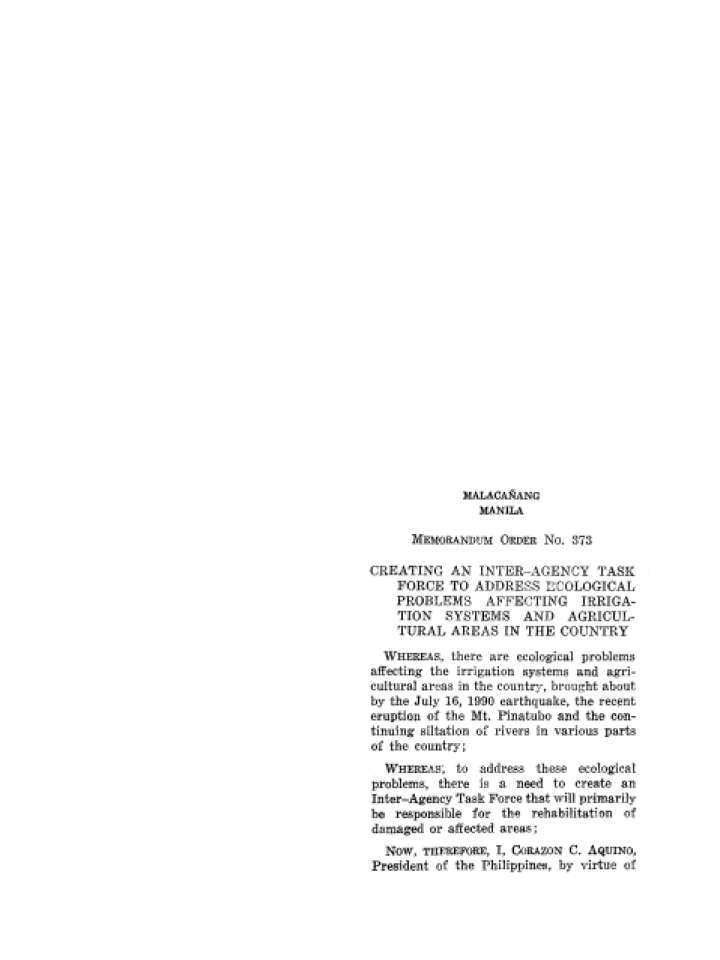
Memorandum Order 393:  CREATING AN INTER-AGENCY TASK FORCE TO ADDRESS ECOLOGICAL PROBLEMS AFFECTING IRRIGATION SYSTEMS AND AGRICULTURAL AREAS IN THE COUNTRY
Policies and plans
Policy type
National legal frameworks
19 August 1991
Memorandum Order 393: Creating an inter-agency task force to address ecological problems affecting irrigation systems and agricultural areas in the country

MEMORANDUM ORDER No. 373 CREATING AN INTER-AGENCY TASK FORCE TO ADDRESS ECOLOGICAL PROBLEMS AFFECTING IRRIGATION SYSTEMS AND AGRICULTURAL AREAS IN THE COUNTRY

Office of the President of the Republic of Philippines

Pagination

Showing results 11–18 on this page

  • Previous
  • 1
  • 2

Is this page useful?

Yes No
Report an issue on this page

Thank you. If you have 2 minutes, we would benefit from additional feedback (link opens in a new window).

The International Recovery Platform (IRP) is a global partnership working to strengthen knowledge, and share experiences and lessons on building back better in recovery, rehabilitation, and reconstruction.

Latest IRP videos and photos: YouTube Flickr Contact IRP

Loading