PreventionWeb
Menu
Last updated 15 Dec 2025

USA: Hurricane Sandy 2012

Image

Introduction

Superstorm Sandy, massive storm that brought significant wind and flooding damage to Jamaica, Cuba, Haiti, the Dominican Republic, The Bahamas, and the U.S. Mid-Atlantic and Northeastern states in late October 2012. Flash flooding generated by the storm's relentless rainfall, high winds, and coastal storm surges killed 147 people and produced widespread property damage in the areas in its path.

The storm swept through the Caribbean as a tropical cyclone (hurricane), and, upon reaching the waters off the coast of New Jersey, it merged with a fast southeastward-moving cold air mass, which drew it westward over land. At its greatest extent, the storm measured more than 900 miles (about 1,450 km) in diameter. The storm caused more than $70 billion in damage in the United States and was among the most costly natural disasters in U.S. history.
Hazards
Cyclone, Hurricane and Typhoon
Country and region
United States of America

Knowledge base

Items: 7
Documents and publications
18 November 2016
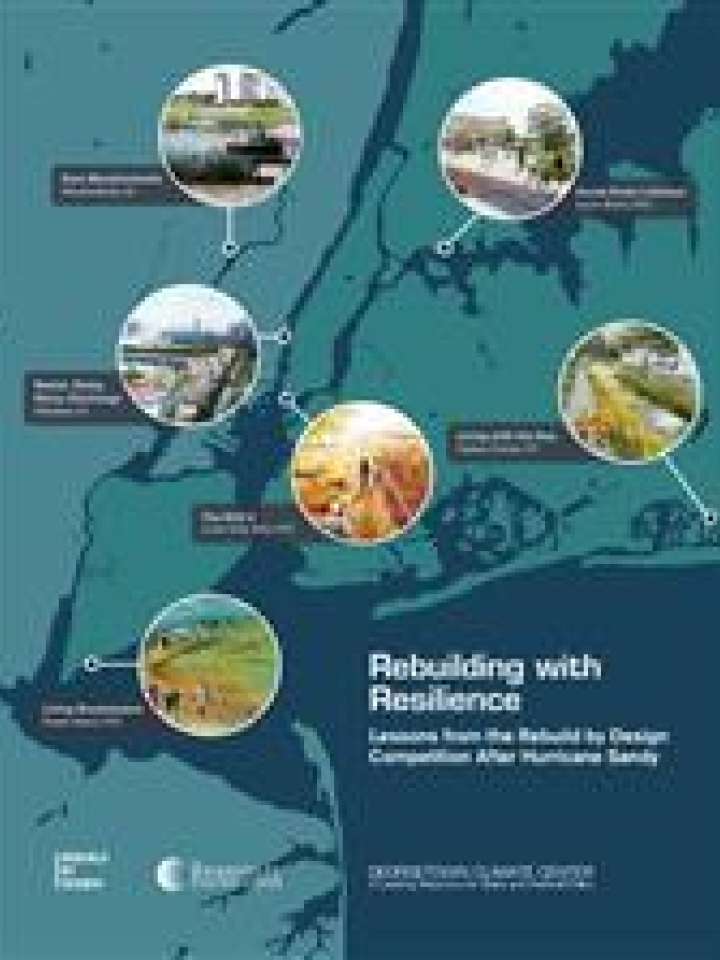
Rebuilding with resilience: Lessons from the rebuild by design competition after Hurricane Sandy

This study presents analysis of the six winning Hurricane Sandy Design Competition projects selected to demonstrate innovative approaches for rebuilding communities affected by Hurricane Sandy in ways that will enhance physical, social, economic, and

Rockefeller Foundation, the
Rebuild by Design
Georgetown University
Documents and publications
26 December 2013
After Sandy: advancing strategies for long-term resilience and adaptability

This report evaluates local and federal plans for strengthening community resiliency post-Sandy and offers guidance on post-disaster rebuilding and building in anticipation of future disasters in a way that helps preserve the environment, boost economic prosperity, and foster a high quality of life. It contains a comprehensive, practical set of 23 recommendations focused on four areas: (i) land use and development; (ii) infrastructure, technology and capacity; (iii) finance, investment and insurance; and (iv) leadership and governance.

Urban Land Institute, the
Documents and publications
DRF - Disaster Recovery Frameworks
Policy type
Local policies and plans
4 November 2013
United States of America: PlaNYC - a stronger, more resilient New York

A comprehensive plan that contains actionable recommendations both for rebuilding the communities impacted by Sandy and increasing the resilience of infrastructure and buildings citywide.

City of New York
Documents and publications
30 September 2013
National strategy recommendations: future disaster preparedness

This report provides FEMA’s recommendations for the development of a national strategy for reducing costs, loss of life, and injuries associated with extreme disaster events in vulnerable areas of the United States. It presents the development of a

Federal Emergency Management Agency (FEMA)
Documents and publications
24 September 2013
Rebuilding for resilience: fortifying infrastructure to withstand disaster

This report extends the focus of the UNISDR-PwC initiative, looking specifically at the long-term opportunity for public-private sector collaboration in building or rebuilding risk-resilient infrastructure. It describes why building disaster-resilient infrastructure is critical for a region’s competitiveness, both nationally and globally. It also illustrates how the private sector can offer innovative solutions to help communities build or rebuild disaster-resilient infrastructure.

PricewaterhouseCoopers - Switzerland
Documents and publications
DRF - Disaster Recovery Frameworks
20 August 2013
Hurricane Sandy rebuilding strategy: stronger communities, a resilient region

This document presents the policy recommendations of the Hurricane Sandy Rebuilding Task Force for helping the rebuilding of the region affected by the 2011 super-storm.

U.S. Department of Housing and Urban Development
Documents and publications
16 August 2013
Using ICT and social media in disasters: opportunities and risks for government

This report examines four different issue areas to analyze how social media is used in the context of risk and crisis communication, using hurricane Sandy as an example.

Center for Security Studies, ETH Zurich

Is this page useful?

Yes No
Report an issue on this page

Thank you. If you have 2 minutes, we would benefit from additional feedback (link opens in a new window).

The International Recovery Platform (IRP) is a global partnership working to strengthen knowledge, and share experiences and lessons on building back better in recovery, rehabilitation, and reconstruction.

Latest IRP videos and photos: YouTube Flickr Contact IRP

Loading