This article reports on the housing reconstruction project in the state, focusing on three questions: what are the key planning decisions, what are the main implementation challenges, and what are the lessons learnt?
This paper presents, explores, and tests a conceptual framework for analysing the trade-offs that underpin this relationship as evidenced through policy goals, initiatives, and decision-making processes.
This paper uses qualitative case study analysis to explore post-quake transformations in a rural context. The aim is to gain insight into the distinctive dynamics of disaster response mechanisms, focusing on two initiatives.
This report describes Japan’s incremental approach to developing, implementing, and facilitating compliance with building regulation over many decades.
World Bank, the
Global Facility for Disaster Reduction and Recovery, the (GFDRR)
This synthesis report analyzes the vulnerability of Micro, Small and Medium enterprises to natural hazards and their capacity to act as drivers of community recovery.
This paper aims to study whether natural disasters in the Philippines trigger subsequent economic growth or other socioeconomic or technological improvements.
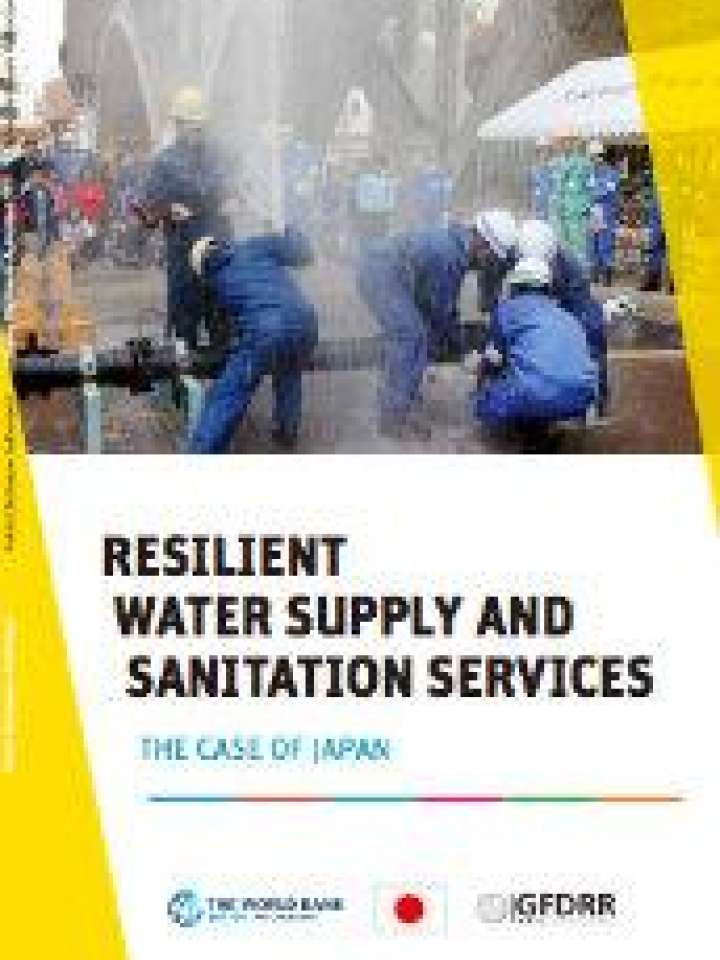
This report outlines the ways Japan has built the resilience of its water supply and sanitation (WSS) services through an adaptive approach based on lessons learned from past natural disasters.
Global Facility for Disaster Reduction and Recovery, the (GFDRR)