Navigation failed to load. If you are on the UNDRR office network, your browser may be blocking access to external resources. Learn how to allow access.
The purpose of this Environmental Assessment and Review Framework is to provide a framework to review and assess environmental aspects of activities undertaken within a project, including preconstruction, construction and operational phases.
This report describes Japan’s incremental approach to developing, implementing, and facilitating compliance with building regulation over many decades.
World Bank, the
Global Facility for Disaster Reduction and Recovery, the (GFDRR)
The need to consider disaster risk reduction at the time of recovery is well-recognized. Viable disaster risk reduction measures should resolve the root causes of predisaster vulnerabilities. Accordingly, we investigated the recovery from the impact of
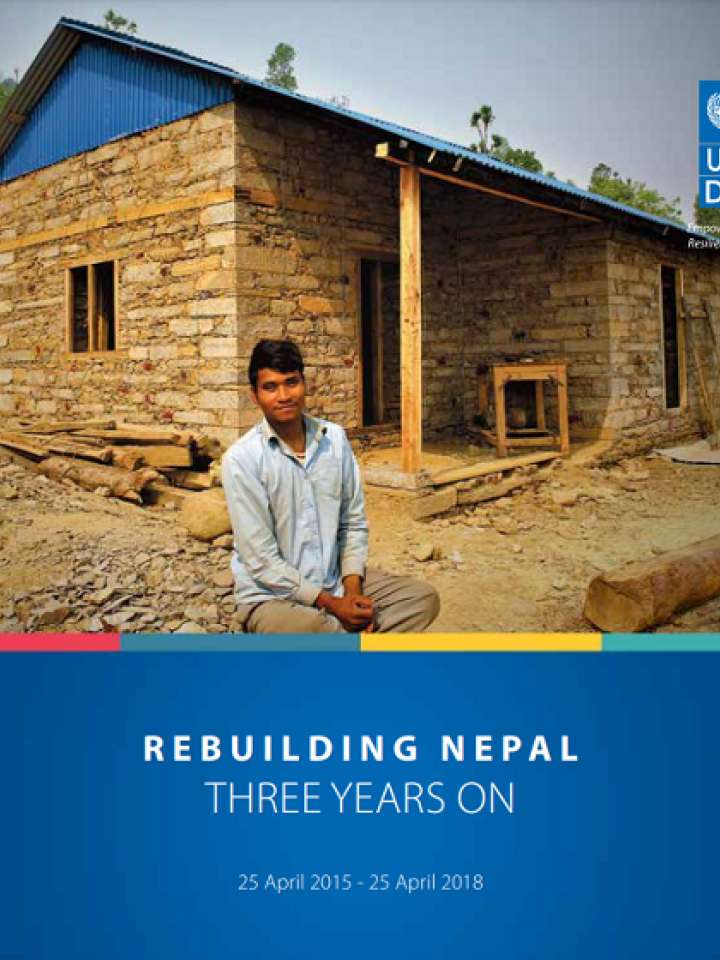
This booklet captures the key efforts undertaken and results achieved over the past three years by UNDP in line with the vision articulated in its Strategy for Earthquake Recovery Assistance for recovery from the 2015 Gorkha Earthquake in Nepal.
To understand what mattered for recovery in the short and long-term, this study followed the same households 10 weeks, one year and two years after the Gorkha earthquake in Nepal. The analysis will explore what factors mattered most for short-term coping and longterm recovery in order to improve humanitarian response and design of recovery programs in the aftermath of acute disasters.
The GRADE approach provides required sectoral baseline information for the design of rehabilitation and reconstruction plans, based on an assessment of vulnerability and damage distribution of the affected infrastructure and assets.
Global Facility for Disaster Reduction and Recovery, the (GFDRR)