Navigation failed to load. If you are on the UNDRR office network, your browser may be blocking access to external resources. Learn how to allow access.
This briefing examines the challenges the city government faced, first in the immediate humanitarian response and later during the recovery and rehabilitation phases. Drawing on these experiences, it makes recommendations for local and national government and humanitarian agencies to improve their capacity for a more coordinated, efficient and sustainable response to future disasters.
International Institute for Environment and Development (IIED)
This report is a synthesis of the experiences, observations, and recommendations of a large group of experienced post-disaster shelter and recovery experts gathered from interviews, surveys, and direct discussions, and information derived from a desk
World Bank, the
International Federation of Red Cross and Red Crescent Societies (IFRC)
United Nations Human Settlements Programme (UN-HABITAT)
Global Facility for Disaster Reduction and Recovery, the (GFDRR)
FEMA's Damage Assessment Operations Manual expedites decision-making and delivery of assistance by defining national standards for assessing damage and clearly outlining the information considered when evaluating requests for a major disaster declaration.
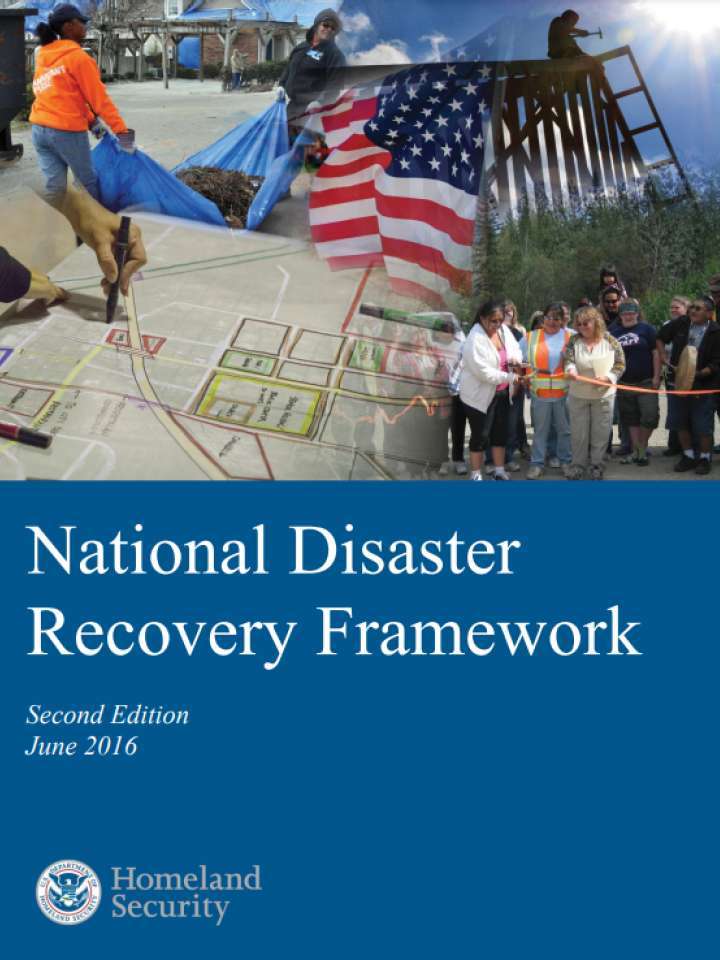
The National Disaster Recovery Framework establishes a common platform and forum for how the whole community builds, sustains, and coordinates delivery of recovery capabilities.
This Strategic Framework 2016–20 articulates the way forward in increasing knowledge, capacity building and advocacy, partnerships and investments, as part of a collective struggle toward disaster and climate resilient development in Africa. The Framework
World Bank, the
Global Facility for Disaster Reduction and Recovery, the (GFDRR)
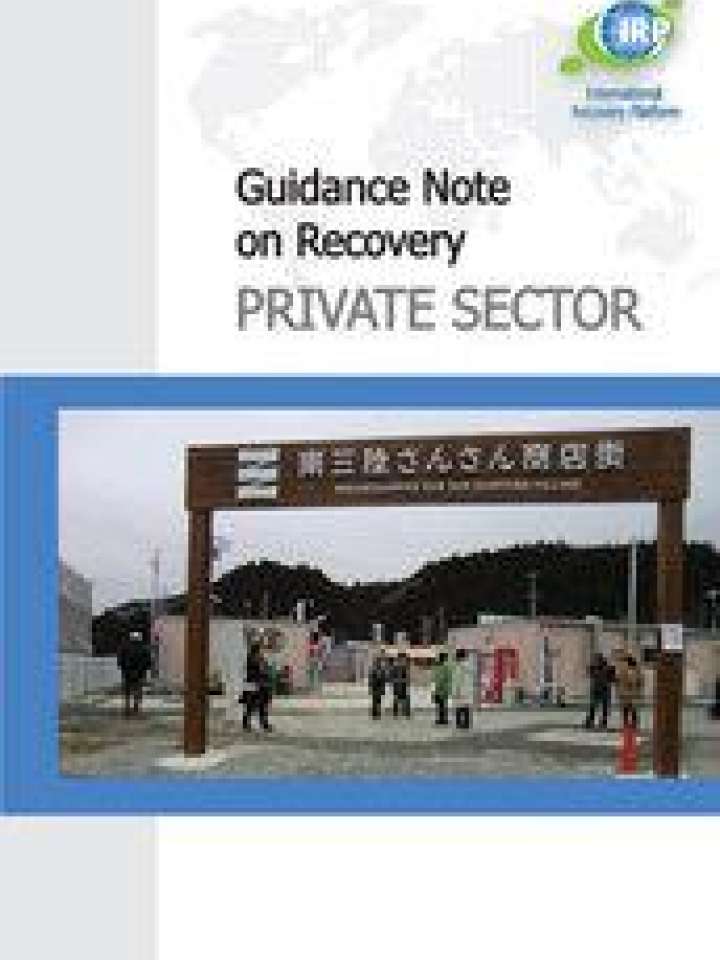
This document attempts to fill knowledge gaps regarding the role of the private sector in disaster recovery and draws from the wider body of knowledge and from documented experiences of past and present disaster planning and recovery.
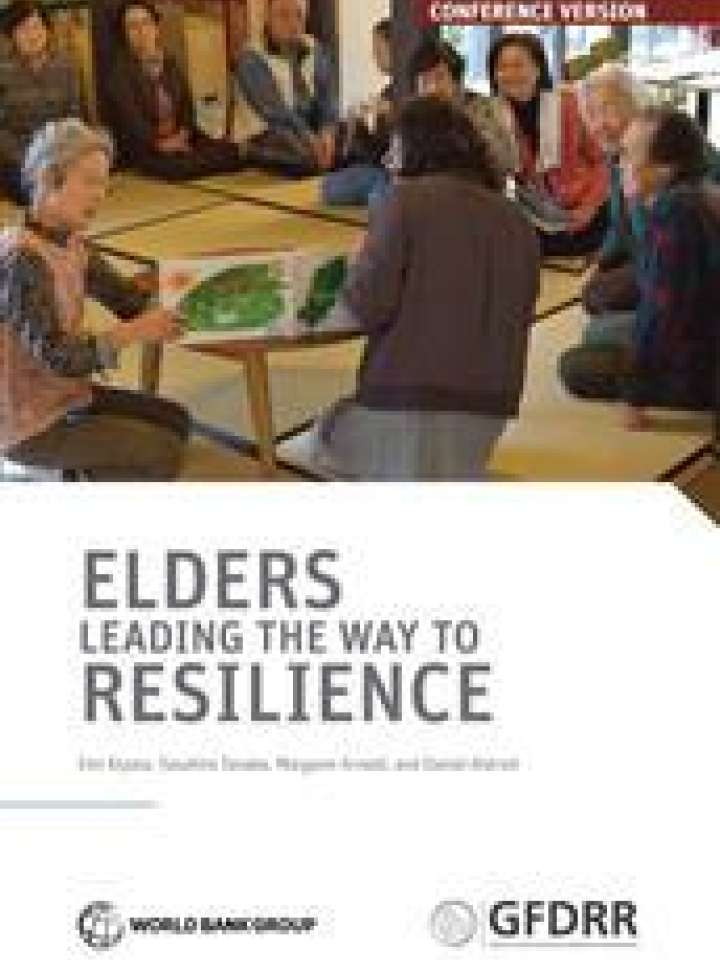
This report describes and assesses the experience of Ofunato, Japan, which was devastated by the 2011 Great Eastern Japan Earthquake. With facilitation by the NGO Ibasho, elders and other community members planned and built the Ibasho Café, which now acts as a hub that is restoring the fabric of a community still badly damaged by the disaster. This report provides lessons learned that are applicable to other actors that want to support community-driven approaches that empower elders to contribute to their communities and strengthen resilience.
World Bank, the
Global Facility for Disaster Reduction and Recovery, the (GFDRR)
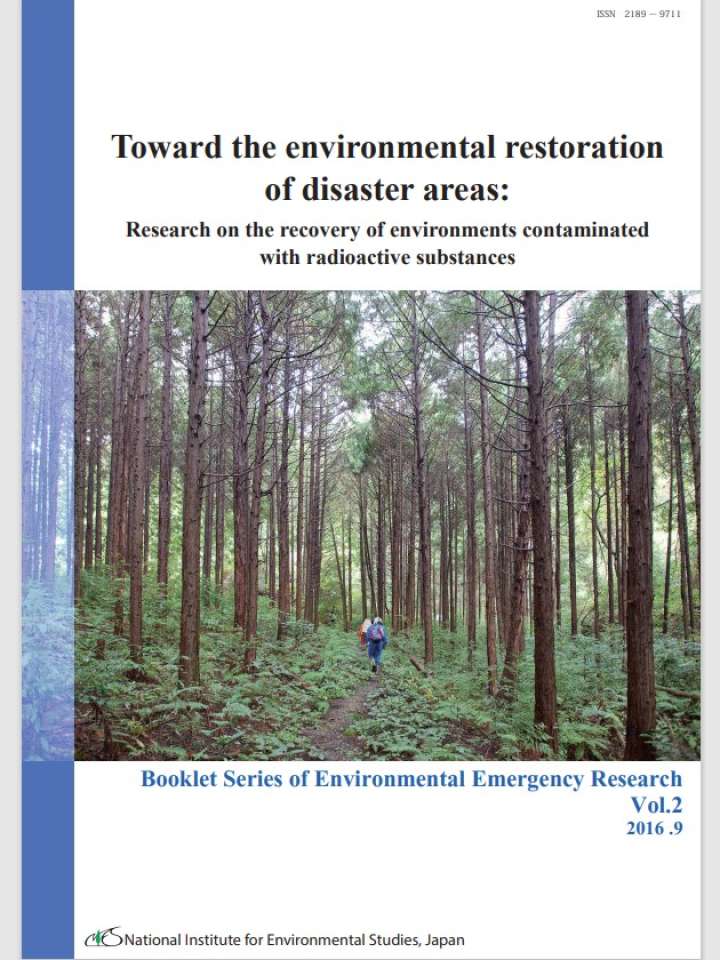
This publication introduces NIES' research on recovery efforts following the GEJE of environments contaminated with radioactive substances, as well as plans for further research in this area.
National Institute for Environmental Studies (NIES)-Japan