PreventionWeb
Menu

Asian Development Bank (ADB)

ADB
Philippines
UN & International Organizations

Mission

ADB is a multilateral development finance institution dedicated to reducing poverty in Asia and the Pacific. Established in 1966, ADB is now owned by 67 members - of which 48 are from within Asia and the Pacific and 19 outside.

 
Disaster Reduction Goal

To support the developing member countries in achieving poverty reduction, sustaining economic growth, reducing disaster losses, and enhancing natural resource management through investments in disaster resilience.

DRR activities
Policies and Programmes in DRR

ADB’s work in disaster risk management is guided by its Disaster and Emergency Assistance Policy (DEAP, 2004), which establishes a series of objectives focusing on:
• strengthening support for reducing disaster risk in developing member countries;
•providing rehabilitation and reconstruction assistance following disasters; and
•leveraging ADB’s activities by developing partnerships.

The Disaster and Emergency Assistance Policy is being implemented through an integrated disaster risk management (IDRM) approach that bring together the elements of disaster risk reduction (DRR), climate change adaptation (CCA), and disaster risk financing (DRF) within an overarching context of resilience.

Disaster Reduction Focal Point(s)

Charlotte Benson
Senior Disaster Risk Management Specialist
Public Management, Governance and Participation Division
Regional and Sustainable Development Department
Email: [email protected]

Websites

http://www.adb.org/themes/governance/disaster-risk-management
Show more
Latest additions
Items: 63
Publication
Published on
17 May 2019
Microfinance for disaster recovery: Lessons from the 2015 Nepal earthquake
This report assesses the impact of the livelihood restoration microcredit provided to the affected households after the earthquake in Nepal in April 2015. The assessment found that access to finance after a disaster has a critical positive impact on the affected households’ recovery. The report also provides recommendations on how MFIs can play a role in supporting rural communities’ disaster risk mitigation and preparedness efforts.
Publication
Published on
14 January 2019
Philippine city disaster insurance pool: rationale and design
This report presents the rationale for and design of a city government disaster insurance pool in the Philippines.
Publication
Published on
30 June 2018
Cyclone Gita Recovery Project: Report and Recommendation of the President to the Board of Directors
This document describes the terms and conditions of a project that will support the efforts of the Government of Tonga to reconstruct and climate and disaster-proof the Nuku’alofa electricity network damaged by Tropical Cyclone Gita in February 2018.
Publication
Published on
14 March 2018
Natural disasters, public spending, and creative destruction: a case study of the Philippines
This paper aims to study whether natural disasters in the Philippines trigger subsequent economic growth or other socioeconomic or technological improvements.
Publication
Published on
28 October 2016
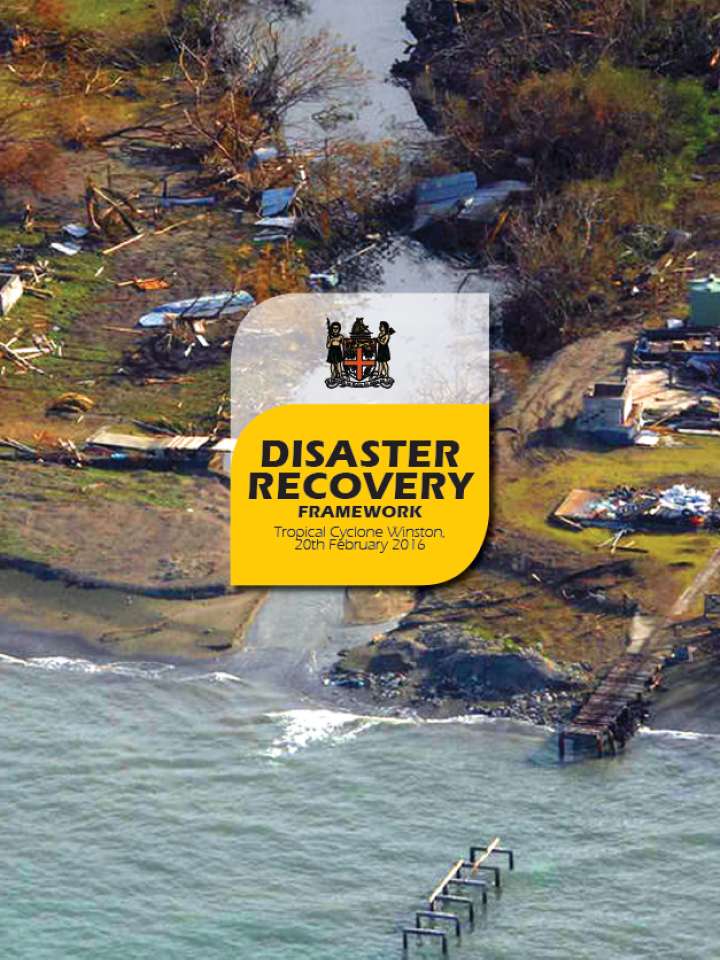
Fiji Tropical Cyclone Winston Disaster Recovery Framework 2016
This DRF guides the planning and implementation of recovery programmes and projects, providing overall direction to the government, the private sector, development partners, civil society and communities.
Publication
Published on
9 May 2016
Disaster-resilient microfinance - Learning from communities affected by Typhoon Haiyan
This reports analyzes the economic recovery of 4,000 households in the Philippines that were badly affected by typhoon Haiyan (Yolanda) in the Philippines and recommends improvements to the role of microfinance in enhancing the financial resilience of such communities.
Publication
Published on
17 November 2015
Proceedings of the regional knowledge forum on post-disaster recovery
This document presents the main outcomes, shared lessons and proceedings from the forum on post-disaster recovery organized by ADB in Manila on 20–21 October 2015. This forum provided a venue to share common challenges and possible solutions on planning and managing recovery programs based on lessons and good practices.
Publication
Published on
19 October 2015
Gender mainstreaming case study: north east coastal community development project and tsunami-affected areas rebuilding project
This case study looks at the gender dimensions of two projects supported by the Asian Development Bank (ADB) in Sri Lanka: the North East Coastal Community Development Project (NECCDP) and Component B of the Tsunami-Affected Areas Rebuilding Project.

Pagination

  • Previous page ‹ Previous
  • Page 1
  • Page 2
  • Page 3
  • Page 4
  • Current page 5
  • Page 6
  • Page 7
  • Page 8
  • Next page Next ›

More content for this organization may be available on PreventionWeb or on the site search.

Voluntary Commitments

The organization has no registered commitments.

The Sendai Framework Voluntary Commitments (SFVC) online platform allows stakeholders to inform the public about their work on DRR. The SFVC online platform is a useful toolto know who is doing what and where for the implementation of the Sendai Framework, which could foster potential collaboration among stakeholders. All stakeholders (private sector, civil society organizations, academia, media, local governments, etc.) working on DRR can submit their commitments and report on their progress and deliverables.

Contact information

http://www.adb.org/
+63 26324444
Fax:
+63 26322444
Facebook
LinkedIn
Twitter

Is this page useful?

Yes No
Report an issue on this page

Thank you. If you have 2 minutes, we would benefit from additional feedback (link opens in a new window).

The International Recovery Platform (IRP) is a global partnership working to strengthen knowledge, and share experiences and lessons on building back better in recovery, rehabilitation, and reconstruction.

Latest IRP videos and photos: YouTube Flickr Contact IRP

Loading