PreventionWeb
Menu

Economics of Disasters and Climate Change (Springer)

Mission

Economics of Disasters and Climate Change is a peer-reviewed, international journal designed to foster and disseminate innovative and original research and policy analysis on the economic and financial aspects of climate change and disasters (separately, and the interactions between climate and disasters). The journal aims to provide a central ‘meeting point’ for all economists working on these topics and enhance the quality and quantity of analysis as it pertains to our knowledge of these phenomena and their policy implications.
Show more
Latest additions
Items: 5
Publication
Published on
20 August 2024
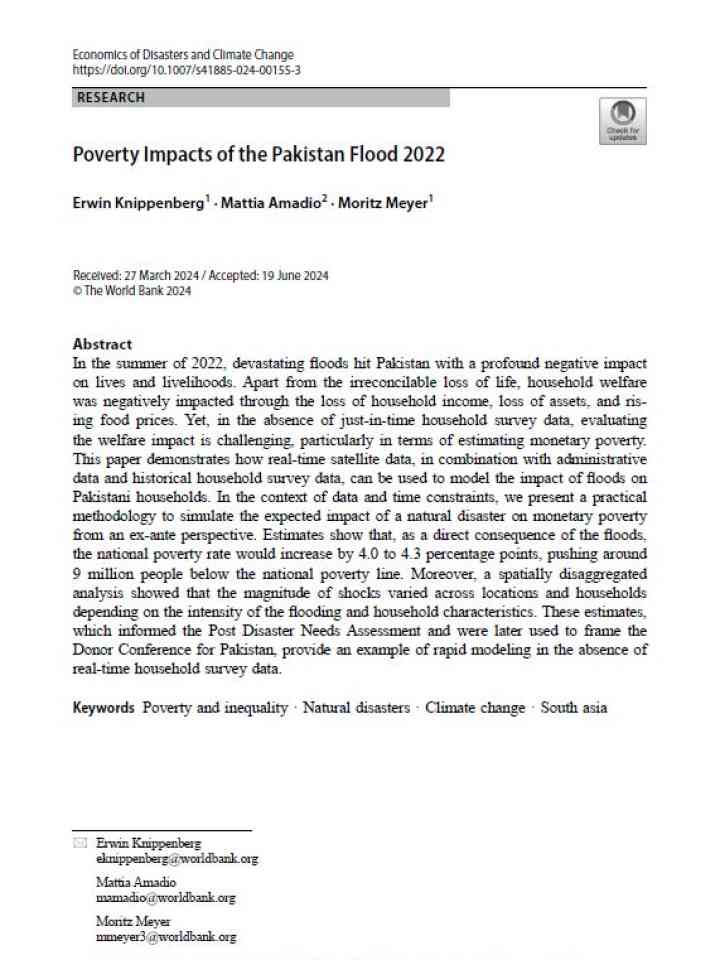
Poverty impacts of the Pakistan flood 2022
This paper demonstrates how real-time satellite data, in combination with administrative data and historical household survey data, can be used to model the impact of 2022 floods on Pakistani households.
Publication
Published on
28 June 2024
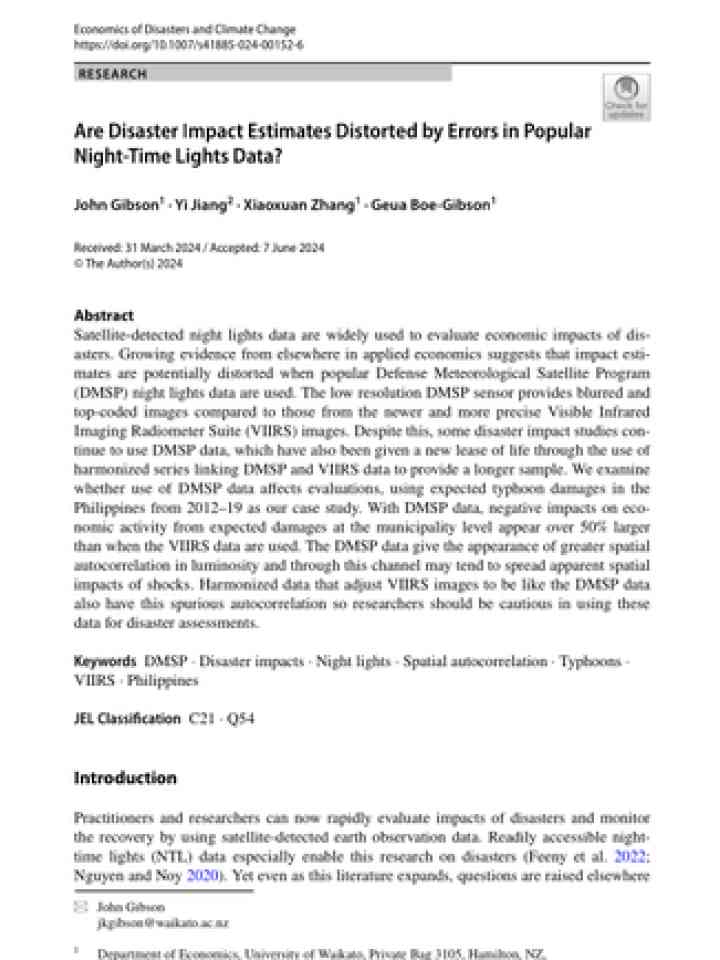
Are disaster impact estimates distorted by errors in popular night-time lights data?
Satellite-detected night lights data are widely used to evaluate economic impacts of disasters. But growing evidence in applied economics suggests that impact estimates are potentially distorted when popular DMSP night lights data are used.
Publication
Published on
5 March 2024
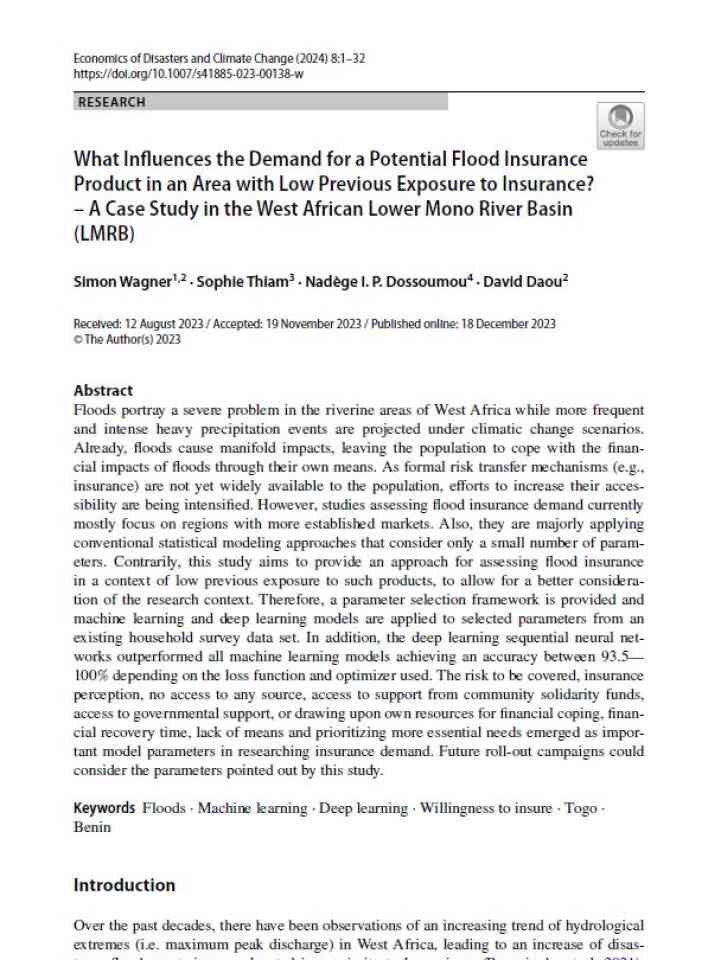
What influences the demand for a potential flood insurance product in an area with low previous exposure to insurance? – a case study in the West African Lower Mono River Basin (lmrb)
This study aims to provide an approach for assessing flood insurance in a context of low previous exposure to such products, to allow for a better consideration of the research context.
Publication
Published on
12 May 2023
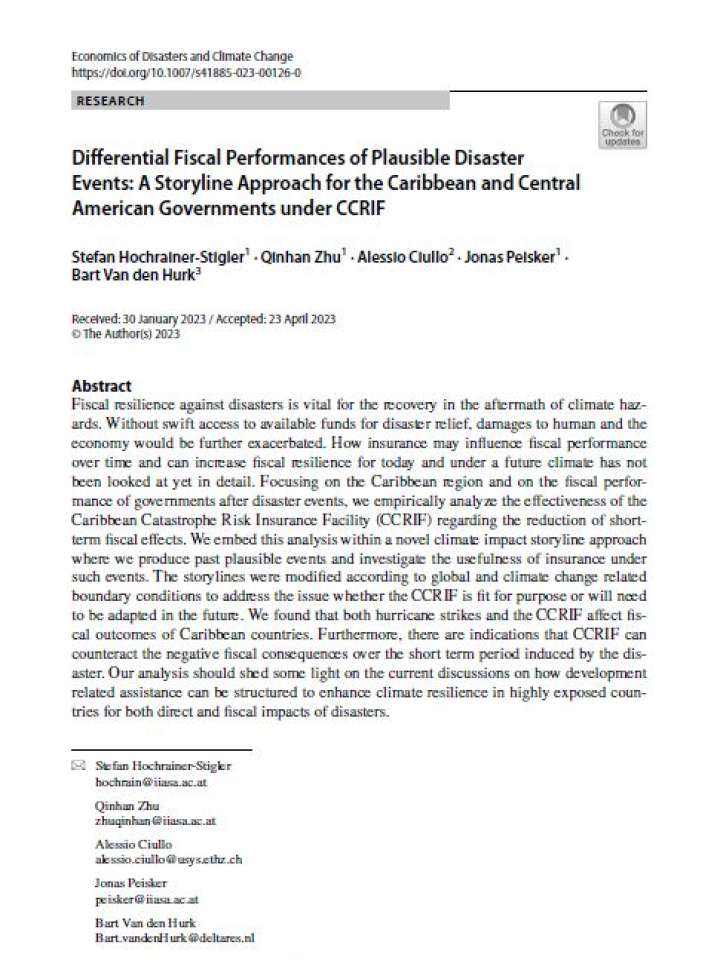
Differential fiscal performances of plausible disaster events: a storyline approach for the Caribbean and Central American governments under CCRIF
This study empirically analyzes the effectiveness of the Caribbean Catastrophe Risk Insurance Facility (CCRIF) regarding the reduction of short-term fiscal effects.
Publication
Published on
30 March 2022
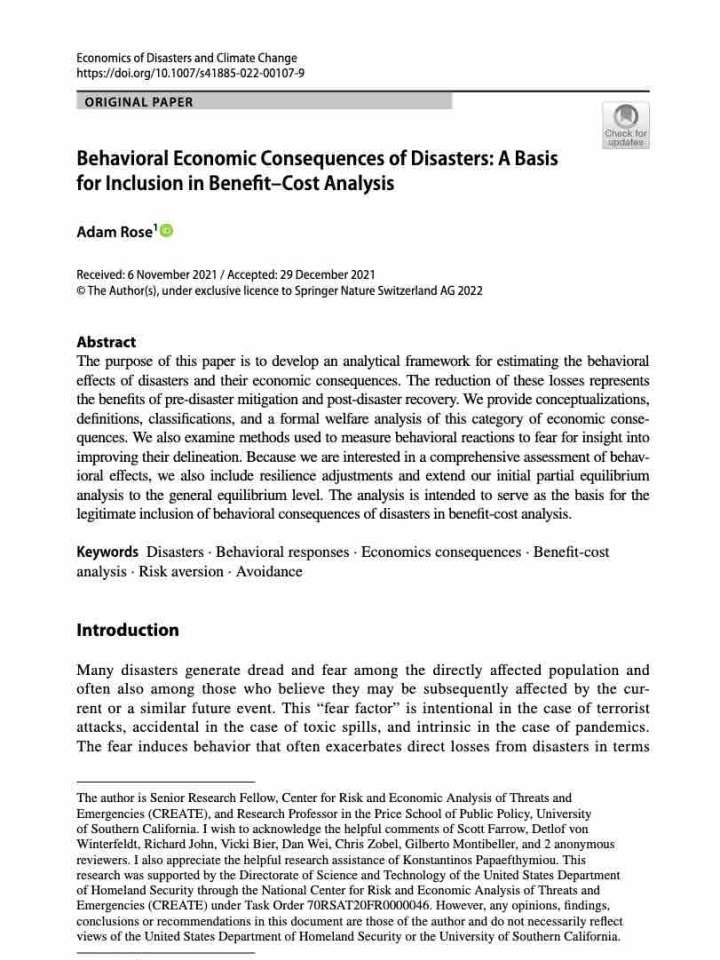
Behavioral economic consequences of disasters: a basis for inclusion in benefit–cost analysis
This paper's purpose is to develop an analytical framework for estimating the behavioral effects of disasters and their economic consequences. The reduction of these losses represents the benefits of pre-disaster mitigation and post-disaster recovery.

More content for this organization may be available on PreventionWeb or on the site search.

Voluntary Commitments

The organization has no registered commitments.

The Sendai Framework Voluntary Commitments (SFVC) online platform allows stakeholders to inform the public about their work on DRR. The SFVC online platform is a useful toolto know who is doing what and where for the implementation of the Sendai Framework, which could foster potential collaboration among stakeholders. All stakeholders (private sector, civil society organizations, academia, media, local governments, etc.) working on DRR can submit their commitments and report on their progress and deliverables.

Contact information

https://www.springer.com/journal/41885/
[email protected]

Is this page useful?

Yes No
Report an issue on this page

Thank you. If you have 2 minutes, we would benefit from additional feedback (link opens in a new window).

The International Recovery Platform (IRP) is a global partnership working to strengthen knowledge, and share experiences and lessons on building back better in recovery, rehabilitation, and reconstruction.

Latest IRP videos and photos: YouTube Flickr Contact IRP

Loading