Mission
Established in 1951, the International Organization for Migration (IOM) is the leading intergovernmental organization in the field of migration and is committed to the principle that humane and orderly migration benefits migrants and society. IOM works with its partners in the international community to assist in meeting the growing operational challenges of migration, advance understanding of migration issues, encourage social and economic development through migration and uphold the well-being and human rights of migrants.
There are today at least 244 million people on the move across borders worldwide, and another 740 million people moving internally within countries. Mobility, when dignified and properly managed, can bring important benefits for migrants seeking opportunities and a better life. It is also recognized that mobility can make significant, and often overlooked, social and economic contributions to communities and States of origin, transit and destination.
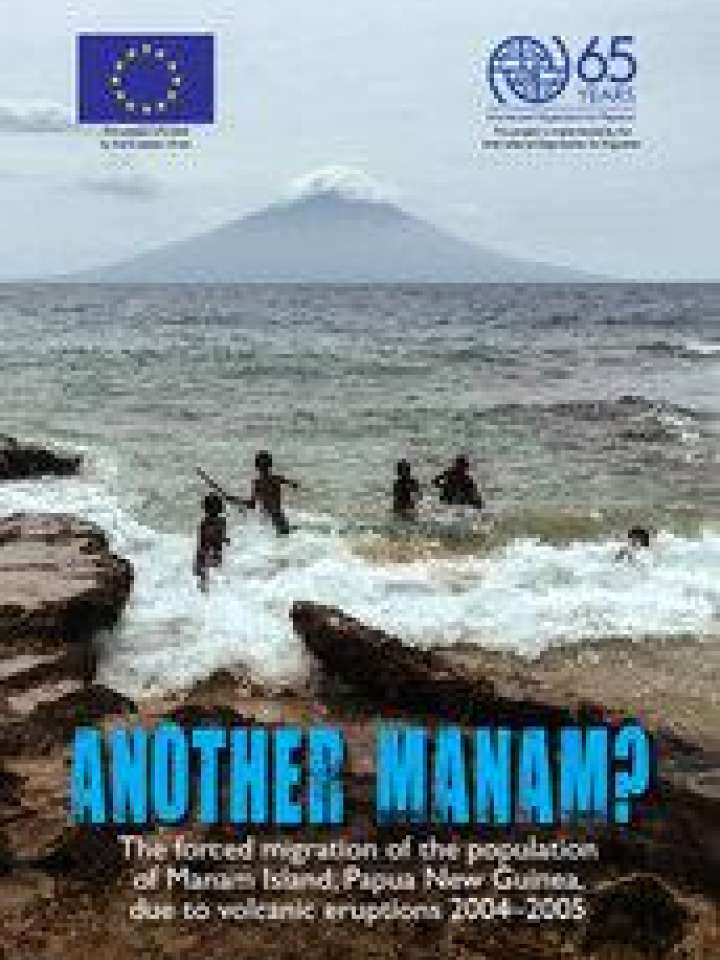
In the period 2008-2015, however, an average of 26.4 million people each year were uprooted by disasters , triggered by natural hazards. Such hazards are increasingly caused or magnified by climatic and environmental change factors, and the compounding effects of fast-paced urbanization, population growth and rising inequalities. Beyond the direct human, material and environmental costs on affected communities and countries, disasters frequently result in large-scale movements of populations which can lead to reduced access to basic services and livelihood options, and increased exposure to violence, poverty and insecurity for both the displaced populations and their host communities.
Further, data shows that disasters and environmental degradation have potential to fuel conflict and fragility, reverse development gains, and hamper progress towards the Sustainable Development Goals (SDGs), especially for least developed countries, landlocked developing countries and small island developing states. As environmental degradation and climate change are expected to increase the frequency and intensity of sudden-onset hazards, and to worsen the impacts of slow-onset hazards, the ramifications on human mobility are projected to be significant.
In the context of disaster, mobility is principally understood as a negative impact that can give rise to new risks and vulnerabilities for people on the move. While this can and often is the case, IOM has highlighted the direct importance of mobility decisions in reducing risk and promoting resilience, and the conditions of extreme vulnerability that are associated with ‘trapped populations’ who are unable to move out of harm’s way, or invest in alternative livelihood strategies amidst environment and climatic change pressures.
IOM as the global migration agency brings a unique perspective and operational comparative advantage to DRR and resilience given the intrinsic links between mobility, risk and resilience. IOM is also highly operational, with the ability to connect directly with beneficiary groups, understanding their particular needs and capacities and at the same time aligning with national frameworks and priorities. Guided by its migration governance policies at the global level, and working at the request of its Member States, the Organization’s DRR and resilience-based work benefits from longstanding operational experiences managing mobility in various complex crisis environments over the past decades, currently working at the field level through a network of 400 offices worldwide. Over the years, IOM has developed a unique contextual and strategic analysis and data collection capacity on the nexus of crisis and mobility.
At the planning level, DRR and resilience constitute a core sector of assistance in the Organization’s institution-wide Migration Crisis Operational Framework (MCOF) . Through MCOF, IOM incorporates risk and resilience into country-specific strategic planning processes and resource mobilization efforts, reflecting the strategic relevance of this area of work for IOM in addressing the mobility dimensions of crisis.
Disaster Reduction Goal
IOM’s mission on DRR and resilience is:
To assist Member States to implement the priorities of the Sendai Framework by advancing mobility-based strategies in disaster risk reduction and resilience.
IOM’s objectives are fourfold:
- To reduce disaster-induced displacement by harnessing the dimensions of mobility in prevention and preparedness;
- To mitigate the impacts of displacement through risk-informed response;
- To strengthen resilience by building back better in recovery and reconstruction;
- To expand and strengthen partnerships to support integration of mobility in global risk reduction efforts.
Achievement 1:
IOM supported 32 Member States in integrating human mobility considerations into national and local DRR and climate adaptation strategies. This included anticipatory action pilots in East Africa and the Pacific, resulting in earlier early warning dissemination to more than 1.2 million people and activation of pre-disaster cash assistance for 48,000 high-risk individuals.
Achievement 2:
Through collaboration with WMO, UNDRR and national meteorological agencies, IOM expanded community-based early warning systems in displacement-prone regions. Over 450,000 people in fragile and conflict-affected settings gained access to tailored risk information and evacuation protocols aligned with the Early Warnings for All initiative
Achievement 3:
In over 20 crisis-affected countries, IOM DRR interventions provided direct support to 286,790 persons (among which 142, 432 women), indirectly reaching 1,410,933 people in 333 communities. This included risk-sensitive shelter construction, hazard-aware site planning and recovery efforts focused on rehabilitating and upgrading essential community infrastructure such as flood‑resilient drainage systems, nature‑based solutions stabilizing disaster-prone landscapes to support safe and sustainable returns while improving community resilience by reducing future hazard exposure.
Achievement 4:
IOM enhanced the use of displacement, climate and hazard data for risk analytics. The Displacement Tracking Matrix (DTM) rolled out risk modules in 18 countries, strengthening national and local disaster risk information systems and supporting multi-risk assessments aligned with the Sendai Framework.
Achievement 5:
In 2025, significant progress was made in strengthening government leadership on disaster risk reduction and displacement management through the implementation of UN systemwide coordination arrangements under the S.G. Action Agenda for Durable Solutions. Convened by IOM in their first operational year, these arrangements brought humanitarian, development and peace actors together to reinforce nationally led efforts to prevent, reduce and address disaster related displacement. Increasingly, governments are embedding internal displacement within broader DRR, resilience-building and risk informed development strategies, shifting from reactive crisis response to anticipatory and preventive approaches. As a result, more than 14 million IDPs are now included in government-led solutions pathways that aim not only to resolve existing displacement but also to mitigate future disaster and climate risks.

Voluntary Commitments
The Sendai Framework Voluntary Commitments (SFVC) online platform allows stakeholders to inform the public about their work on DRR. The SFVC online platform is a useful toolto know who is doing what and where for the implementation of the Sendai Framework, which could foster potential collaboration among stakeholders. All stakeholders (private sector, civil society organizations, academia, media, local governments, etc.) working on DRR can submit their commitments and report on their progress and deliverables.