PreventionWeb
Menu

World Vision International

WVI
Canada
Non Governmental Organizations

Mission

World Vision International is a Christian relief, development and advocacy organisation dedicated to working with children, families and communities to overcome poverty and injustice. Inspired by Christian values, World Vision is dedicated to working with the world’s most vulnerable people. World Vision serves all people regardless of religion, race, ethnicity or gender. World Vision has 50,000 dedicated and passionate staff and volunteers and serves 100 million people in World Vision supported communities.

Disaster Reduction Goal

World Vision works with children, families and communities at risk across the globe through long term development interventions and relief operations.

The primary approach to reducing disaster risk is through the integration of risk reduction and resilience building measures into multi-sector long term development programmes.

In addition, World Vision places strong emphasis on ensuring the collaborative development of disaster preparedness and response plans with local government and other civil society organisations. To complement this strategy, a process of vulnerability monitoring is being established across areas where slow onset drought related crises are prevalent to enhance early warning and early action.

Post disaster recovery contexts also present an opportunity to build back community infrastructure and livelihoods better and stronger to withstand future shocks and stresses.

DRR activities
Disaster Reduction Focal Point(s)

Richard Rumsey, Director of Disaster Risk Reduction & Community Resilience, World Vision International

Email: [email protected]

Websites

http://www.wvi.org

Show more
Latest additions
Items: 9
Publication
Published on
29 May 2020
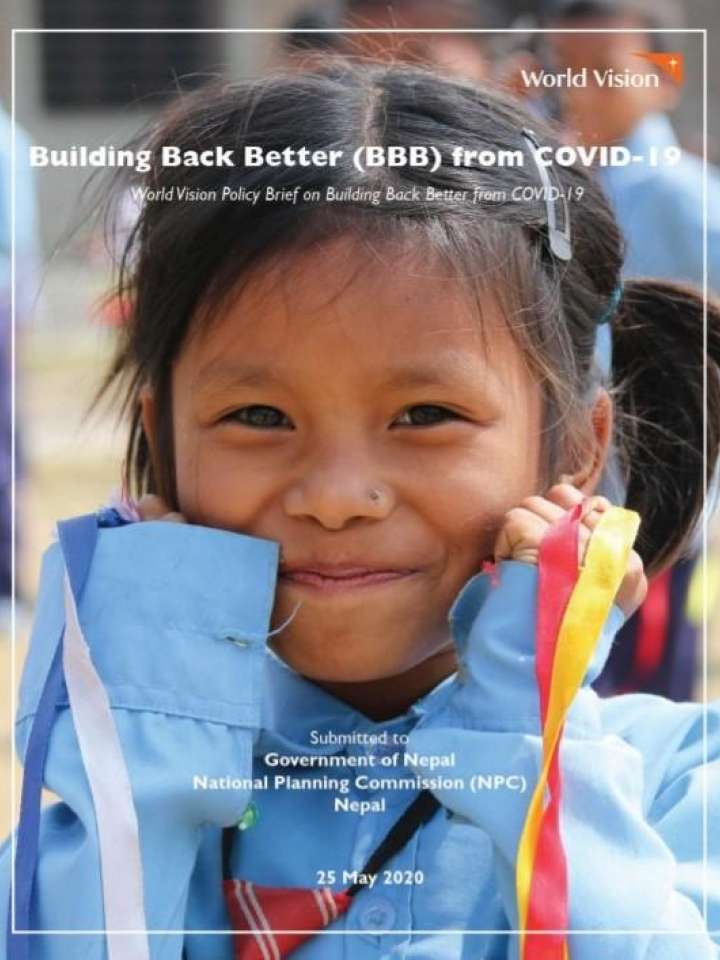
Building Back Better (BBB) from COVID-19
This policy brief aims to complement the work being done by Government ministries, donors, United Nations agencies, International Non-Government Organisations (INGOs) and other research organisations on the socio-economic impact of COVID-19. It is based on desk study review of relevant research papers and reports and World Vision International’s experience in BBB, both in Nepal and other countries, in particular in the Asia Pacific region.
Publication
Published on
30 December 2018
‘Let’s Get Back to our Routine’: Listening to children who were affected by Central Sulawesi earthquake and tsunami
This participatory study was conducted to listen to children, adolescents, and caregivers who were affected by the Central Sulawesi Earthquake and Tsunami.
Publication
Published on
30 April 2017
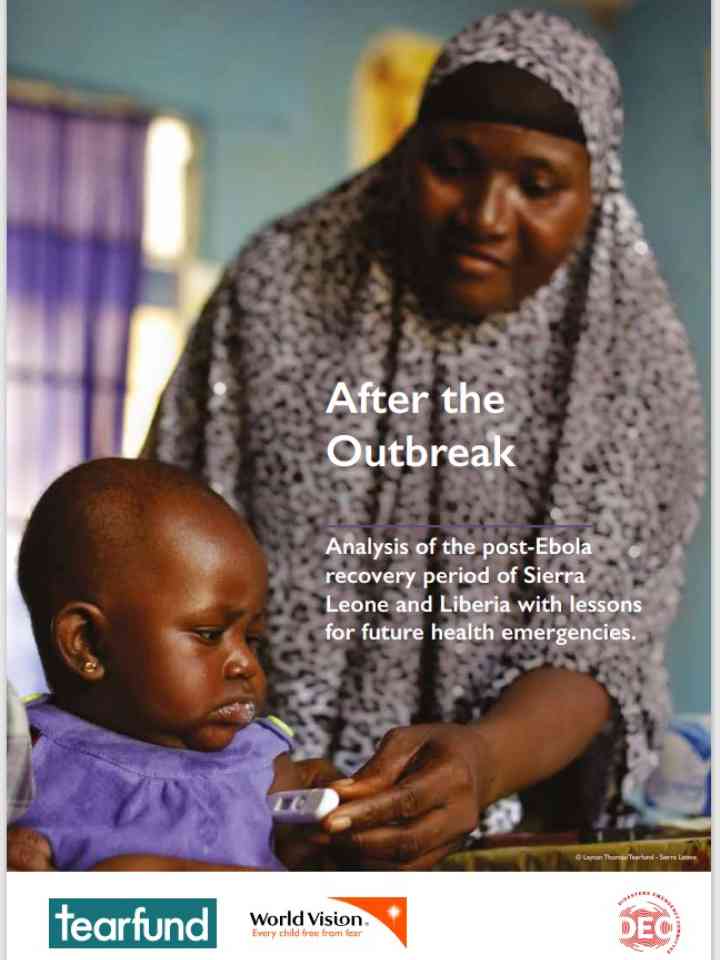
After the Outbreak: Analysis of the post-Ebola recovery period of Sierra Leone and Liberia with lessons for future health emergencies
This study evaluates Sierra Leone and Liberia’s road to recovery by analysing their post-Ebola policies (particularly those for survivors and affected persons) and how these have been implemented in practice.
Publication
Published on
30 April 2015
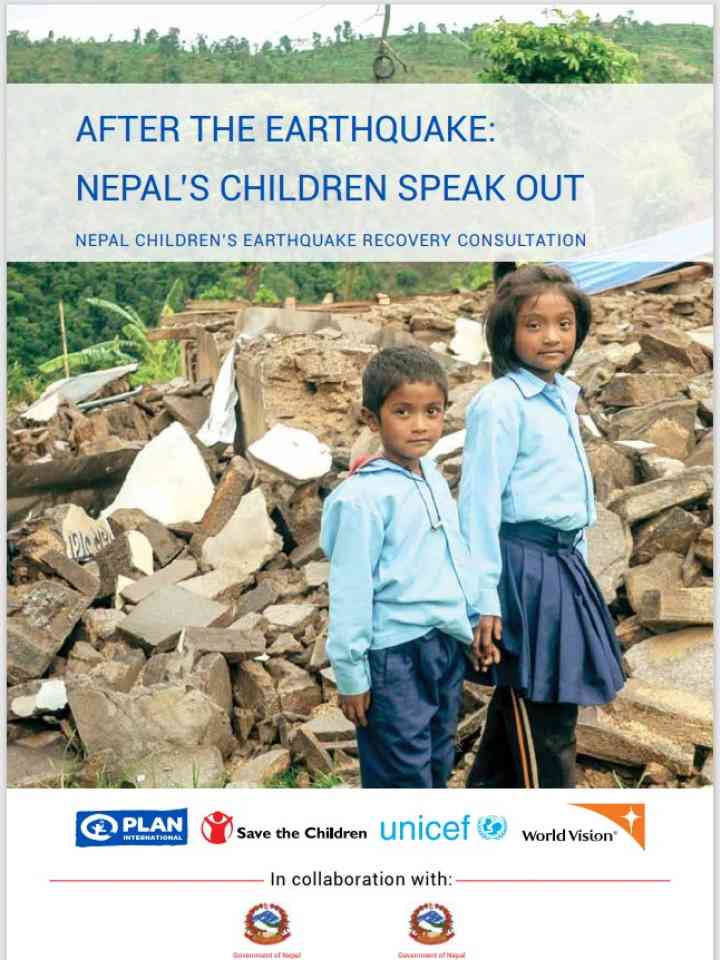
After the earthquake: Nepal’s children speak out
This report reflects the views and voices of children affected by the twin earthquakes in Nepal, who were consulted in May and June 2015.
Publication
Published on
30 April 2015
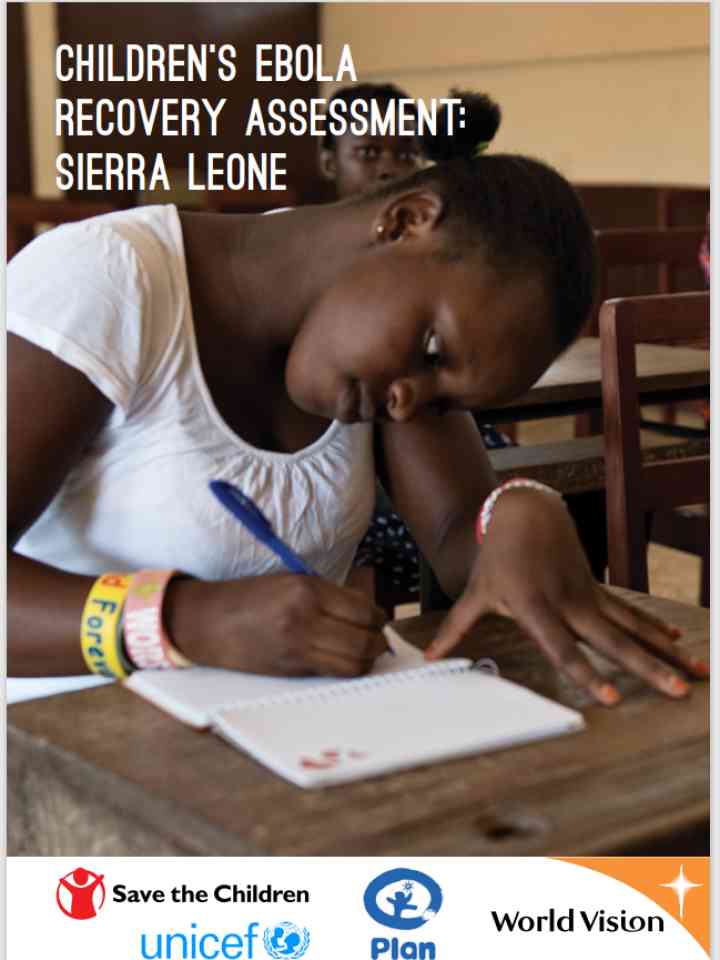
Children’s Ebola Recovery Assessment: Sierra Leone
In mid-March 2015, a Children's Ebola Recovery Assessment (CERA) conducted in Sierra Leone to create a mechanism, to discuss issues of concern and to formulate their recommendations for recovery.
Publication
Published on
23 May 2013
Towards the resilient future children want: a review of progress in achieving the Children’s Charter for Disaster Risk Reduction
This report aims to respond to the question of how the five priorities for disaster risk reduction (DRR), identified by children from 21 hazard-prone countries in the Children’s Charter for DRR, can be achieved, exploring the enabling factors and
Publication
Published on
8 June 2010
Futures in the balance: a way forward for Haiti's children
This publication discusses many of the critical issues that have the power to deliver lasting change in Haiti, including disaster risk reduction (DRR), among others such as child protection, education and opportunities for youth, food security and
Publication
Published on
30 March 2010
Rebuilding a resilient Haiti
This paper is calling for the Government of Haiti and the international community to focus on reducing the impact of future disasters. It asserts that Haiti’s disasters cannot be prevented, but that their effects on the people who live here can be minimised by investments in pre-disaster preparedness and disaster risk reduction (DRR), and that DRR must be treated as a critical component of any reconstruction and recovery framework for the country.

Pagination

  • Previous page ‹ Previous
  • Current page 1
  • Page 2
  • Next page Next ›

More content for this organization may be available on PreventionWeb or on the site search.

Voluntary Commitments

The organization has no registered commitments.

The Sendai Framework Voluntary Commitments (SFVC) online platform allows stakeholders to inform the public about their work on DRR. The SFVC online platform is a useful toolto know who is doing what and where for the implementation of the Sendai Framework, which could foster potential collaboration among stakeholders. All stakeholders (private sector, civil society organizations, academia, media, local governments, etc.) working on DRR can submit their commitments and report on their progress and deliverables.

Contact information

http://www.wvi.org/
[email protected]
Facebook
Twitter

Is this page useful?

Yes No
Report an issue on this page

Thank you. If you have 2 minutes, we would benefit from additional feedback (link opens in a new window).

The International Recovery Platform (IRP) is a global partnership working to strengthen knowledge, and share experiences and lessons on building back better in recovery, rehabilitation, and reconstruction.

Latest IRP videos and photos: YouTube Flickr Contact IRP

Loading