Mission
WWF’s mission is to stop the degradation of the planet’s natural environment and to build a future in which humans live in harmony with nature, by conserving the world’s biodiversity, ensuring that the use of renewable natural resources is sustainable, promoting the reduction of pollution and wasteful consumption. It is one of the world’s largest independent organizations dedicated to the conservation of nature.
To protect and restore healthy ecosystems and promote river, forest and land care practices that build community resilience to natural disasters and climate change related disasters and to ensure that post-disaster recovery and reconstruction is environmentally sustainable and reduces community vulnerability.
A number of WWF projects and programmes address disaster risk reduction and community resilience, e.g. :
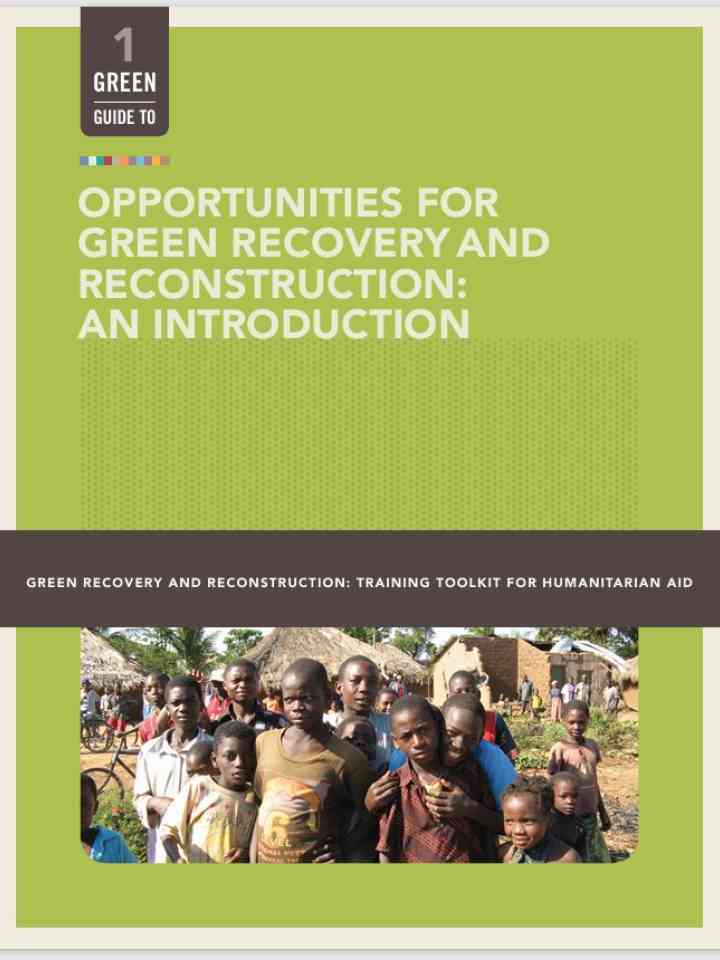
• WWF US, Humanitarian Partnerships and the Green Recovery and Reconstruction Toolkit, http://worldwildlife.org/partnership-categories/humanitarian-partnerships
• WWF Pakistan, Development of Integrated River Basin Management for Indus Basin: Challenges and Opportunities
• WWF India, Indian Sundarbans Delta – A Vision, http://awsassets.wwfindia.org/downloads/indian_sundarbans_delta__a_vision.pdf
• CARE-WWF Primeiras e Segundas, http://primeirasesegundas.net/
WWF has also carried out vulnerability assessments to inform climate change adaptation strategies using a range of methodologies at community and eco-regional scales e.g.
• WWF Philippines, Business Risk assessment and the Management of Climate Change Impacts http://wwf.org.ph/wwf3/downloads/publications/bramcci2.pdf
• WWF Nepal, Climate Change Vulnerability Assessment of Indrawati sub- basin, http://nicholasinstitute.duke.edu/sites/default/files/publications/freshwater-ecosystem-vulnerability-assessment-indrawati-sub-basin-nepal-paper.pdf
• WWF Belize Vulnerability Assessment of Coastal Communities, http://community.eldis.org/.59c095ef/SocioeconomicstudyBelizeancommunitites.pdf
• WWF Pakistan, Community Risk Evaluations, http://foreverindus.org/index.php
• WWF Colombia, Vulnerability assessments, http://www.wwf.org.co/sala_redaccion/publicaciones/?202666/Cambio-climtico-en-un-paisaje-vivo-Vulnerabilidad-y-adaptacin-en-la-Cordillera-Real-Oriental-de-Colombia-Ecuador-y-Per
• WWF Bhutan, Climate Change Vulnerability Assessment of Wangchuck Centennial Park, http://www.wwfbhutan.org/?201392/Climate-Change-Vulnerability-Assessment-of-Wangchuck-Centennial-Park
• WWF US, Concerning Fiji, Tanzania and Cameroon, http://worldwildlife.org/publications/climate-change-vulnerability-assessment-and-adaptation-planning-for-mangrove-systems
• WWF US, Concerning the Galapagos, http://awsassets.panda.org/downloads/integrated_report_final.pdf
• WWF India Vulnerability Assessment on the Ganga River basin, http://assets.wwfindia.org/downloads/vulnerability_assessment___ganga_basin.pdf
Other relevant sources
WWF South Pacific Programme Office, http://www.wwfpacific.org.fj/what_we_do/climatechange/
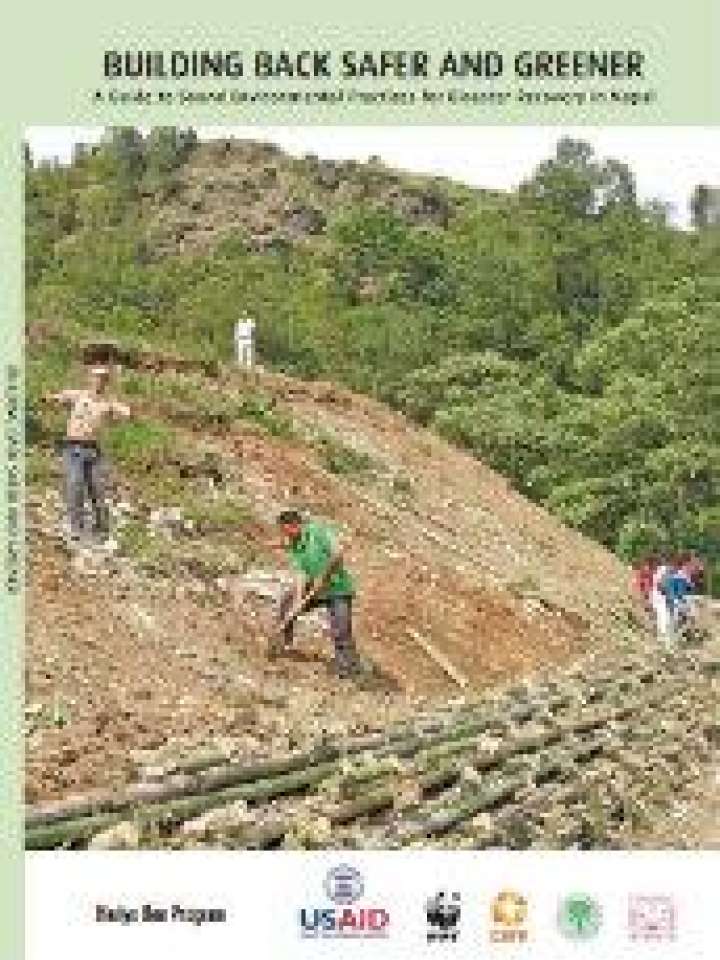
WWF Nepal, Hariyo Ban Program, http://www.wwfnepal.org/hariyobanprogram/who_we_are/
WWF India, http://www.wwfindia.org/about_wwf/reducing_footprint/climate_change_and_energy/solution/adaptation_and_impacts/sundarbans_programme/
WWF Arctic Programme. Assessing Ecosystem Resilience http://wwf.panda.org/what_we_do/where_we_work/arctic/what_we_do/climate/racer/
WWF UK, Tackling the Limits of Adaptation http://www.wwf.org.uk/research_centre/?6348/tackling-the-limits-to-adaptation
WWF UK, The Characteristics of Building Resilience Interagency Discussion Paper http://www.wwf.org.uk/research_centre/?6175/The-characteristics-of-resilience-building-interagency-discussion
ClimatePrep: adaptation stories, lessons, and explorations, http://www.climateprep.org/
Partnership for Environment and Disaster Risk Reduction (PEDRR)
Anita Van Breda, WWF US
Shaun Martin, WWF US
Helen Jeans, WWF UK
Sarah Davidson, WWF-CARE Alliance
Nadia Bajwa, WWF Pakistan
Judy Oglethorpe, WWF Nepal
Carmen Candelo Reina, WWF Colombia
Phurba Lhendup, WWF Bhutan
Elaine Geyer-Allély, WWF International
See linnks above in Policies and Programmes
Voluntary Commitments
The Sendai Framework Voluntary Commitments (SFVC) online platform allows stakeholders to inform the public about their work on DRR. The SFVC online platform is a useful toolto know who is doing what and where for the implementation of the Sendai Framework, which could foster potential collaboration among stakeholders. All stakeholders (private sector, civil society organizations, academia, media, local governments, etc.) working on DRR can submit their commitments and report on their progress and deliverables.