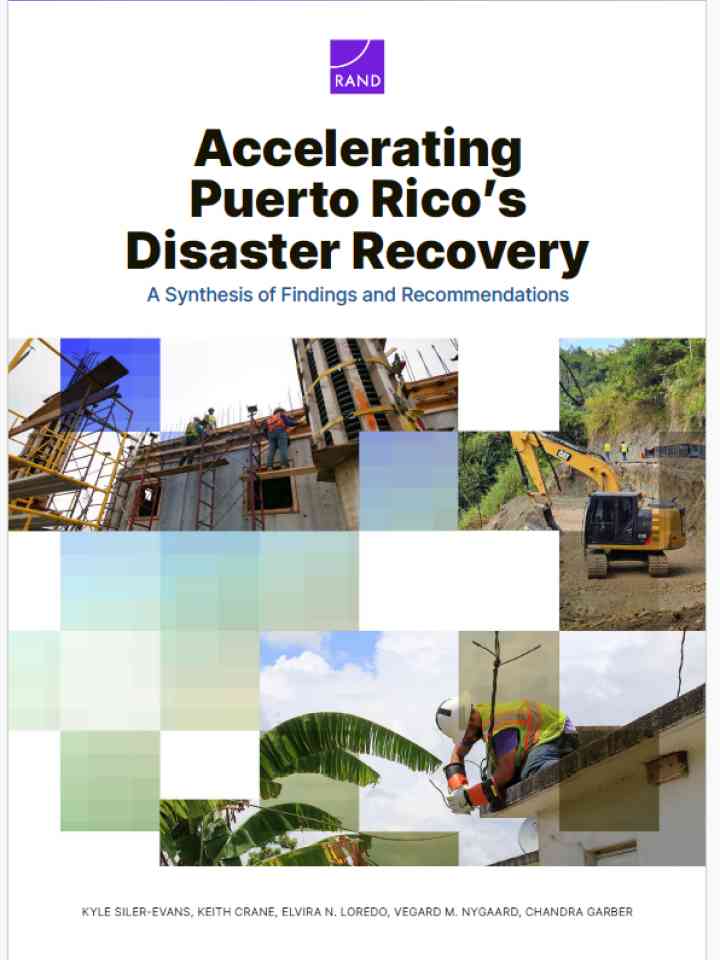
This report examines the progress of Puerto Rico’s recovery following the devastating impacts of Hurricanes Irma and Maria in 2017. Despite more than $70 billion in federal recovery funds allocated for reconstruction and support, the recovery process has progressed slowly. The study evaluates the current pace of rebuilding and identifies key challenges affecting infrastructure restoration, governance, and economic development.
The research highlights several structural barriers slowing recovery, including inefficient project management processes, inflation reducing the value of fixed federal grants, and shortages of skilled construction workers. It also notes that if recovery continues at the current pace, reconstruction could take several decades. These challenges risk delaying critical infrastructure improvements and limiting Puerto Rico’s ability to strengthen resilience against future disasters.
To address these issues, the report proposes policy reforms such as establishing a centralized recovery authority, improving project prioritization, addressing funding shortfalls caused by inflation, and increasing participation from mainland U.S. construction firms. The recommendations aim not only to accelerate rebuilding but also to support long-term economic growth, stronger governance, and improved disaster preparedness across Puerto Rico.
Explore further