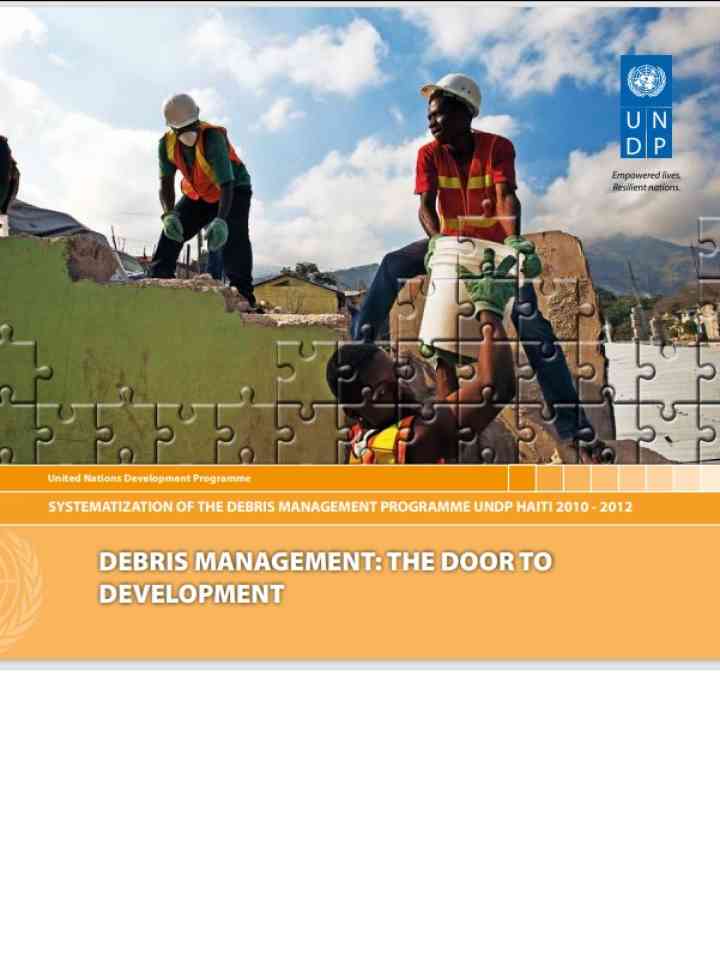
Debris Management: The Door to Development
On January 12, 2010, a devastating earthquake measuring 7.0 on the Richter scale struck Haiti. The destruction of buildings and infrastructure generated large amount of debris, estimated at 10 million cubic meters, blocking streets and land in affected areas, hindering relief, recovery and reconstruction activities.
The Haiti joint UN Debris Management Projects (the Debris Léogâne project and the Debris I and Debris II projects in Port-au-Prince) were aimed at contributing to the post-earthquake rehabilitation process through the implementation of a debris management strategy encompassing a system of community planning, demolition, debris removal, transportation, recycling and reutilization of debris of in the rehabilitation of community infrastructures.
Debris management in Haiti was not seen as a set of mechanical cleaning actions, but rather as an open door to encourage the rebuilding of the social fabric, foster rehabilitation, recovery and local economy reactivation. Debris management became one of the first steps towards rebuilding the country.
Explore further