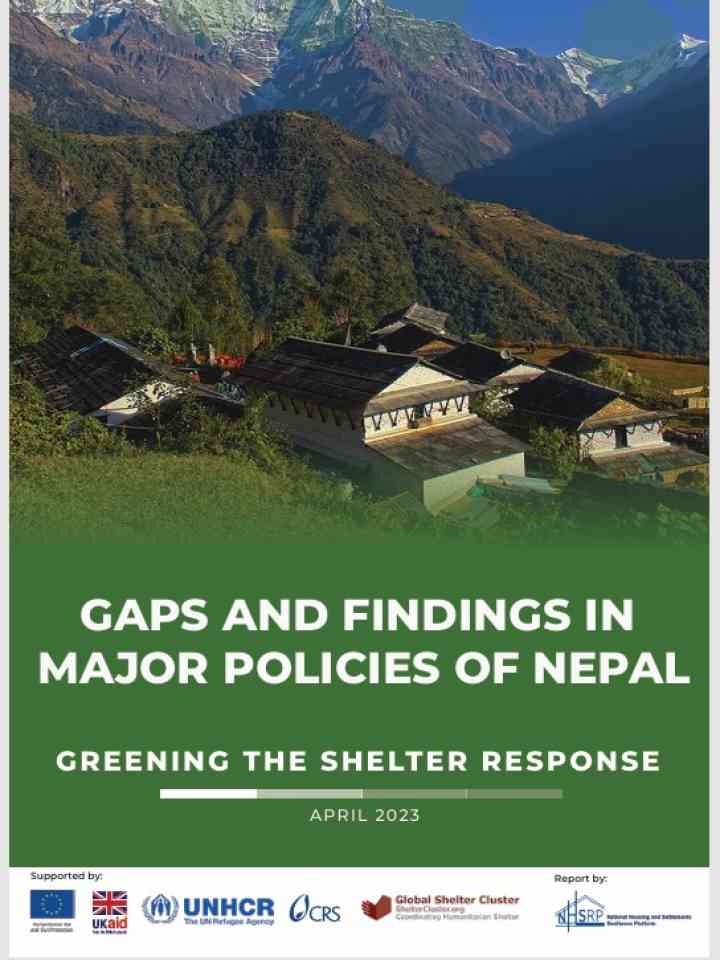
Greening the Shelter Response: Gaps and Findings in Major Policies of Nepal
The report focuses on the importance of integrating environmentally sustainable practices into shelter responses in Nepal, particularly in the wake of disasters. It highlights the current state of policies and regulations governing shelter construction and recovery efforts, emphasizing the need for a shift towards greener practices that can mitigate environmental impacts while providing safe housing solutions.
A critical analysis within the report reveals significant gaps in Nepal's existing policies related to sustainable shelter practices. These gaps include a lack of comprehensive guidelines, insufficient enforcement mechanisms, and limited awareness among stakeholders about the benefits of green building techniques. The report underscores how these deficiencies hinder effective disaster recovery and reconstruction, ultimately affecting community resilience and environmental health.
To address the identified gaps, the report proposes a series of actionable recommendations aimed at enhancing policy frameworks for sustainable shelter responses. These include developing clear guidelines for environmentally friendly construction methods, promoting stakeholder engagement and education, and establishing monitoring and evaluation systems to ensure compliance with new policies. By implementing these recommendations, Nepal can foster a more resilient and environmentally conscious approach to disaster recovery and reconstruction efforts.
Explore further