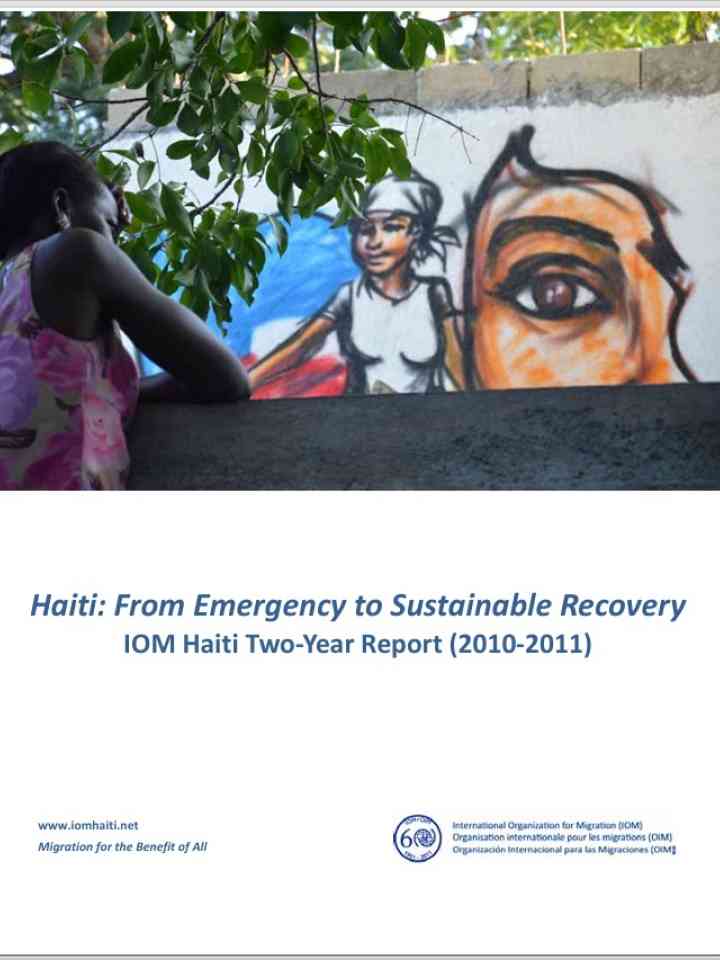
Haiti: From Emergency to Sustainable Recovery
Hundreds of thousands people were crushed to death beneath tons of rubble, and over a million sought refuge under the open sky with little more than the clothes on their back. The international community mobilized to respond at the peak of its capacity to provide life‐saving services and shelters to the over one million persons that ended up homeless on the streets in the days and months after the earthquake. This report emphasizes the challenges encountered in the aftermath, such as displacement, mobility, and development issues, and underscores the importance of international cooperation in addressing these complex issues.
On the second anniversary of the disaster, half a million people remain in camps, sheltered by tawdry plastic sheeting and living precariously. Haiti's challenges span the public health risks of urban slums and the deforestation of rural areas that pushes poor people to flee, whether to already over‐crowded towns and cities in the country or overseas.
Through initiatives like family tracing, psycho-social assistance, education support, and income-generating training, IOM has played a crucial role in assisting vulnerable populations, such as children affected by exploitation, in rebuilding their lives and fostering sustainable development in Haiti.
Explore further