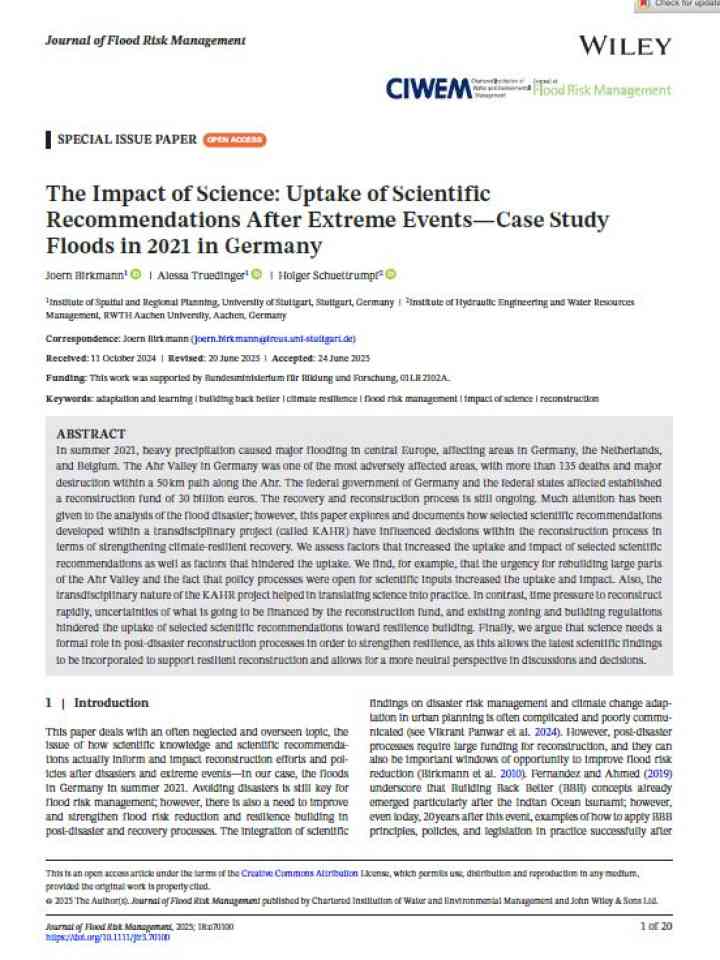
The impact of science: Uptake of scientific recommendations after extreme events: Case study floods in 2021 in Germany
This paper explores and documents how selected scientific recommendations developed within a transdisciplinary project (called KAHR) have influenced decisions within the reconstruction process, following the 2021 floods in Germany, in terms of strengthening climate-resilient recovery. The authors assess factors that increased the uptake and impact of selected scientific recommendations as well as factors that hindered the uptake. They find, for example, that the urgency for rebuilding large parts of the Ahr Valley and the fact that policy processes were open for scientific inputs increased the uptake and impact.
Also, the transdisciplinary nature of the KAHR project helped in translating science into practice. In contrast, time pressure to reconstruct rapidly, uncertainties of what is going to be financed by the reconstruction fund, and existing zoning and building regulations hindered the uptake of selected scientific recommendations toward resilience building. Finally, they argue that science needs a formal role in post-disaster reconstruction processes in order to strengthen resilience, as this allows the latest scientific findings to be incorporated to support resilient reconstruction and allows for a more neutral perspective in discussions and decisions.
Explore further