Strategic guidelines for sustainable recovery and long-term resilience in district Buner, Pakistan
To inform recovery efforts, this report presents strategic guidelines for developing a comprehensive recovery framework through three core principles. First, the report advocates for a people-centered and rights-based approach to empower affected communities to lead their own recovery. This is evidenced by the community's articulated preference for durable "transitional shelters instead of tents" and the request for unconditional cash grants, identified as the "most dignified and flexible form of aid". Second, the strategic guide encourages the use of the "build back better and smarter" imperative, a principle that views recovery not merely as a response but as an act of climate adaptation through the integration of disaster risk reduction (DRR) measures. Third, it emphasizes a multi-sectoral and synergistic approach, recognizing that interventions in one area, such as cash-for-work programmes can simultaneously amplify results in other sectors like shelter and livelihoods.
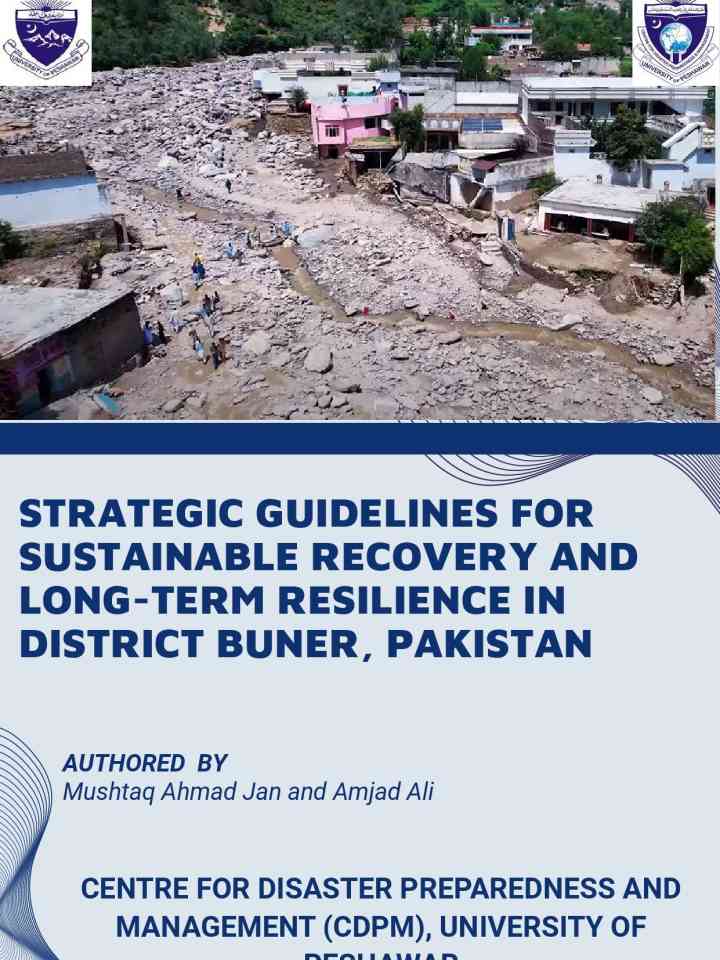
In mid-August 2025, the Buner district in Pakistan was struck by an unprecedented series of cloudbursts, a meteorological event that triggered catastrophic flash floods in four major watersheds. This deluge was reported to be 50 to 60 percent more intense than the previous year's monsoon and represented a hydro-geological disaster fundamentally distinct from the region's historical flash floods. Unlike slow-onset events, these floods manifested as violent torrents of water, silt, boulders and debris that "swept away entire villages" within minutes, reshaping the physical and socio-economic landscape of the affected valleys. The catastrophe has been profoundly devastating. Official data indicates a total human toll of 251 fatalities and 120 injuries. The physical destruction is staggering, with over 1,650 homes damaged (assessment in progress), along with 29 schools and 14 health facilities. The district's economy has been affected, with an estimated 80 percent of agricultural land damaged and 26,142 acres of crops washed away, along with the small-scale businesses being "wiped out in minutes". The disaster has left approximately 60 to 70% of the population unable to support their families.