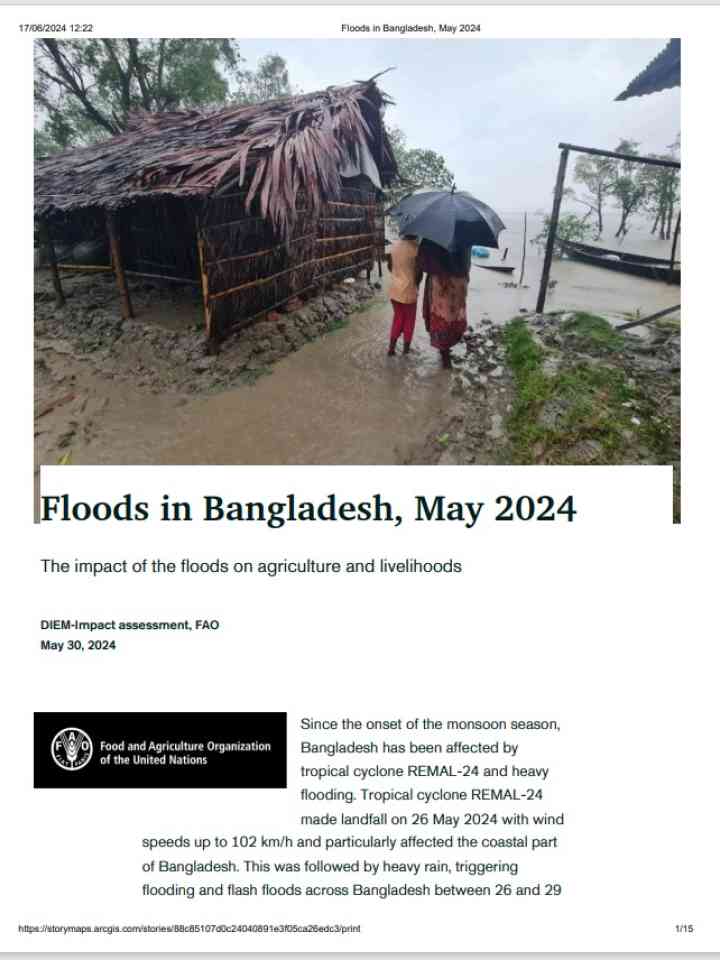
Floods in Bangladesh, May 2024 : The impact of the floods on agriculture and livelihoods
The floods in Bangladesh during May 2024 were primarily triggered by tropical cyclone REMAL-24, which made landfall on May 26, resulting in severe flooding across the country. The cyclone brought wind speeds of up to 102 km/h and caused extensive flooding, affecting over 768,000 hectares of land, with significant damage reported in the coastal and northeastern regions, particularly in the Khulna and Sylhet divisions.
The agricultural sector faced substantial challenges due to the flooding coinciding with the boro harvest and the planting of kharif crops. While some crops like kharif vegetables and fruits experienced minor impacts, stored crops essential for food security and income were likely damaged. The flooding also affected over 110,000 hectares of tree cover and more than 55,000 hectares of mangroves, exacerbating the environmental impact of the disaster. The cumulative effects of the cyclone and subsequent rains hindered farmers' ability to access their fields and manage their resources effectively.
In response to this disaster, assessments conducted by the Food and Agriculture Organization (FAO) highlighted the urgent need for recovery efforts to support affected communities. The findings emphasized that while standing crops had sustained minor damage, the loss of stored agricultural inputs such as seeds and fertilizers could have lasting effects on food consumption and livelihoods. As Bangladesh continues to grapple with the consequences of climate-related disasters, these events underline the importance of strengthening disaster preparedness and resilience strategies within vulnerable agricultural communities.
Explore further