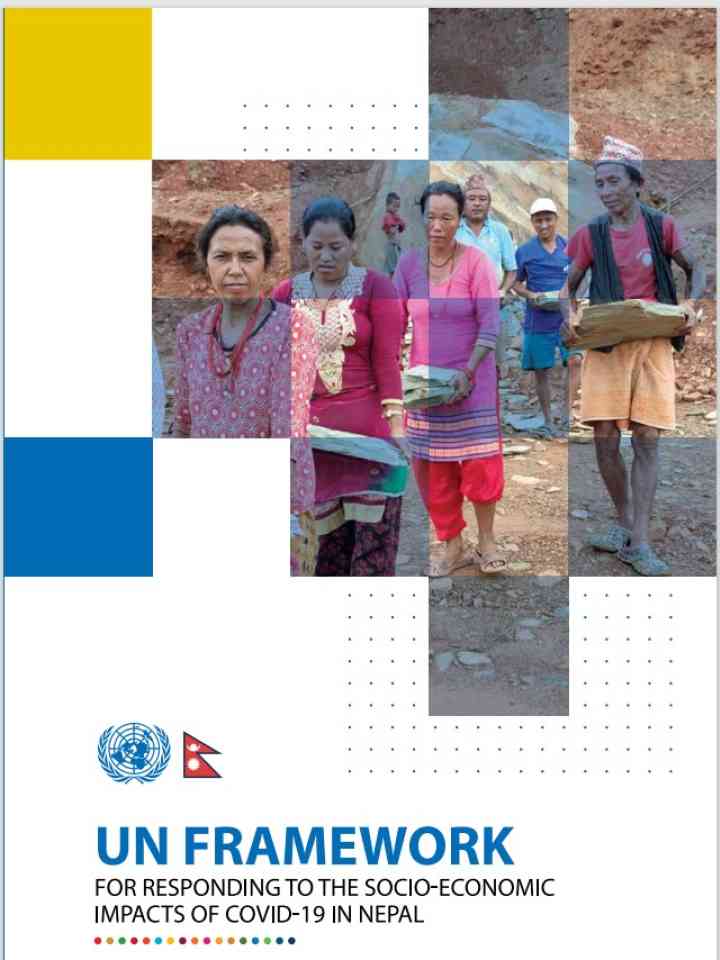
UN Framework for Responding to the Socio-Economic Impacts of COVID19 in Nepal
The United Nations has designed this Framework for Responding to the SocioEconomic Impacts of COVID-19 in Nepal. The Framework is anchored in government priorities, as articulated by planning and budgeting documents at the national and provincial levels. It aims to complement and build on the government-led response.
The proposed Framework builds on short-term recovery and resilience activities managed by the humanitarian country team. Its preparation is informed by analysis of data and evidence and an understanding of the specifc impacts of the pandemic in the Nepal context. In addition to the collection of data through assessments and surveys, the United Nations consulted 35 groups, including more than 1,000 people representing diferent segments of the population and constituency groups. This evidence has allowed for tailored solutions to respond to specifc needs and necessities created by the COVID-19 crisis. Further, the Framework emphasizes the challenges faced by vulnerable and marginalized populations, ensuring no one is left behind.
The Framework is structured around fve interconnected and reinforcing pillars:
- Health First, focusing on the immediate health response, as well as addressing existing challenges in health systems and services.
- Protecting People, through increased and more inclusive provision of essential services and building stronger social protection systems.
- Economic Response and Recovery, creating jobs and other income-generating opportunities and supporting small businesses to jumpstart the economy.
- Social Cohesion and Community Resilience, addressing discrimination, exclusion and other rights against at-risk people and groups, and building resilience to future crises and shocks.
- Macroeconomic Response and Multilateral Collaboration, to support inclusive and sustainable growth and bring partners together to ensure more efective cooperation.
Explore further