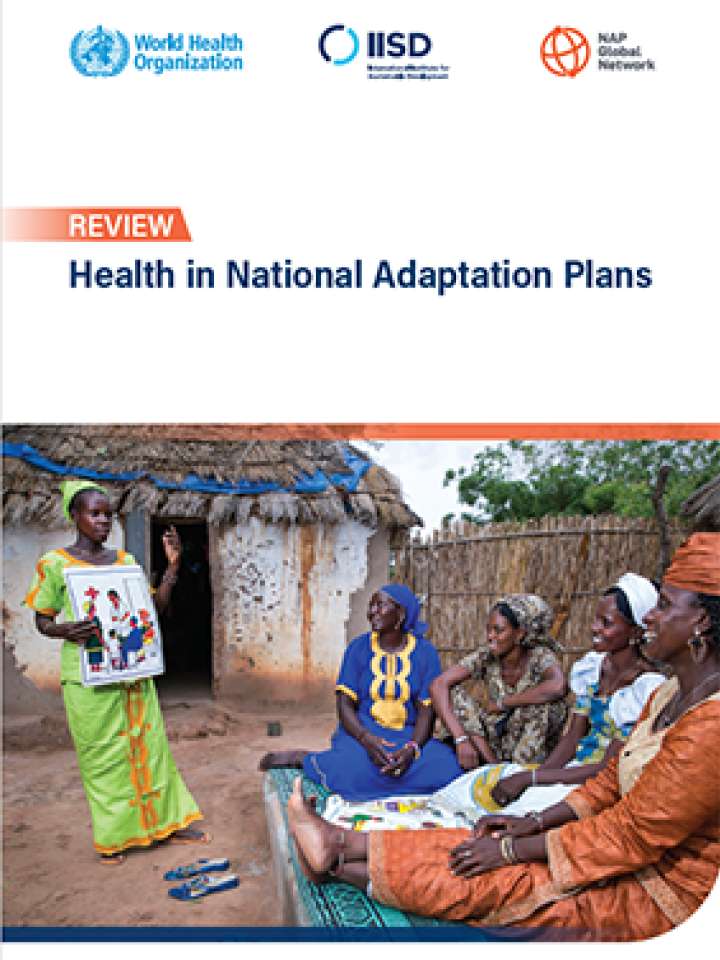
Review of health in National Adaptation Plans
Climate change has significant impacts on health both directly, such as injury and death from extreme weather events, or heat illnesses from temperature increases, and indirectly, including malnutrition, increased spread of vector-borne diseases, and impacts on mental health. As part of the response to the threats posed by climate change across all sectors, the National Adaptation Plan (NAP) process was established to build resilience to climate change across economies, societies and ecosystems over the medium and longer term.
This WHO review, conducted in collaboration with the NAP Global Network, analyses 19 of the 20 NAP documents submitted to NAP Central by 31 December 2020, the UNFCCC’s NAP portal, to assess the extent to which health was considered in adaptation planning processes. The review found that all NAPs highlight health as a priority sector vulnerable to climate change, however, the extent to which the health risks are considered and addressed varies.
Several areas of opportunity for strengthening health systems resilience through the NAP process are identified in the report, including:
- The inclusion of health in integrated vulnerability & adaptation assessments for various sectors;
- Improved institutional arrangements;
- Synergies across NAP processes;
- Systematic improvement through NAP iterations;
- The development of a Health National Adaptation Plan (HNAP).
The target audience of this review is the national staff leading the NAP processes in a country and the Ministry of Health staff responsible for the development and implementation of the HNAP. Secondary audiences include agencies supporting the HNAP and NAP processes in other sectors, nongovernment agencies, bilateral donors, officers in the WHO, and other UN organizations and technical agencies.
This review can be used in conjunction with the WHO Quality Criteria for Health National Adaptation Plans.
Explore further