PreventionWeb
Menu

United Nations Office for the Coordination of Humanitarian Affairs

OCHA
UN & International Organizations

Mission

OCHA’s mission is to mobilise and coordinate effective and principled humanitarian action in partnership with national and international actors to alleviate human suffering in emergencies, advocate for the rights of people in need, promote preparedness and prevention and facilitate sustainable solutions. The USG also chairs the Inter-Agency Standing Committee as the Emergency Relief Coordinator. OCHA:

  • Works with Governments to strengthen their capacity with early warning information, contingency planning, national capacity-building and training, and by mobilizing support from regional networks;
  • Helps Governments access tools and services for life-saving relief (rapid-response teams, needs assessment, funds, reports and civil-military coordination);
  • Identifies and analyses trends and helps the humanitarian community develop common policy, based on humanitarian principles;
  • Speaks out publicly when necessary, works behind the scenes, negotiating on issues such as access, protection of civilians and aid workers, and humanitarian principles;
  • Gathers and shares reliable data on where crisis-affected people are, what they urgently need and who is best placed to assist them;
  • Helps manage humanitarian donations from more than 130 countries through its financial tracking services.

Disaster Reduction Goal

OCHA’s key objectives are to:

  • Convene humanitarian and development partners to work strategically and coherently to strengthen resilience and build national and local capacity
  • Advocate a resilience-based approach and ensure resilience concepts are integrated into the humanitarian programme cycle, and humanitarian tools and mechanisms are used to optimum effect

OCHA works to incorporate DRR approaches into humanitarian programmes and strengthen preparedness for effective humanitarian response. Emergency preparedness and DRR are critical to building community and household resilience.

DRR activities
Membership in Key Networks

Inter-Agency Standing Committee

CADRI

UNDRR Inter-Agency Group (IAG)

National Counterpart

National Disaster Management Offices/Ministries

Disaster Reduction Focal Point(s)

Ursula Muller
Assistant Secretary-General and Deputy Emergency Relief Coordinator
United Nations Office for the Coordination of Humanitarian Affairs (OCHA)
UN Headquarters I Room S-3322 I New York, NY 10017
Tel: +212-963-0762
Email: [email protected]

Rudi Muller
Director
Office for the Coordination of Humanitarian Affairs, Geneva
Tel: +41 22 917 1352
Email: [email protected]
Websites

http://ochaonline.un.org

http://www.reliefweb.int

Show more
Latest additions
Items: 27
Publication
Published on
11 August 2023
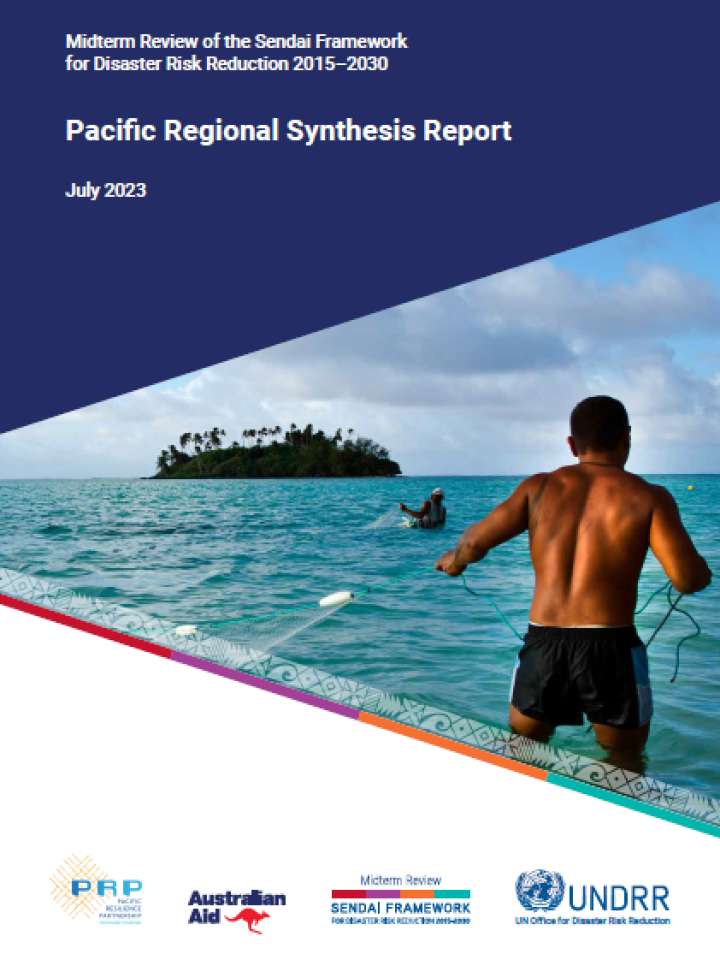
Subregional report: Midterm review of the implementation of the Sendai Framework for Disaster Risk Reduction 2015-2030 for the Pacific
This report takes stock of the implementation of the Sendai Framework for Disaster Risk Reduction 2015-2030 in the Pacific at its midpoint and identifies key areas to focus on to advance the achievement of the Framework’s goal and targets by 2023.
Publication
Published on
10 December 2020
Tuvalu country preparedness package
The Country Preparedness Package is a joint initiative of the Government of Tuvalu and the Pacific Humanitarian. The document is intended to strengthen preparedness and collaboration between national and international actors in disaster response.
Publication
Published on
22 October 2018
The human consequences of the Chernobyl nuclear accident: A strategy for recovery
This report contains the findings of a study commissioned by agencies of the United Nations to obtain credible information on the conditions in which people affected by the Chernobyl accident are living fifteen years after the explosion, and to make recommendations as to how their needs can best be addressed in the light of this information.
Publication
Published on
17 September 2015
Shelter After Disaster (second edition)
This edition adds new insights to the original text of the 1982 Guidelines , provides a more updated format and gives updated resources and reflects current thinking within the shelter sector.
Publication
Published on
16 September 2015
Guidance on gender mainstreaming in transition
This working document presents key considerations to ensure gender equality and women empowerment principles inform the transition process and reconstruction planning after the 2015 Nepal earthquake.
Publication
Published on
8 October 2013
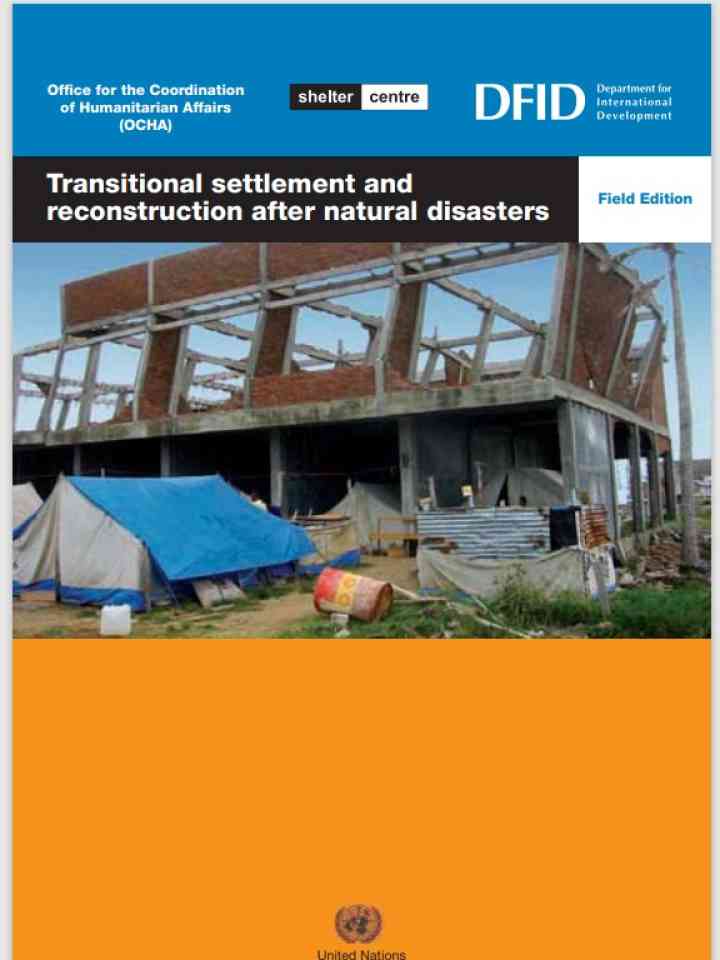
Transitional Settlement and Reconstruction After Natural Disasters (Field Edition)
The guidelines cover coordination and strategic planning and implementation relevant to transitional settlement and reconstruction following all natural disasters.
Publication
Published on
27 December 2011
Drylands recovery and development in the Horn of Africa: The need for community control and empowerment, education and pro-poor infrastructure
This position paper explains the need for drylands recovery and development in the Horn of Africa through community control and empowerment, education and pro-poor infrastructure.
Publication
Published on
12 March 2011
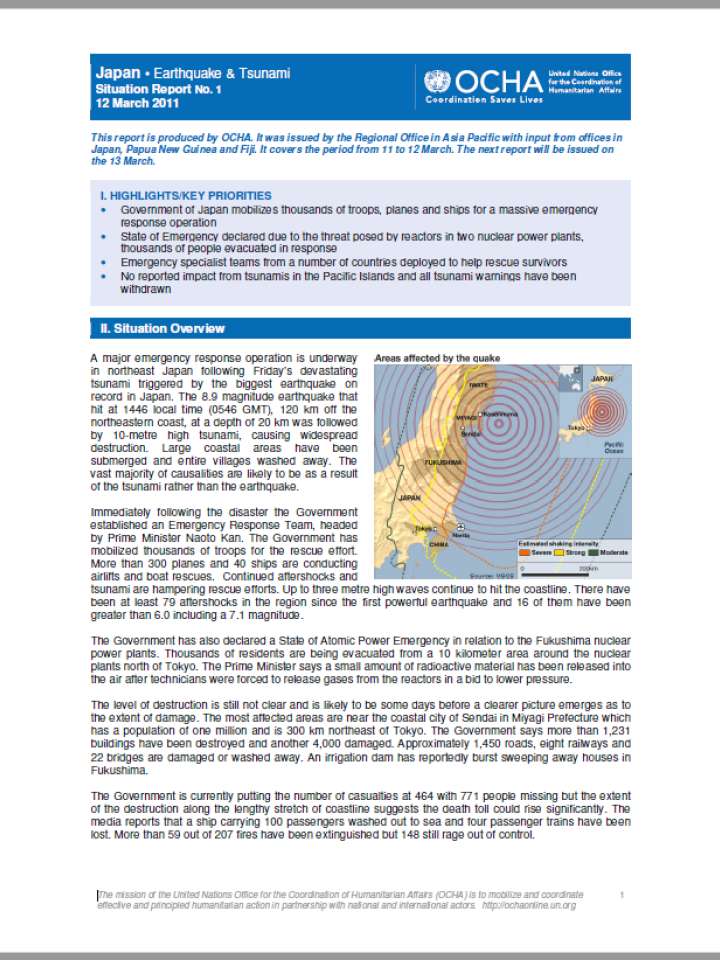
Japan: Earthquake & Tsunami Situation Report (No.1-No.16)
These reports were produced by OCHA immediately after the Great East Japan Earthquake and Tsunami on 11 March 2011.

Pagination

  • Previous page ‹ Previous
  • Current page 1
  • Page 2
  • Page 3
  • Page 4
  • Next page Next ›

More content for this organization may be available on PreventionWeb or on the site search.

Voluntary Commitments

The organization has no registered commitments.

The Sendai Framework Voluntary Commitments (SFVC) online platform allows stakeholders to inform the public about their work on DRR. The SFVC online platform is a useful toolto know who is doing what and where for the implementation of the Sendai Framework, which could foster potential collaboration among stakeholders. All stakeholders (private sector, civil society organizations, academia, media, local governments, etc.) working on DRR can submit their commitments and report on their progress and deliverables.

Contact information

http://ochaonline.un.org
[email protected]
+1 2129631234
Fax:
+1 2129631234
Facebook
LinkedIn
Twitter

Is this page useful?

Yes No
Report an issue on this page

Thank you. If you have 2 minutes, we would benefit from additional feedback (link opens in a new window).

The International Recovery Platform (IRP) is a global partnership working to strengthen knowledge, and share experiences and lessons on building back better in recovery, rehabilitation, and reconstruction.

Latest IRP videos and photos: YouTube Flickr Contact IRP

Loading