PreventionWeb
Menu
Last updated 20 Aug 2025

Haiti earthquake 2010
Image

Introduction

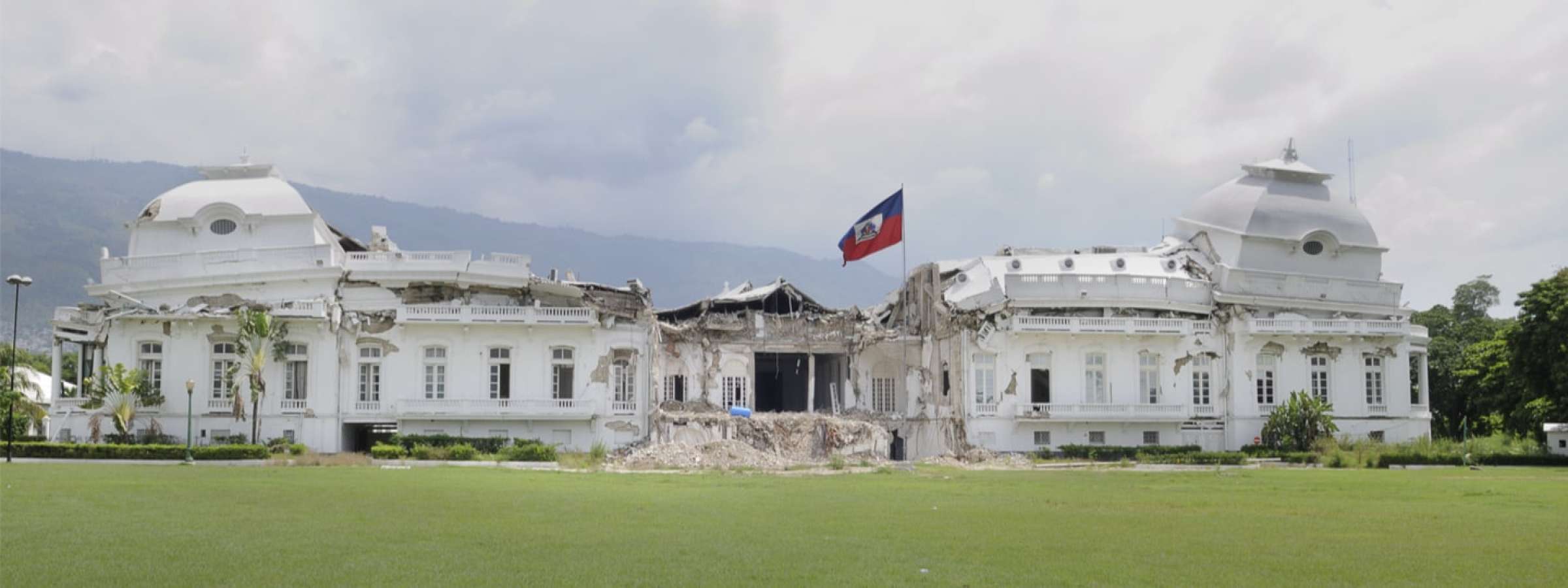
The 2010 Haiti earthquake was a catastrophic magnitude 7.0 Mw earthquake that struck Haiti at 16:53 local time (21:53 UTC) on Tuesday, 12 January 2010. The initial earthquake was soon followed by two aftershocks of magnitudes 5.9 and 5.5.

More aftershocks occurred in the following days, including another one of magnitude 5.9 that struck on January 20 at Petit Goâve, a town some 35 miles (55 km) west of Port-au-Prince. Haiti had not been hit by an earthquake of such enormity since the 18th century, the closest in force being a 1984 shock of magnitude 6.9. A magnitude-8.0 earthquake had struck the Dominican Republic in 1946.

Death toll estimates range from 100,000 to about 160,000 to Haitian government figures from 220,000 to 316,000. The government of Haiti estimated that 250,000 residences and 30,000 commercial buildings had collapsed or were severely damaged.
Hazards
Earthquake
Country and region
Haiti

Knowledge base

Items: 23
Cover_Government of Haiti
Documents and publications
DRF - Disaster Recovery Frameworks
30 April 2010
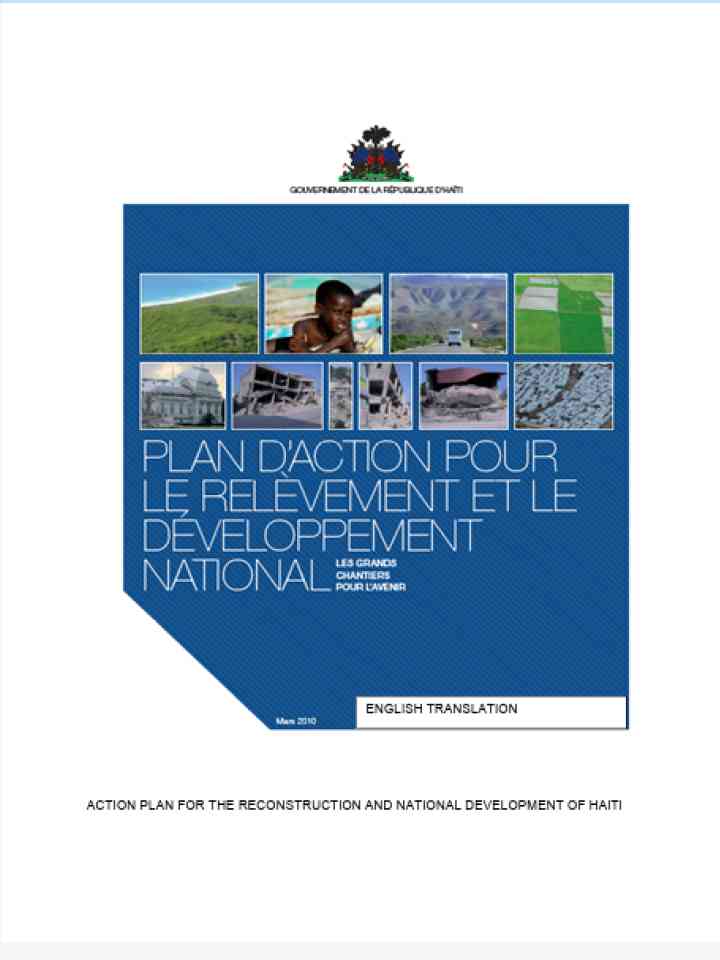
Action Plan for the Reconstruction and National Development of Haiti

The priorities of the Post-Earthquake Action Plan are to cope immediately with the emergency, restart economic, governmental and social activities, reduce the vulnerabilities of the country and once again put Haiti on the path of development.

Haiti - government
Documents and publications
13 April 2010
Ensuring Haitian women’s participation and leadership in all stages of national relief and reconstruction

This report aims to scale-up women’s participation in recovery and reconstruction of Haiti and asserts that gender equality principles must guide all aspects of disaster mitigation, response and reconstruction. It is a response to Haiti’s National Plan of Action, the blueprint guiding reconstruction efforts and resource allocation, based on a Post-Disaster Needs Assessment (PDNA), resulting from a two month process led by the Government of Haiti and involving more than 250 people from the United Nations, the World Bank, the European Union and the Inter-American Development Bank, but failing to address gender dimensions of Haiti’s proposed strategies for reconstructing macroeconomic, social, environmental policies, as well as infrastructure and governance.

Huairou Commission
Grassroots Organizations Operating Together in Sisterhood
Gender and Disaster Network, the
Documents and publications
8 April 2010
Report by the Director-General on UNESCO's post-earthquake response in Haiti

This document on UNESCO’s effort in assisting Haiti after the 12 January 2010 earthquake addresses both relief and reconstruction. It seeks to bridge emergency activities to support longer-term, nationally owned development in education, tangible and

United Nations Educational, Scientific and Cultural Organization (UNESCO)

Pagination

Showing results 21–23 on this page

  • Previous
  • 1
  • 2
  • 3

Is this page useful?

Yes No
Report an issue on this page

Thank you. If you have 2 minutes, we would benefit from additional feedback (link opens in a new window).

The International Recovery Platform (IRP) is a global partnership working to strengthen knowledge, and share experiences and lessons on building back better in recovery, rehabilitation, and reconstruction.

Latest IRP videos and photos: YouTube Flickr Contact IRP

Loading