PreventionWeb
Navigation loading…

Navigation failed to load. If you are on the UNDRR office network, your browser may be blocking access to external resources. Learn how to allow access.

Menu
Last updated 1 Mar 2024

Recovery Collection: 2004 Indian Ocean Earthquake and Tsunami
Image
Indian Ocean Tsunami
Frans Delian / Shutterstock

Introduction

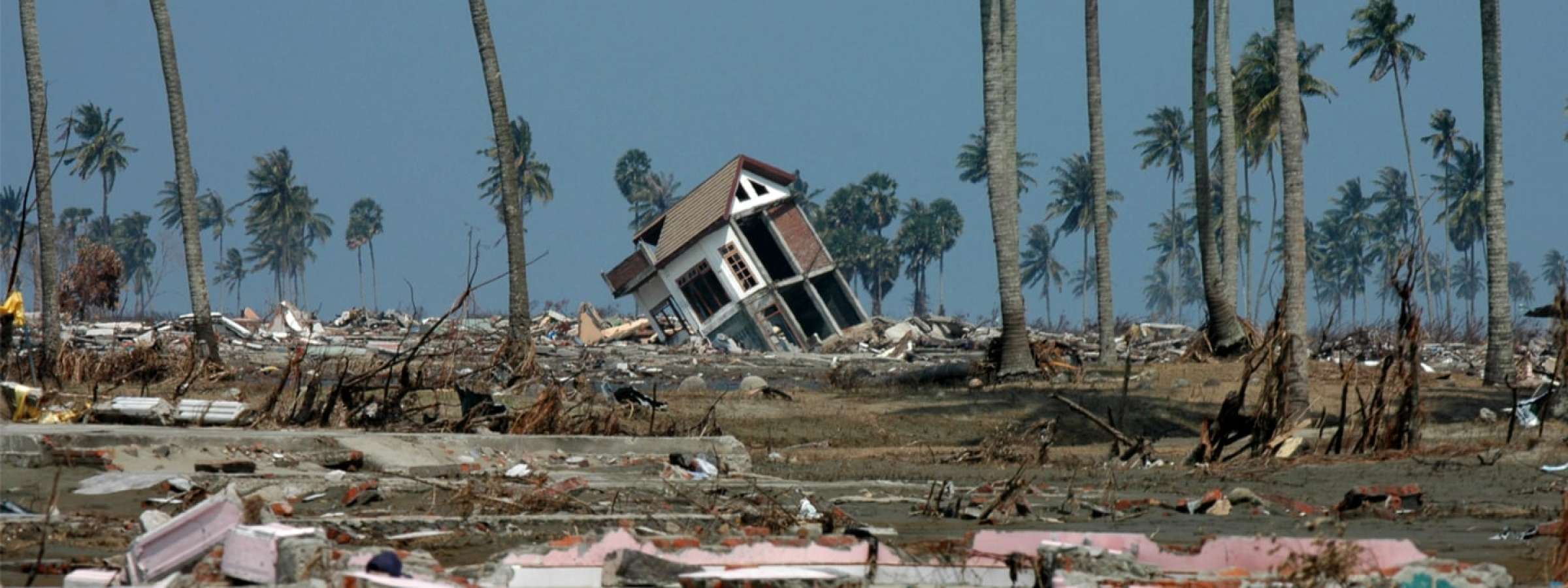
The morning of December 26, 2004 saw the worst disaster in Indonesia’s history. A magnitude (M) 9.1 submarine earthquake occurred along the Indian Ocean subduction zone triggering a massive tsunami that destroyed 800 km of the coastal areas of Aceh Province with inundation observed as far as 6 km inland. Post disaster damage and loss assessment revealed staggering numbers on the calamity that include over 220,000 human fatalities and the destruction of 139,000 houses, 73,869 hectares of agricultural lands, 2,618 kilometers of roads, 3,415 schools, 104,500 small-medium enterprises, 13,828 fishing boats, 119 bridges, 669 government buildings, 517 health facilities, 1,089 worship places, 22 seaports, and 8 airports and airstrips (BRR-Agency for the Rehabilitation and Reconstruction of Aceh and Nias, 2009). Added to these statistics, more than half a million tsunami survivors were internally displaced and hundreds of thousands more lost their livelihoods.

Almost within hours, news on the tsunami devastation of Aceh spread quickly around the world eventually sparking an unprecedented massive global community emergency response and relief effort. Given the extremely urgent situation on the grounds, the Government of Indonesia agreed to allow international military personnel coming from Asian and European countries, the United States, and Australia, among others, to participate in the disaster response operations that also included more than 600 local, national, and international non-governmental, community-based, civil society, multi-lateral, and UN organizations. Some of these organizations continued to be involved in the post-tsunami reconstruction and recovery phase. The reconstruction costs were estimated to be US $4.9 billion while committed funds from various sources including the international community donors and the Government of Indonesia amounted to US$ 6.7 billion (BRR, 2009).

Before embarking on a painstaking reconstruction effort, the Government of Indonesia created a “Master Plan for the Rehabilitation and Reconstruction of Aceh and Nias, North Sumatra”. Parallel to this effort, the government also established the Agency for the Rehabilitation and Reconstruction of Aceh and Nias (BRR), an ad-hoc agency, first of its kind, mandated to implement and coordinate government-funded projects and coordinate donor- and NGO- funded projects from April 2005 to April 2009. The “Build Back Better” philosophy was adopted in the reconstruction effort. This guiding principle seeks to ensure that every reconstruction effort shall integrate the concept of Disaster Risk Reduction that would help reduce future disaster risk and build resilience. By the end of the project period, BRR had implemented and coordinated a total of roughly 12,000 projects.

Post-tsunami recovery and reconstruction efforts generally resulted in significant achievements in terms of housing, infrastructure, environment, agriculture, livelihood, health, local economy, education, and disaster management sectors. The enactment of Law of the Republic of Indonesia Number 24/ 2007 concerning Disaster Management and the subsequent transformation of disaster management entities marked a major shift in disaster management paradigm in Indonesia which should help prepare Indonesia in responding more effectively to future disaster events.
Hazards
Earthquake Tsunami
Themes
Critical infrastructure Preparedness Education and school safety Food security and agriculture Livelihood Recovery Shelter and housing
Country and region
Indonesia

Knowledge base

Items: 64
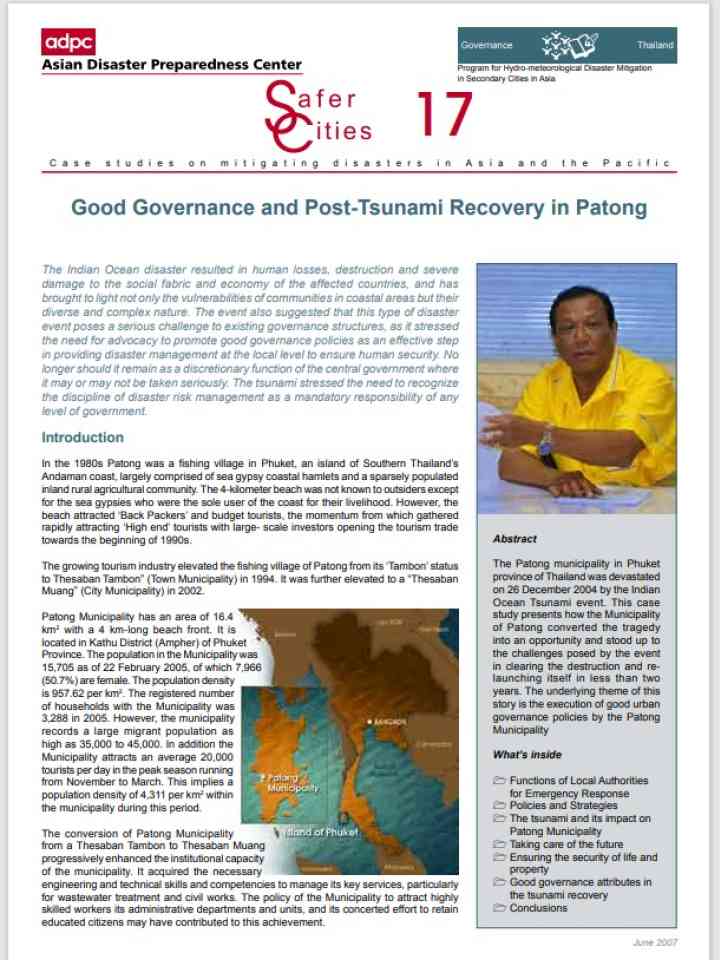
Good Governance and Post-Tsunami Recovery in Patong
Documents and publications
Case Study
Publications
1 June 2007
Case studies on Mitigating Disaster in Asia and the Pacific: Good Governance and Post-Tsunami Recovery in Patong

This case study presents how the Municipality of Patong converted the tragedy into an opportunity and stood up to the challenges posed by the Indian Ocean Tsunami event in clearing the destruction and re-launching itself in less than two years.

Asian Disaster Preparedness Center
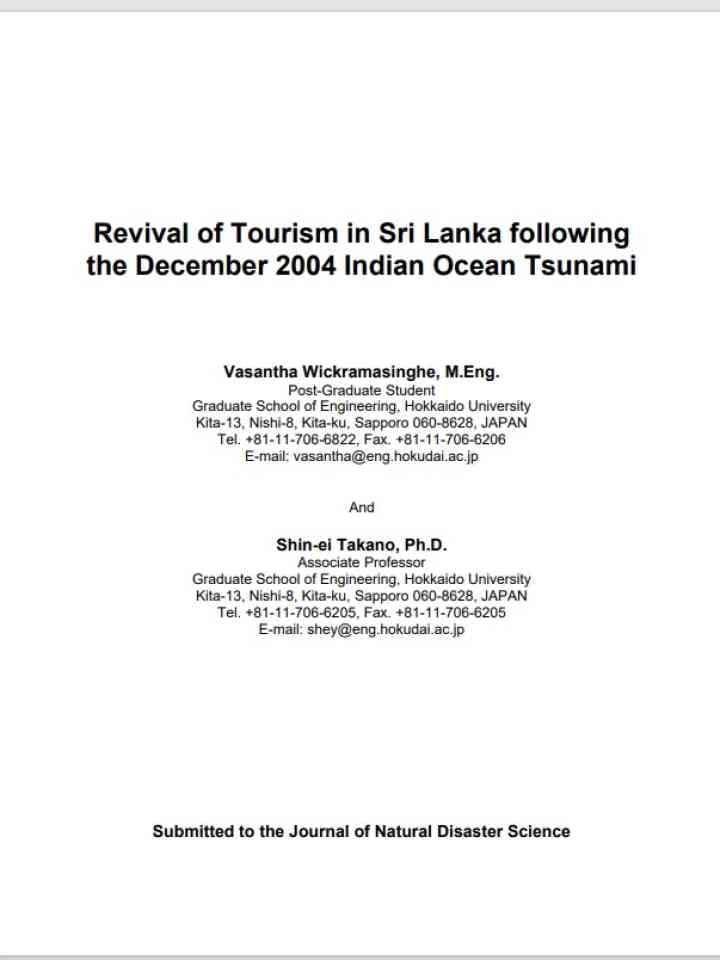
Revival of Tourism in Sri Lanka following the December 2004 Indian Ocean Tsunami
Documents and publications
Publications
31 May 2007
Revival of Tourism in Sri Lanka following the December 2004 Indian Ocean Tsunami

This paper documents the impact of the December 2004 Indian Ocean Tsunami on tourism in Sri Lanka and a detailed overview of the recovery strategies adopted in the aftermath of the disaster.

Japan Society for Natural Disaster Science
Bridging the gap. Save the Children’s transitional housing project after the tsunami in Ampara district, Sri Lanka
Documents and publications
Publications
30 April 2007
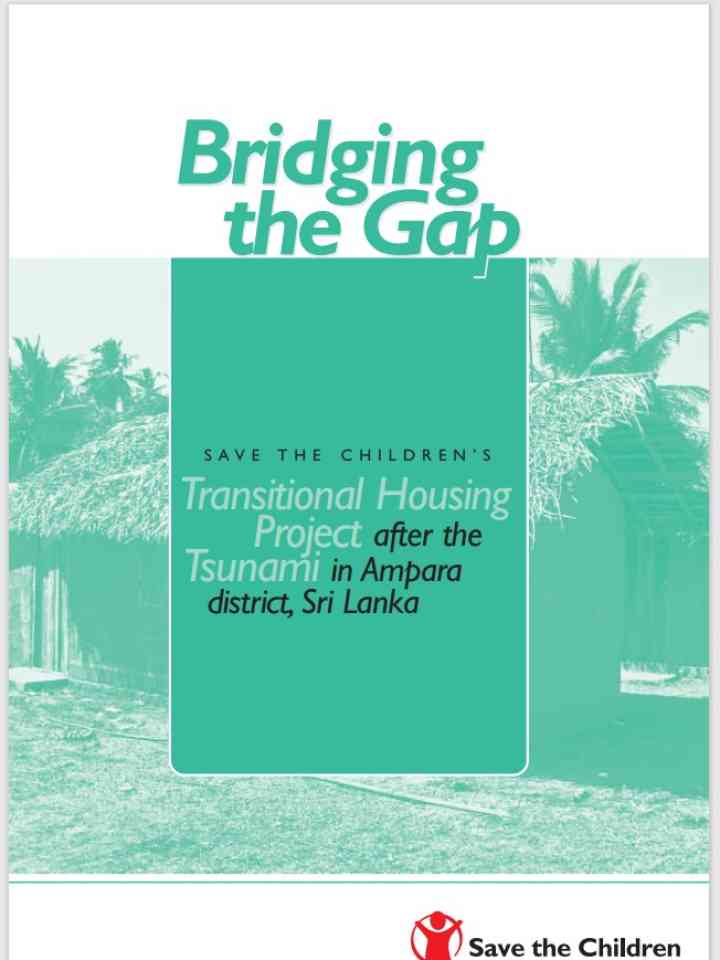
Bridging the gap. Save the Children’s transitional housing project after the tsunami in Ampara district, Sri Lanka

The publication documents the shelter construction process in Ampara district, Sri Lanka, following the 2004 tsunami and pays particular attention to the community consultations that were part of this reconstruction process.

Save the Children International
Making space for children: Planning for post-disaster reconstruction with children and their families
Documents and publications
Publications
30 April 2007
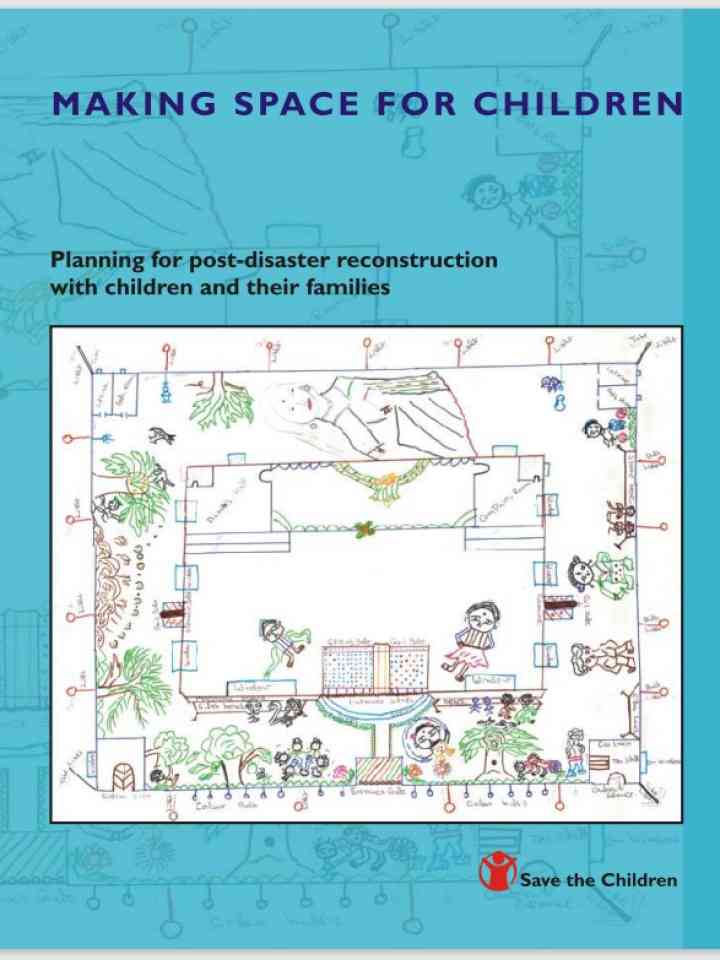
Making space for children: Planning for post-disaster reconstruction with children and their families

The objective of this handbook was to give children and adults in Cooks Nagar,Tamil Nadu, India the chance to plan the changes they wanted to make in their settlement as it underwent reconstruction following the tsunami in late 2006.

Save the Children International
Documents and publications
Case Study
24 December 2006
Lessons learned and good practices from the ILO Aceh Programme

This report aims to extract lessons learned from the ILO’s Aceh Programme in response to the Indian Ocean tsunami on 26 December 2004, and propose good practices for future ILO crisis responses.

International Labour Organization (ILO)
Cash for Recovery: Feasibility study on a capital-based income generation scheme for tsunami-affected households in Trincomalee District, Sri Lanka
Documents and publications
Publications
30 April 2006
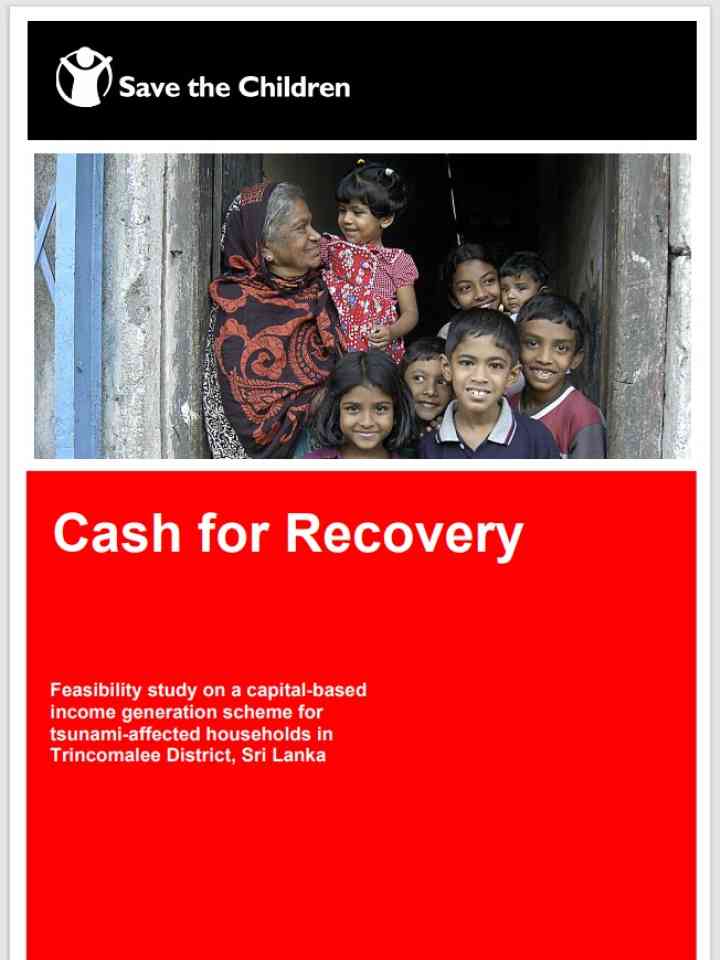
Cash for Recovery: Feasibility study on a capital-based income generation scheme for tsunami-affected households in Trincomalee District, Sri Lanka

Cash for Recovery looks at the feasibility of cash-based responses in post-disaster situations. It is an in-depth study of a scheme in Sri Lanka designed to meet the needs of extremely poor and labour-scarce households.

Save the Children International
Tsunami Recovery in the Maldives: 2004 - 2006
Documents and publications
Publications
30 April 2006
Tsunami Recovery in the Maldives: 2004 - 2006

The document discusses the UNDP's effective response to the 2004 tsunami in the Maldives, highlighting significant progress in shelter recovery projects and emphasizing the importance of sustainable development for the country's future.

United Nations Development Programme (UNDP)
Cover_TAFREN, Sri Lanka
Documents and publications
DRF - Disaster Recovery Frameworks
30 December 2005
Post-tsunami recovery and reconstruction strategy

The document outlines Sri Lanka’s comprehensive strategy for post-tsunami recovery, detailing how the government, coordinated rebuilding of infrastructure, restoration of livelihoods, and long-term development.

Sri Lanka - government
Tsunami 2004 Sri Lanka Preliminary Damage and Needs Assessment
Documents and publications
PDNA - Post Disaster Needs Assessments
12 November 2005
Sri Lanka 2005 Post-Tsunami Recovery Program - Preliminary Damage and Needs Assessment

This report gives a preliminary estimate of the damage and needs resulting from the widespread destruction caused by the 2004 tsunami, evaluating the social, environmental, and economic impacts of the disaster and summarizing damage.

Asian Development Bank (ADB)
Japan Bank For International Cooperation
World Bank, the
Tsunami 2004 India Tsunami Recovery Program Preliminary Damage and Needs Assessment
Documents and publications
PDNA - Post Disaster Needs Assessments
12 November 2005
India Post Tsunami Recovery Program Preliminary Damage and Needs Assessment

This report provides an assessment of damages and needs resulting from the tsunami that struck the eastern and southwestern coast of India as well as the Andaman and Nicobar Islands on December 26, 2004.

Asian Development Bank (ADB)
World Bank, the
United Nations - Headquarters

Pagination

Showing results 51–60 on this page

  • Previous
  • 1
  • …
  • 5
  • 6
  • 7
  • Next

Is this page useful?

Yes No
Report an issue on this page

Thank you. If you have 2 minutes, we would benefit from additional feedback (link opens in a new window).

The International Recovery Platform (IRP) is a global partnership working to strengthen knowledge, and share experiences and lessons on building back better in recovery, rehabilitation, and reconstruction.

Latest IRP videos and photos: YouTube Flickr Contact IRP

Loading