PreventionWeb
Menu
Last updated 30 Nov 2023

Recovery Collection: Kerala Floods 2018
Image
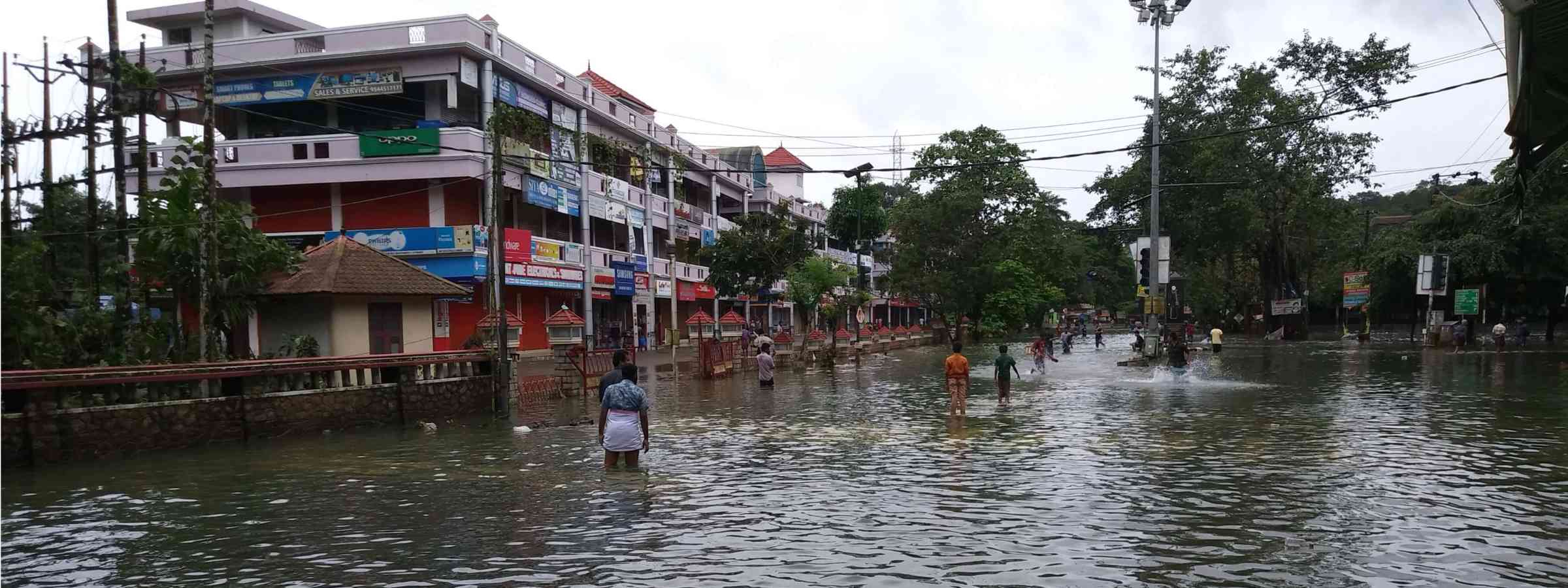
Pala during 2018 Kerala floods
PraveenP

Introduction

In August 2018, Kerala, a state in southern India, experienced one of the most devastating floods in its history. The disaster, triggered by unprecedented monsoon rains, led to the deaths of over 480 people, displaced over a million residents, and caused extensive damage to infrastructure, homes, and livelihoods. The floods were the result of the highest rainfall Kerala had seen in nearly a century, with some regions receiving up to 170% of their usual monsoon precipitation. The heavy rains caused rivers to overflow, landslides to occur, and several dams to release water simultaneously, exacerbating the disaster's impact.

The recovery process in Kerala was as challenging as the disaster itself. Despite the overwhelming scale of destruction, the state government, in collaboration with the central government, NGOs, and international agencies, launched an extensive recovery and rehabilitation program. The recovery efforts were community-driven, with significant participation from local self-help groups, civil society organizations, and the affected communities. One of the key strategies was to build back better, focusing not only on restoring the damaged infrastructure but also on improving resilience to future disasters. This included the reconstruction of houses, schools, and health centers with enhanced structural integrity, and the restoration of livelihoods through support for agriculture, fisheries, and small businesses.

The Kerala floods highlighted the importance of disaster preparedness and resilient infrastructure. One of the key lessons from the recovery experience was the necessity of integrating disaster risk reduction into development planning. The floods exposed vulnerabilities in existing infrastructure and underscored the need for a comprehensive flood management system. In response, Kerala adopted a more integrated approach to water management, incorporating early warning systems, improved dam management protocols, and community-based disaster preparedness initiatives. The state also strengthened its local governance structures, empowering communities to take a more active role in disaster response and recovery.
Hazards
Flood
Themes
Community-based DRR Governance Livelihood Recovery Recovery planning
Country and region
India

Knowledge base

Items: 54
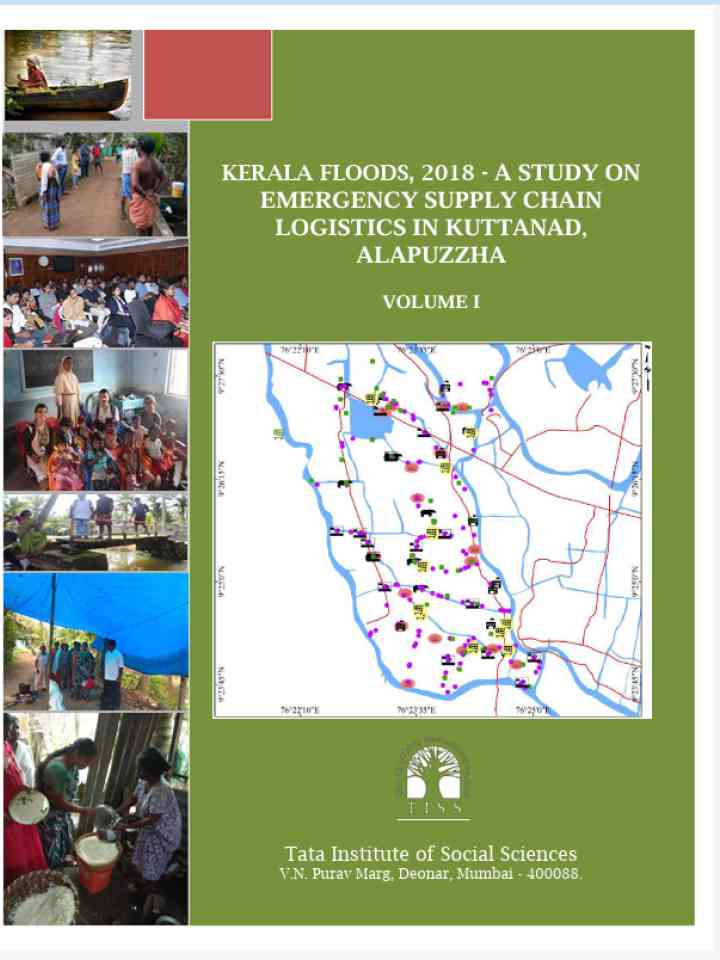
Cover_Tata Institute of Social Sciences (TISS)
Documents and publications
Publications
25 February 2019
Kerala Floods, 2018 - A Study on Emergency Supply Chain Logistics In Kuttanad, Alapuzzha

This report analyses emergency food and relief supply chain mechanisms during the 2018 Kerala floods in Kuttanad, focusing on community-run gruel centres and last-mile logistics supporting flood-affected populations.

Tata Institute of Social Sciences
Covewr_ResearchGate
Documents and publications
Publications
30 January 2019
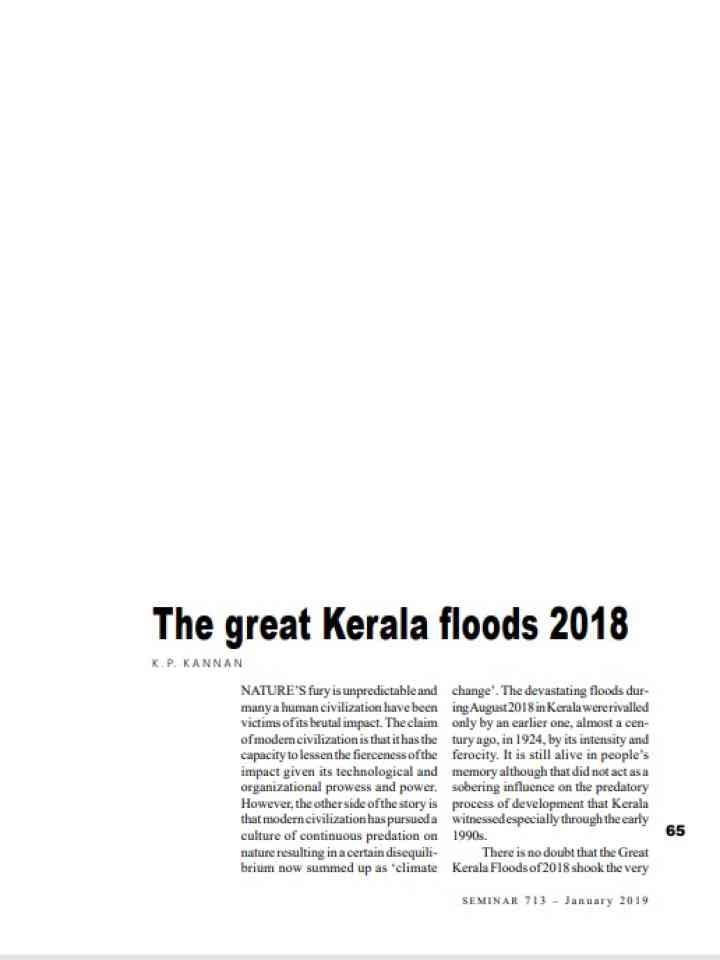
The great Kerala Floods 2018

The document outlines the catastrophic impact of Floods in Kerala in 2018, detailing the causes, human and infrastructural losses, and the lessons learned regarding environmental sustainability, community resilience, and governance in disaster management.

ResearchGate
Documents and publications
3 January 2019
Cred crunch, Issue no. 53, December 2018 - Flash floods: Sharing of experience - Kerala

In August 2018, Kerala experienced severe flash floods with significant human and economic impacts. This publication highlights the global importance of flash floods and details a field mission to Kerala.

Centre for Research on the Epidemiology of Disasters (CRED)
Cover_Kerala State Government
Documents and publications
Publications
1 January 2019
Kerala State Report: Community Participation in Rebuilding Kerala

Thie report details how, after the 2018 floods, the government institutionalized a participatory feedback system to ensure affected communities were actively involved in and informed about disaster recovery and planning processe.

Government of Kerala
Cover_Kerala State Disaster Management Authority
Documents and publications
Publications
Reports and analysis
1 January 2019
Kerala State Report

Through this report and sector deep dive analysis, we seek the voices of the affected people and marginalized groups systematically feed into on-going recovery and rebuilding of resilient Kerala.

Kerala State Disaster Management Authority
Documents and publications
PDNA - Post Disaster Needs Assessments
13 December 2018
Post-disaster needs assessment: Kerala, India

The report formulates recommendations to make Kerala the first green state in India with an eco-sensitive and risk-informed approach. The report also gives several high-ticket innovations and global examples to build back better (BBB) Kerala.

United Nations Development Programme (UNDP)
Global Facility for Disaster Reduction and Recovery, the (GFDRR)
United Nations Development Programme (UNDP)
Cover_Kerala State Disaster Management Authority
Documents and publications
Publications
11 December 2018
Kerala Integrated Water Resources Management

This document is a comprehensive report prepared as part of the Post Disaster Needs Assessment (PDNA) following the severe floods and landslides in Kerala, India, in August 2018.

Kerala State Disaster Management Authority
Cover_RGIDS
Documents and publications
Publications
30 November 2018
Kerala Flood 2018 : The Disaster of The Century

In August 2018, Kerala experienced unprecedented flooding, resulting in the loss of 483 lives, extensive damage to infrastructure and agriculture, and highlighting significant deficiencies in disaster management and environmental planning.

Rajiv Gandhi Institute of Development Studies
Cover_ResearchGate
Documents and publications
Reports and analysis
30 October 2018
Geotechnical Impacts of August 2018 Floods of Kerala, India Event: August 2018

The reconnaissance study to gather perishable data was carried out from September 4th to 9th, 2018. The team traveled to three districts that have been affected by the disaster (Alleppey, Idukki, & Ernakulam).

Geotechnical Extreme Events Reconnaissance Association (GEER)
National Science Foundation (NSF)
University of Kerala
Michigan Technological University
University of Arkansas
Cover_Sphere India
Documents and publications
Publications
20 October 2018
Kerala Floods 2018 Joint Detailed Needs Assessment Report

MS-JDNA is conducted after 3 to 4 weeks of the onset of disaster based on a sample survey, Focus Group Discussions (FGDs) and key informant interviews aiming at analyzing recovery needs as 3 months, 6 months and 1 year.

Sphere India

Pagination

Showing results 41–50 on this page

  • Previous
  • 1
  • …
  • 4
  • 5
  • 6
  • Next

Is this page useful?

Yes No
Report an issue on this page

Thank you. If you have 2 minutes, we would benefit from additional feedback (link opens in a new window).

The International Recovery Platform (IRP) is a global partnership working to strengthen knowledge, and share experiences and lessons on building back better in recovery, rehabilitation, and reconstruction.

Latest IRP videos and photos: YouTube Flickr Contact IRP

Loading