PreventionWeb
Navigation loading…

Navigation failed to load. If you are on the UNDRR office network, your browser may be blocking access to external resources. Learn how to allow access.

Menu
Last updated 17 Dec 2025

Recovery Collection: Puerto Rico: Hurricane Maria 2017
Image
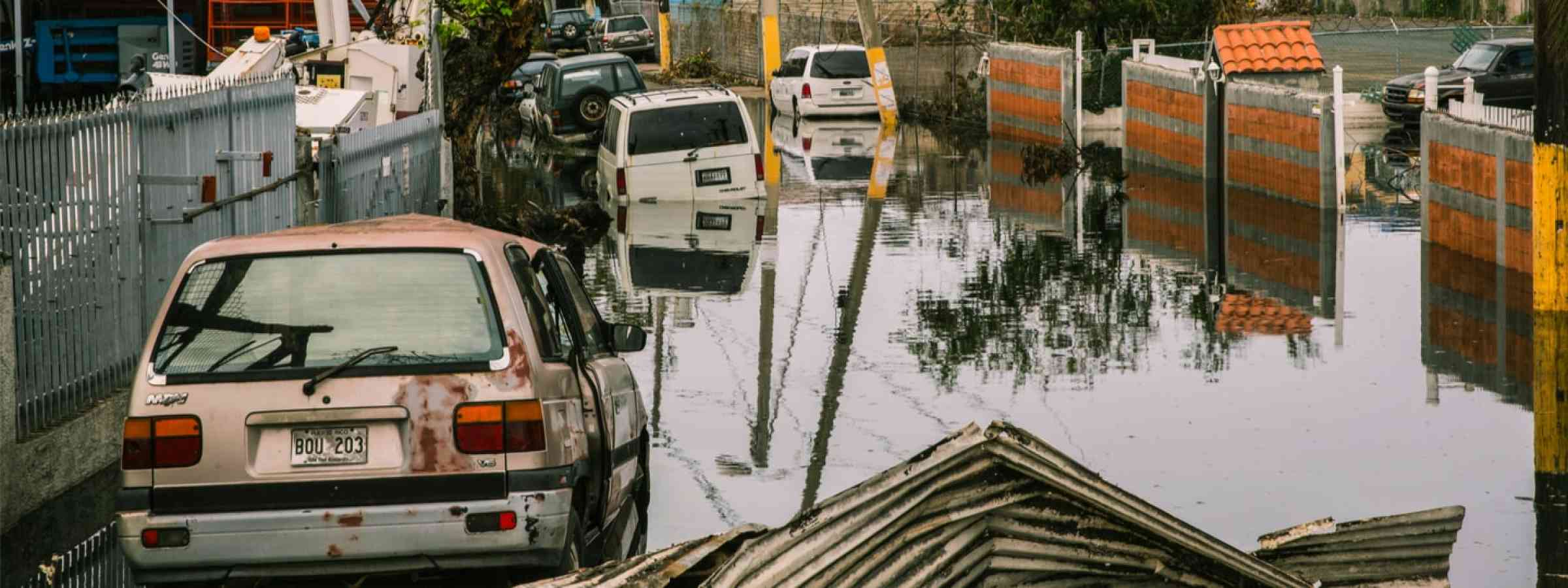
Hurricane Maria
Alessandro Pietri / Shutterstock

Introduction

Hurricane Maria, a category 4 hurricane, made landfall on the island of Puerto Rico on 20 September 2017, less than two weeks after the category 5 Hurricane Irma passed the northern part of the island. Hurricanes Irma and Maria also affected a number of neighbouring countries and territories including Anguilla, Antigua and Barbuda, the Bahamas, the British Virgin Islands, Dominica, the Dominican Republic, Guadeloupe, Haiti, St. Barts, St. Martin, Turks and Caicos Islands, the mainland United States of America and the U.S. Virgin Islands.

In Puerto Rico, Hurricane Irma killed 4 people and brought about widespread power outages and water service interruption for several days, which left at least 900,000 people without power and 50,000 without water. Hurricane Maria was subsequently one of the worst disasters in Puerto Rico’s history, killing at least 2,975 people based on the independent study conducted by George Washington University, which was commissioned by the Puerto Rican government, and partially or completely destroying approximately 166,000 residential buildings. The hurricane caused damage to already fragile infrastructure which had cascading impacts on lifeline infrastructure systems such as energy, transportation, access to health and essential services. The hurricane affected nearly every resident of Puerto Rico, but older adults, children, people living with disabilities and chronic illnesses, and women were disproportionately affected. A pre-existing decade-long economic crisis consisting of structural, demographic, health, social and infrastructure issues exacerbated the damage to the communities on the Caribbean Island.

To build back better in recovery from this devastating hurricane, the Government of Puerto Rico established the Central Office of Recovery, Reconstruction, and Resiliency (COR3) to play a central role in the recovery effort. It developed the Economic and Disaster Recovery Plan with support from federal legislation, the Federal Emergency Management Agency (FEMA) and the Homeland Security Operational Analysis Center (HSOAC). The plan was developed, aligned with existing plans such as Build Back Better Puerto Rico, the Plan for Puerto Rico, the National Disaster Recovery Framework, and the 2018 Community Development Block Grant-Disaster Recovery Action Plan. The team supporting the government to develop the plan conducted damage and needs assessment within specific sectors and across sectors. They identified more than 270 specific courses of action for recovery with an estimated cost of 139 billion USD over an 11-year period.

The Government of Puerto Rico sees the recovery not just as an opportunity to make the island more disaster resilient but also as a means to revitalize its economy, society and infrastructure, to lead Puerto Rico to be an innovative state. The core values for the recovery plan are capacity-building, resiliency, transparency, and innovation, and it includes short-term priorities to address the immense scope of needs such as the reestablishment of lifeline systems and repair or reconstruction of residential structures. It calls for long-term priorities to build resilience including revitalizing urban centers for economic recovery efforts and scaling social services; resilient health, education and infrastructure systems; and rebuilding infrastructure to meet modern codes and standards.

To assist the Government of Puerto Rico’s recovery efforts, the FEMA has been involved in a number of projects. As of December 2021, the FEMA had approved funding the projects to repair damage caused by Hurricane Maria and provide hazard mitigation measures for future disasters for more than 67 recreational plazas which are central to people’s gathering and economic activities. FEMA also provided a recovery toolkit for damaged schools, which includes federal resources and directories with technical assistance opportunities to help schools build capacities to be prepared against future disasters in the four key areas: planning and design, workforce readiness, contracting and procurement, and project review.
 

Hazards
Cyclone, Hurricane and Typhoon
Themes
Recovery Recovery planning
Country and region
Puerto Rico

Knowledge base

Items: 48
Documents and publications
2 October 2020
Assessing the cost of disaster recovery and identifying funding sources in the HSOAC Puerto Rico economic and disaster recovery plan project

This report describes the work done on estimating the costs of, and identifying potential funding sources for, Puerto Rico’s economic and disaster recovery plan.

RAND Corporation
Documents and publications
27 June 2019
USA: Emergency management: FEMA has made progress, but challenges and future risks highlight imperative for further improvements

This report was presented as a statement before the Committee on Homeland Security. It discusses, among other things, FEMA’s progress and challenges related to disaster resilience, response, recovery, and workforce management.

United States Government Accountability Office
Documents and publications
25 June 2019
Stronger power: Improving power sector resilience to natural hazards

This paper, prepared as a sectoral note for the Lifelines report on infrastructure resilience, investigates the vulnerability of the power system to natural hazards and climate change, and provides recommendations to increase its resilience.

World Bank, the
Documents and publications
Publications
13 June 2019
Disaster assistance: FEMA action needed to better support individuals who are older or have disabilities

This report addresses challenges elderlies and people with disabilities faced during three sequential hurricanes–Harvey, Irma, and Maria, and how FEMA addressed them, and the extent to which FEMA has implemented its new approach to disability integration.

United States Government Accountability Office
Documents and publications
10 May 2019
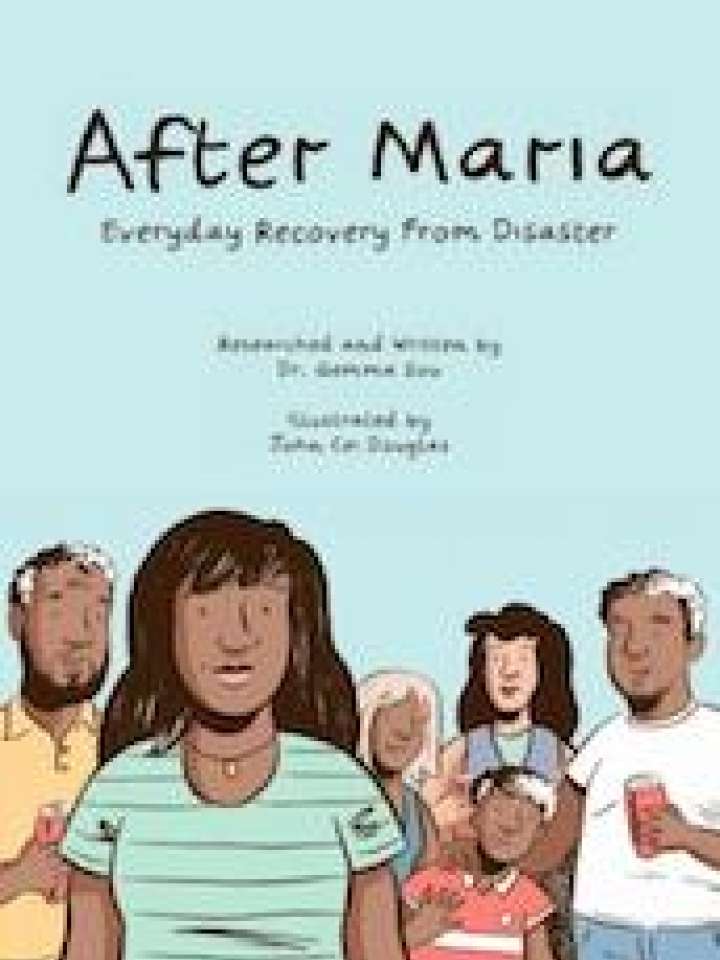
After Maria: Everyday recovery from disaster

This graphic novella provides ethical representations of developing country contexts through Natalia, the novella's protagonist, whose story is about how low-income Puerto Rican families recovered from the impacts of 2017's Hurricane Maria.

Humanitarian and Conflict Response Institute, University of Manchester
Documents and publications
12 April 2019
Historical trajectories of disaster risk in Dominica

This document analyzes the drivers of risk, using the example of Dominica, where processes set in motion during the colonial period have shaped the location of people and assets, the societal repercussions of that harm and the prospects for recovery.

International Journal of Disaster Risk Science
Documents and publications
12 March 2019
Caribbean recovery programme: Lessons learned

This paper identifies lessons learnt from the response to Hurricanes Irma and Maria. The paper recommends to improve UNDP multi-country operational response in Small Islands Developing States (SIDS) contexts.

United Nations Development Programme (UNDP)
Documents and publications
24 September 2018
The inverse response law: Theory and relevance to the aftermath of disasters

In this article, the inverse care law is outlined, its application to medical treatment following disasters considered and an explanation of the inverse response law provided.

Multidisciplinary Digital Publishing Institute
Documents and publications
18 September 2018
The weight of water on women: the long wake of Hurricane María in Puerto Rico

This research study documents the gendered impacts of Hurricane Maria on practices around water, sanitation, and hygiene (WASH) in rural Puerto Rico.

Oxfam International Secretariat
Documents and publications
DRF - Disaster Recovery Frameworks
10 September 2018
Transformation and innovation in the wake of devastation: an economic and disaster recovery plan for Puerto Rico

This economic and disaster recovery plan lays out the Government of Puerto Rico’s strategic vision and goals and provides a detailed framework for achieving them.

Government of Puerto Rico

Pagination

Showing results 31–40 on this page

  • Previous
  • 1
  • …
  • 3
  • 4
  • 5
  • Next

Is this page useful?

Yes No
Report an issue on this page

Thank you. If you have 2 minutes, we would benefit from additional feedback (link opens in a new window).

The International Recovery Platform (IRP) is a global partnership working to strengthen knowledge, and share experiences and lessons on building back better in recovery, rehabilitation, and reconstruction.

Latest IRP videos and photos: YouTube Flickr Contact IRP

Loading