PreventionWeb
Navigation loading…

Navigation failed to load. If you are on the UNDRR office network, your browser may be blocking access to external resources. Learn how to allow access.

Menu
Last updated 17 Dec 2025

Recovery Collection: Puerto Rico: Hurricane Maria 2017
Image
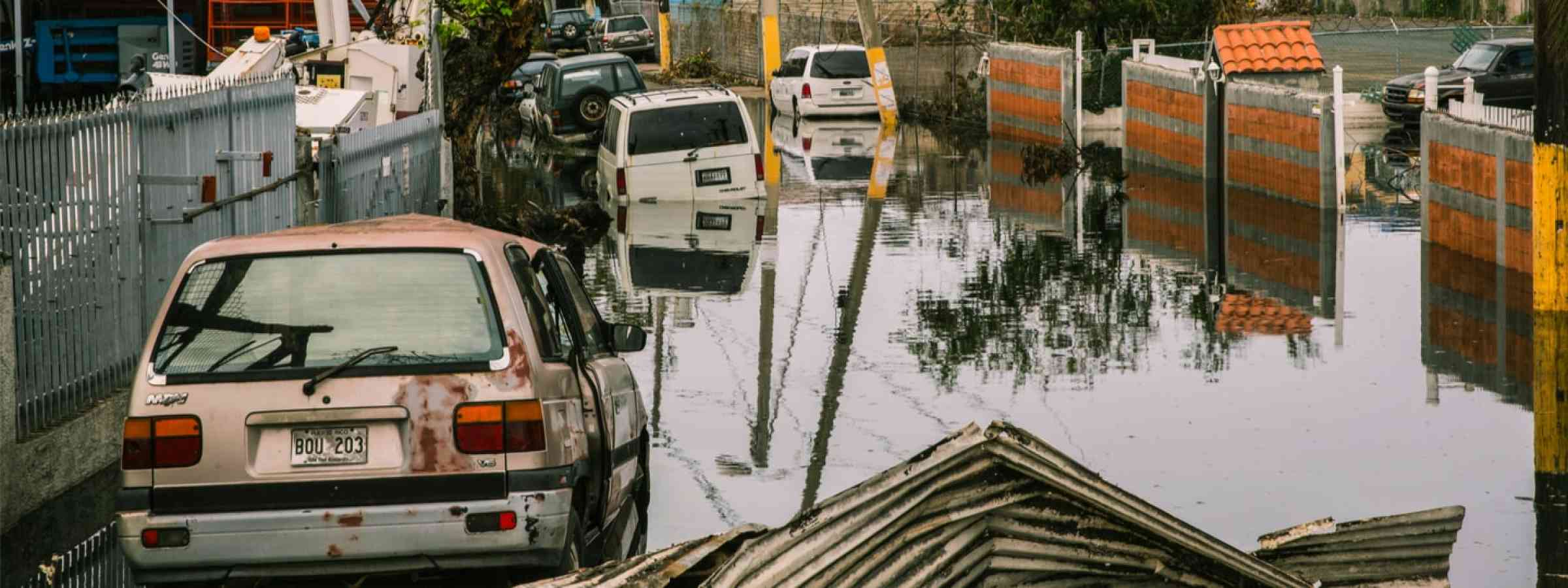
Hurricane Maria
Alessandro Pietri / Shutterstock

Introduction

Hurricane Maria, a category 4 hurricane, made landfall on the island of Puerto Rico on 20 September 2017, less than two weeks after the category 5 Hurricane Irma passed the northern part of the island. Hurricanes Irma and Maria also affected a number of neighbouring countries and territories including Anguilla, Antigua and Barbuda, the Bahamas, the British Virgin Islands, Dominica, the Dominican Republic, Guadeloupe, Haiti, St. Barts, St. Martin, Turks and Caicos Islands, the mainland United States of America and the U.S. Virgin Islands.

In Puerto Rico, Hurricane Irma killed 4 people and brought about widespread power outages and water service interruption for several days, which left at least 900,000 people without power and 50,000 without water. Hurricane Maria was subsequently one of the worst disasters in Puerto Rico’s history, killing at least 2,975 people based on the independent study conducted by George Washington University, which was commissioned by the Puerto Rican government, and partially or completely destroying approximately 166,000 residential buildings. The hurricane caused damage to already fragile infrastructure which had cascading impacts on lifeline infrastructure systems such as energy, transportation, access to health and essential services. The hurricane affected nearly every resident of Puerto Rico, but older adults, children, people living with disabilities and chronic illnesses, and women were disproportionately affected. A pre-existing decade-long economic crisis consisting of structural, demographic, health, social and infrastructure issues exacerbated the damage to the communities on the Caribbean Island.

To build back better in recovery from this devastating hurricane, the Government of Puerto Rico established the Central Office of Recovery, Reconstruction, and Resiliency (COR3) to play a central role in the recovery effort. It developed the Economic and Disaster Recovery Plan with support from federal legislation, the Federal Emergency Management Agency (FEMA) and the Homeland Security Operational Analysis Center (HSOAC). The plan was developed, aligned with existing plans such as Build Back Better Puerto Rico, the Plan for Puerto Rico, the National Disaster Recovery Framework, and the 2018 Community Development Block Grant-Disaster Recovery Action Plan. The team supporting the government to develop the plan conducted damage and needs assessment within specific sectors and across sectors. They identified more than 270 specific courses of action for recovery with an estimated cost of 139 billion USD over an 11-year period.

The Government of Puerto Rico sees the recovery not just as an opportunity to make the island more disaster resilient but also as a means to revitalize its economy, society and infrastructure, to lead Puerto Rico to be an innovative state. The core values for the recovery plan are capacity-building, resiliency, transparency, and innovation, and it includes short-term priorities to address the immense scope of needs such as the reestablishment of lifeline systems and repair or reconstruction of residential structures. It calls for long-term priorities to build resilience including revitalizing urban centers for economic recovery efforts and scaling social services; resilient health, education and infrastructure systems; and rebuilding infrastructure to meet modern codes and standards.

To assist the Government of Puerto Rico’s recovery efforts, the FEMA has been involved in a number of projects. As of December 2021, the FEMA had approved funding the projects to repair damage caused by Hurricane Maria and provide hazard mitigation measures for future disasters for more than 67 recreational plazas which are central to people’s gathering and economic activities. FEMA also provided a recovery toolkit for damaged schools, which includes federal resources and directories with technical assistance opportunities to help schools build capacities to be prepared against future disasters in the four key areas: planning and design, workforce readiness, contracting and procurement, and project review.
 

Hazards
Cyclone, Hurricane and Typhoon
Themes
Recovery Recovery planning
Country and region
Puerto Rico

Knowledge base

Items: 48
Learning from Hurricane Maria's Impacts on Puerto Rico
Documents and publications
Publications
11 November 2021
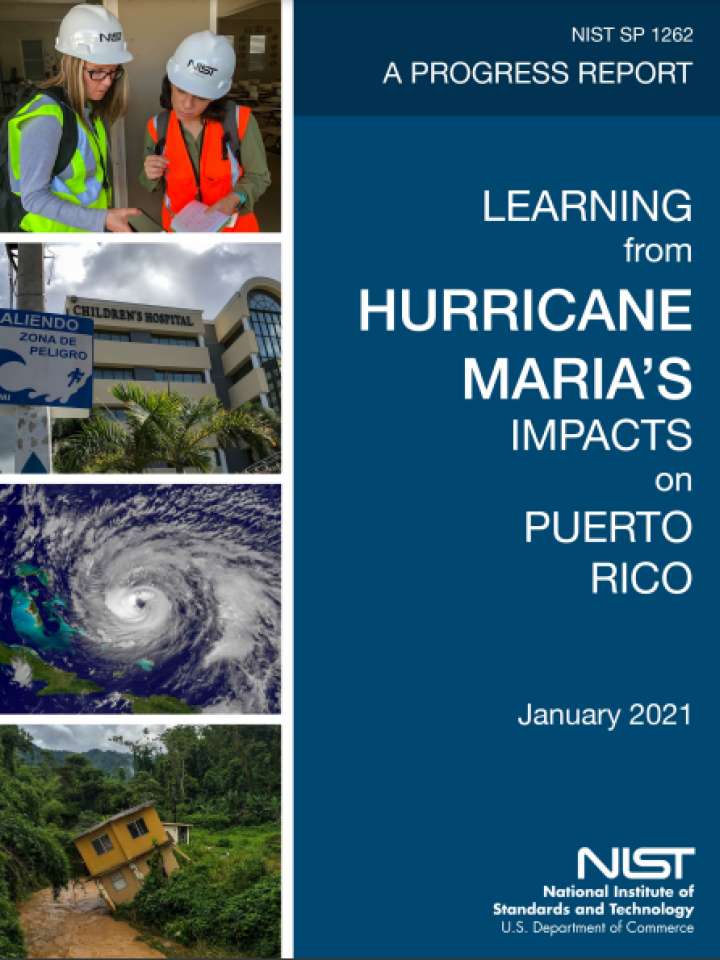
Learning from Hurricane Maria’s impacts on Puerto Rico: a progress report

This report explains in detail the rationale for launching the multi-year effort to study how critical buildings performed during the 2017 Hurricane Maria, as well as how emergency communications systems worked beside the summary of progress to date.

National Institute of Standards and Technology
Department of Commerce
Cover page for publication with title
Documents and publications
4 August 2021
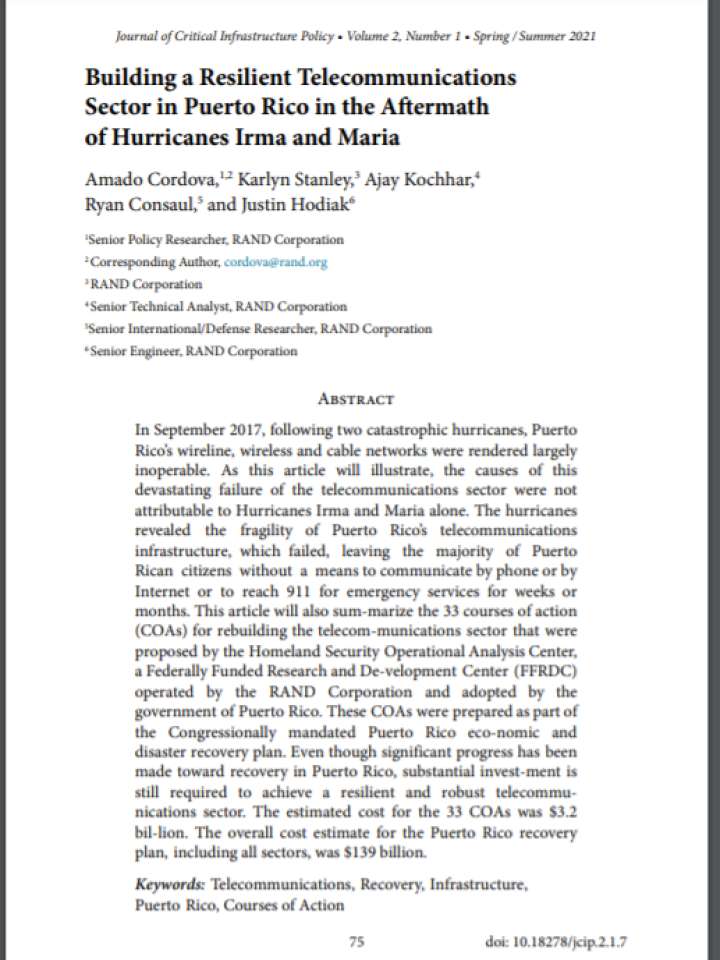
Building a resilient telecommunications sector in Puerto Rico in the aftermath of Hurricanes Irma and Maria

This article will summarize 33 courses of action for rebuilding the telecommunications sector proposed by the Homeland Security Operational Analysis Center, a Federally Funded Research and Development Center and adopted by the government of Puerto Rico.

RAND Corporation
Documents and publications
PDNA - Post Disaster Needs Assessments
16 October 2020
After hurricane Maria predisaster conditions, hurricane damage, and recovery needs in Puerto Rico

This report summarizes a comprehensive assessment of the commonwealth’s challenges and the damage caused by the 2017 hurricanes to support development of Puerto Rico’s short- and long-term recovery and resilience plan,

RAND Corporation
Documents and publications
16 October 2020
Developing recovery options for Puerto Rico's economic and disaster recovery plan: Process and methodology

This report summarizes the strategic planning process in support of the government of Puerto Rico in its development of a congressionally mandated recovery plan.

RAND Corporation
Documents and publications
12 October 2020
Recovery plan for the communications and information technology sector after hurricanes Irma and Maria : Laying the foundation for the digital transformation of Puerto Rico

This report contributes to the overall plan with a focus on the communications and information technology (IT) sector in Puerto Rico after the devastating 2017 hurricane season.

RAND Corporation
Documents and publications
12 October 2020
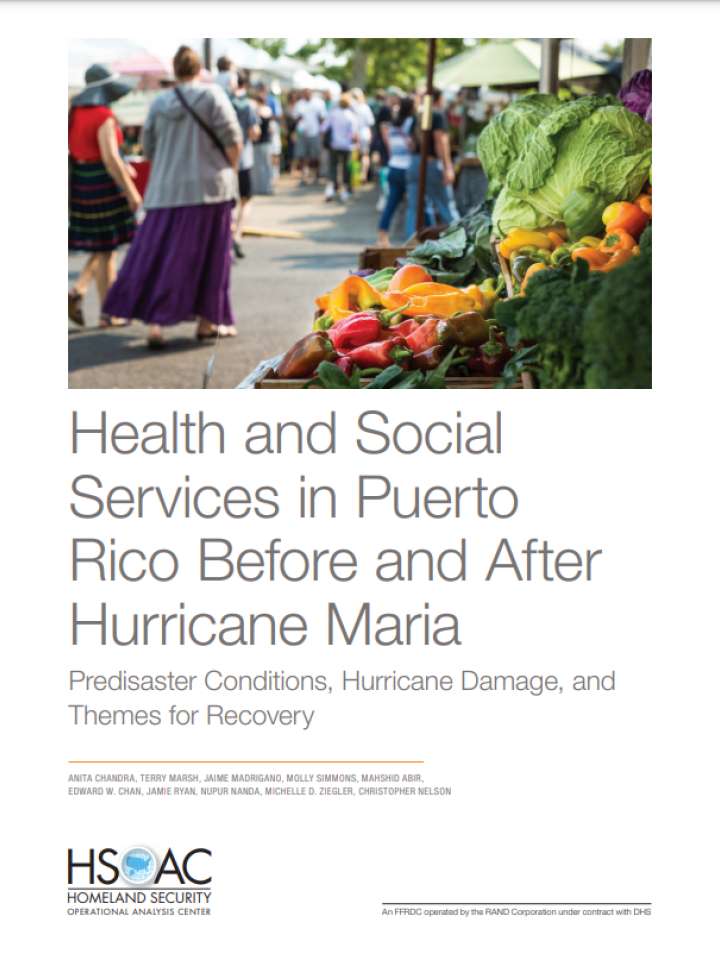
Health and social services in Puerto Rico before and after hurricane Maria: Predisaster conditions, hurricane damage, and themes for recovery

HSOAC research provided the foundation for the 31 courses of action in the recovery plan addressing the health and social services sector. These actions are a mix of social, governmental, fiscal, and economic policies and reforms

RAND Corporation
Documents and publications
12 October 2020
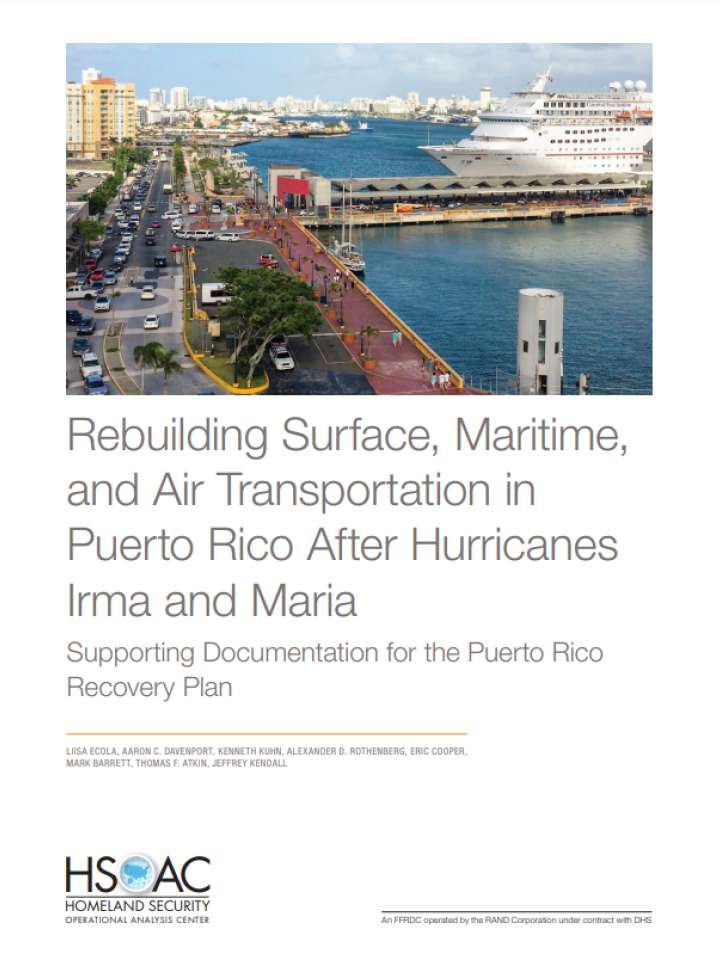
Rebuilding surface, maritime, and air transportation in Puerto Rico after hurricanes Irma and Maria: supporting documentation for the Puerto Rico recovery plan

This report provides a comprehensive evaluation of the transportation sector before and after Hurricanes Irma and Maria devastated Puerto Rico in September 2017.

RAND Corporation
Documents and publications
12 October 2020
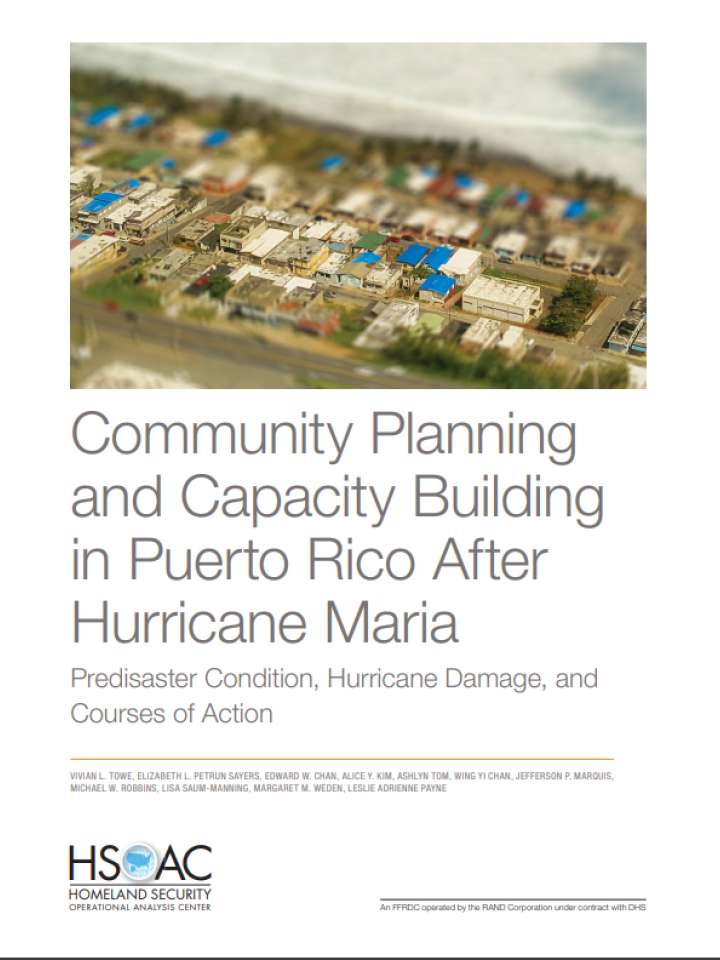
Community planning and capacity building in Puerto Rico after hurricane Maria : Predisaster conditions, hurricane damage, and courses of action

The authors describe the status of Puerto Rico's communities in terms of population characteristics and dynamics, community and individual preparedness, and economic pressures leading up to the landfalls of the hurricanes.

RAND Corporation
Documents and publications
2 October 2020
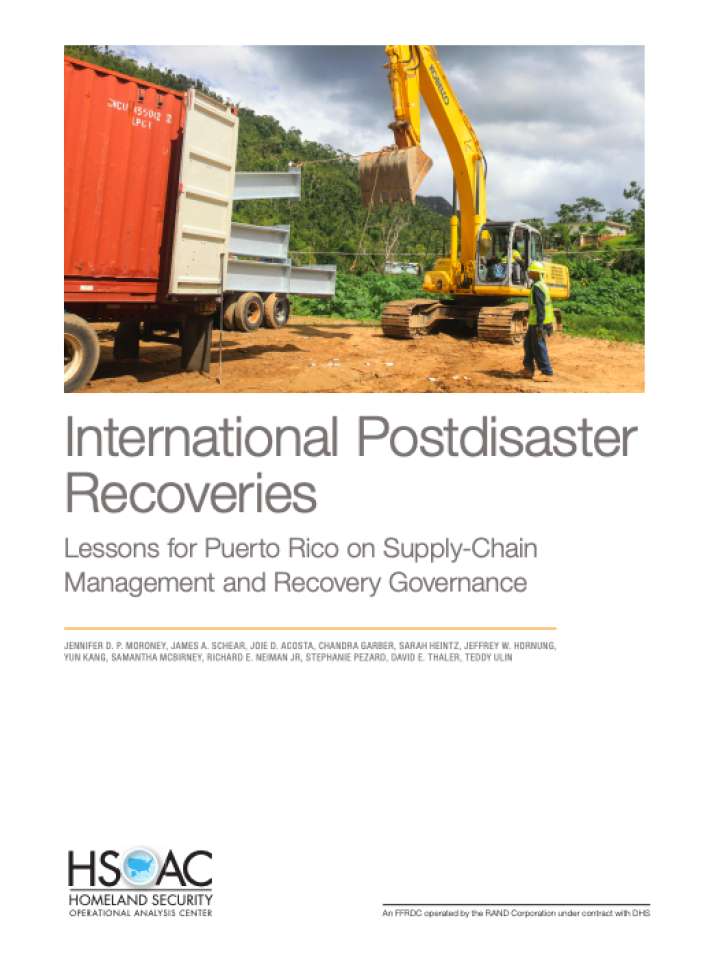
International postdisaster recoveries lessons for Puerto Rico on supply-chain management and recovery governance

As Puerto Rico recovers from Hurricanes Irma and Maria, effective supply-chain management and recovery governance will be vitally important to a successful outcome.

RAND Corporation
Documents and publications
2 October 2020
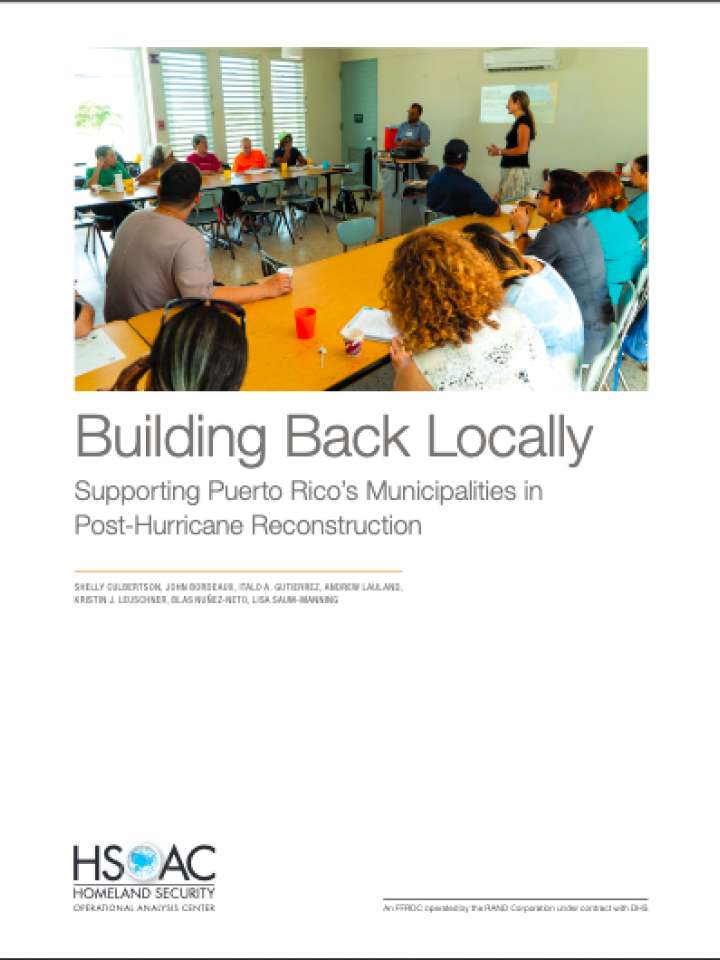
Building back locally : Supporting Puerto Rico's municipalities in post-hurricane reconstruction

Drawing on best-practice frameworks, available data, interviews with FEMA and COR3, and case studies, the authors analyze Puerto Rican municipalities' capacity and needs in four key areas: strategy, management, operations, and finance and administration.

RAND Corporation

Pagination

Showing results 21–30 on this page

  • Previous
  • 1
  • 2
  • 3
  • 4
  • Next

Is this page useful?

Yes No
Report an issue on this page

Thank you. If you have 2 minutes, we would benefit from additional feedback (link opens in a new window).

The International Recovery Platform (IRP) is a global partnership working to strengthen knowledge, and share experiences and lessons on building back better in recovery, rehabilitation, and reconstruction.

Latest IRP videos and photos: YouTube Flickr Contact IRP

Loading