This study aimed to statistically examine how the content and channels influence the activities of households in developing country rural communities to recover from disasters.
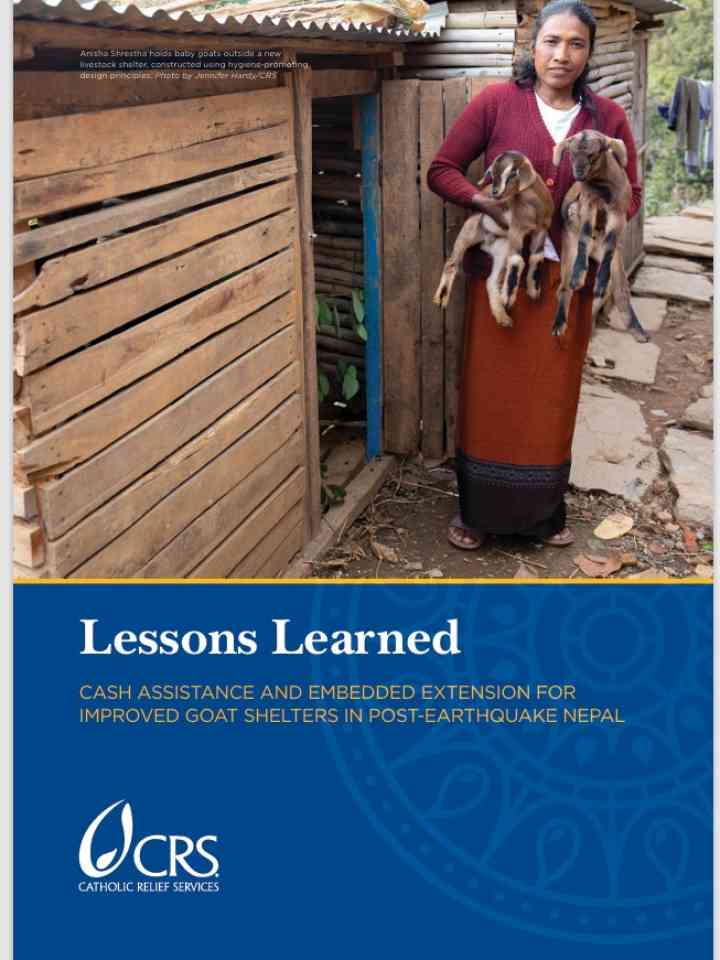
In this learning brief, it reports how CRS worked with affected families through a cash transfer program that rebuilt goat shelters to improve the animals' health and the owners' incomes.
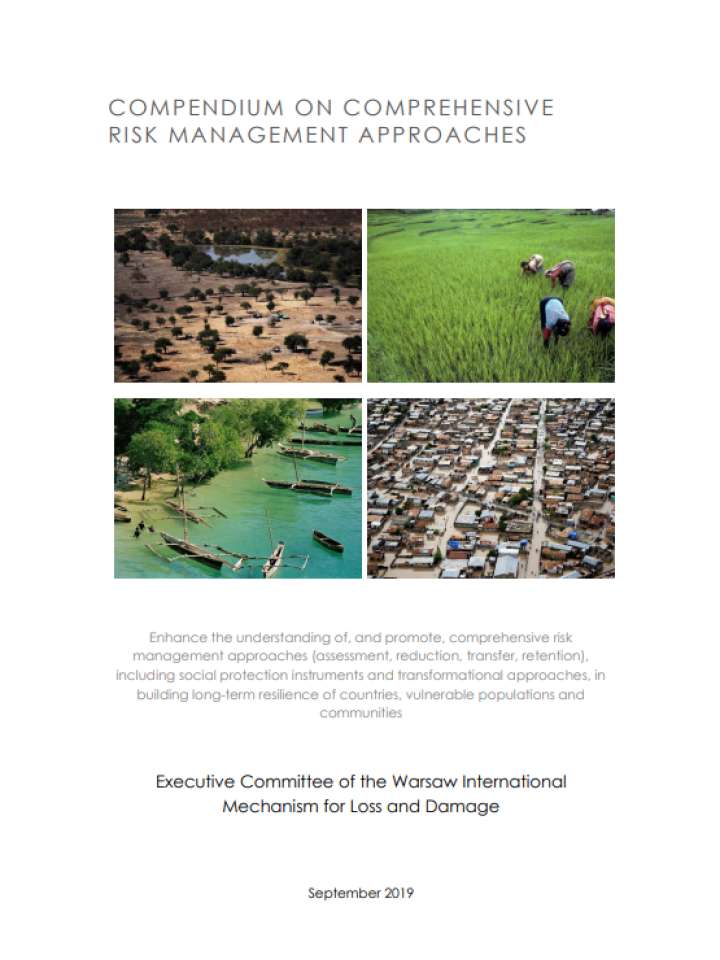
This compendium contains a collection of good practices and lessons learned about comprehensive risk management approaches, taking into account the specific needs of developing countries particularly vulnerable to the adverse effects of climate change.
Warsaw International Mechanism for Loss and Damage
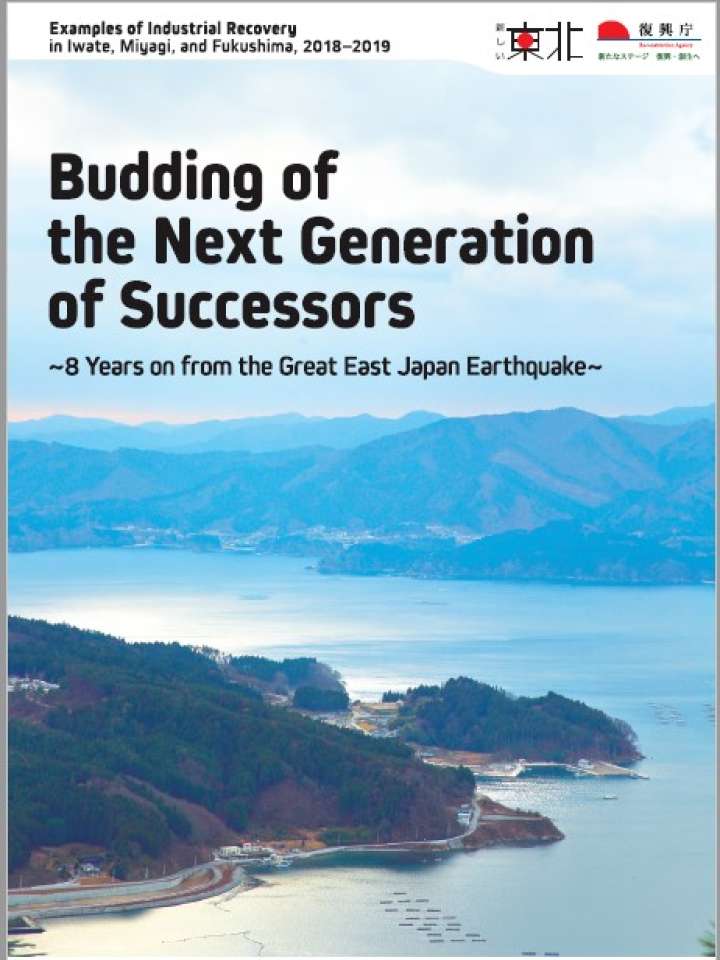
This book was compiled by the Reconstruction Agency to introduce the various "challenges" of companies and organizations in the three prefectures of Iwate, Miyagi, and Fukushima toward industrial reconstruction after the Great East Japan Earthquake.
The village/town-university collaboration provides the Sendai Framework for Disaster Risk Reduction with a model for developing a multi-disciplinary and multi-hazard approach to public DRR policy during the recovery phase of a nuclear accident.
United Nations Office for Disaster Risk Reduction (UNDRR)
Recent Kerala floods could prove the potential of social media as a significant and accessible tool to get information across quickly to reach out to a large group of people.
International Journal of Innovative Technology and Exploring Engineering
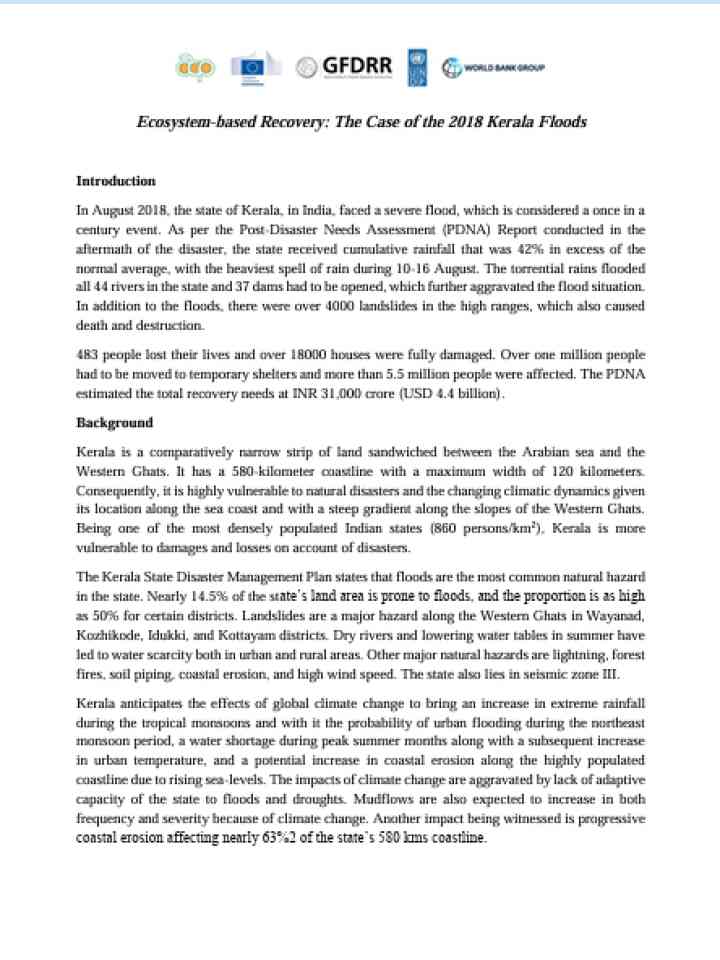
The 2018 Kerala floods highlighted the need for ecosystem-based recovery, risk-informed land use planning, inclusive disaster response, and leveraging youth and technology to build resilience against future climate-induced hazards.
World Bank, the
Global Facility for Disaster Reduction and Recovery, the (GFDRR)
European Union
United Nations Office for Disaster Risk Reduction (UNDRR)