Navigation failed to load. If you are on the UNDRR office network, your browser may be blocking access to external resources. Learn how to allow access.
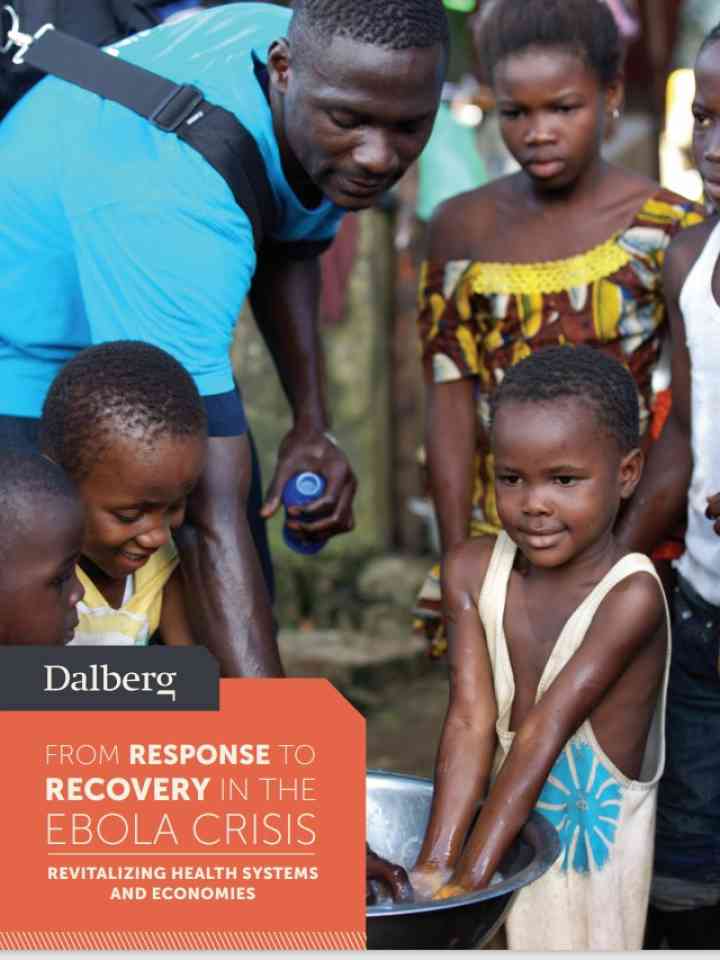
This report explores specific ways to seize this opportunity for change. We examine what has worked to mitigate Ebola's spread and why, with an eye towards enabling permanent solutions to take root from emergency measures.
Southasiadisasters.net issue no. 126, February 2015:
This issue focuses on the theme of Managing Risk and Building Resilience in Humanitarian Action in India. This issue's contents includes: (i) Community Based Disaster Management of WOTR; (ii) Role of
This World Bank brochure, published ahead of the Third UN World Disaster Risk Reduction Conference, presents an overview of global DRR policy development and the World Bank's strategy in the field. In the brochure the case is made for increased investment
World Bank, the
Global Facility for Disaster Reduction and Recovery, the (GFDRR)
This report addresses the subject of nuclear disasters. It elaborates on the Fukushima Nuclear Disaster intending to answer question such as: What have been the impacts of the Fukushima nuclear disaster?; What is the current condition of the victims of
This Rapid Damage and Impact Assessment was prepared following the devastating impacts of Tropical Storm Erika on August 27, 2015, to provide the Dominican government with a quantitative basis to design and build a comprehensive recovery strategy.
Organization of the African, Caribbean and Pacific Group of States
Global Facility for Disaster Reduction and Recovery, the (GFDRR)
This document outlines Japan's cooperation for disaster risk reduction (DRR) from 2015 to 2018, through a triple approach combining: (i) non-material assistance, such as human resource development and institutional development, (ii) material assistance
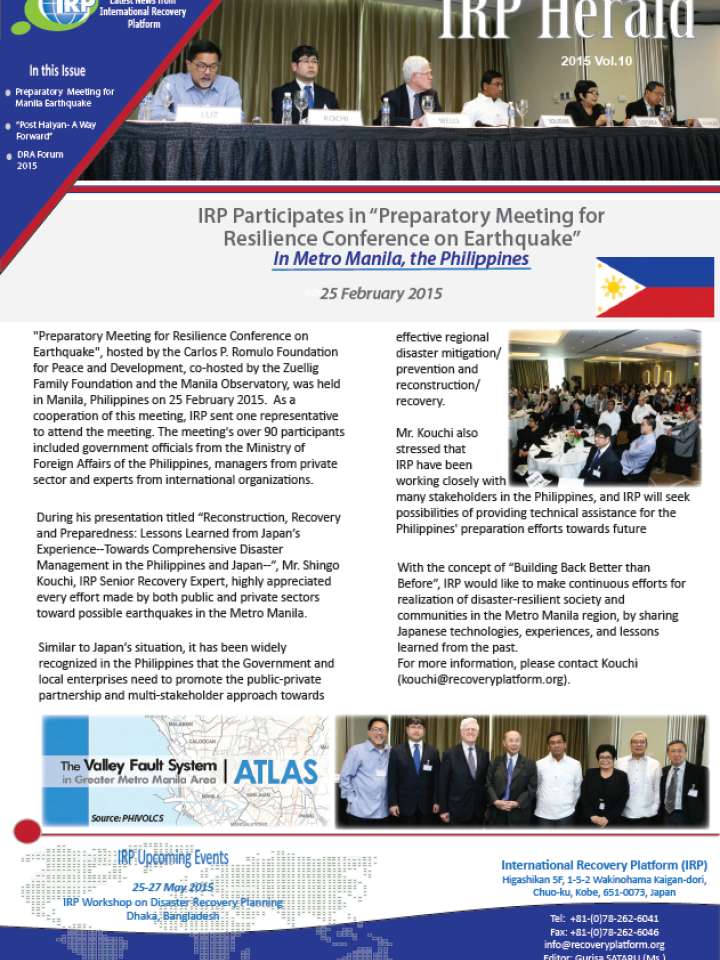
IRP Herald Volume 10 is the knowledge report for the Preparatory Meeting for Resilience Conference on Earthquake, and the ASEM Manila Conference on Disaster Risk Reduction and Management.