This policy aims to guide government objectives and strategies in order to guarantee the security and safety of Timor-Leste's citizens and their property and to safeguard its natural resources against natural or human-induced disasters.
This paper begins by reviewing pre-disaster restoration concepts, then focus on Tokyo as an example of municipalities introducing pre-disaster restoration and includes remarks on projected pre-disaster restoration.
This guide first lays out the relevant building codes in force in Colombia for small and medium scale construction projects. Subsequent sections discuss factors affecting earthquake vulnerability of masonry structures and mitigation strategies, factors in
Drawing "mental maps" of their former home and life spaces can have long-lasting benefits, especially for children. Not only is it a therapeutic activity for them related to the recent pains, but it is also about overcoming the losses of home space and
In this document, NDMA emphasises the contingency process as a preparedness measure for response to natural hazards. Following contingency planning for winter hazards, this exercise focuses on planning for the oncoming monsoon season to identify and
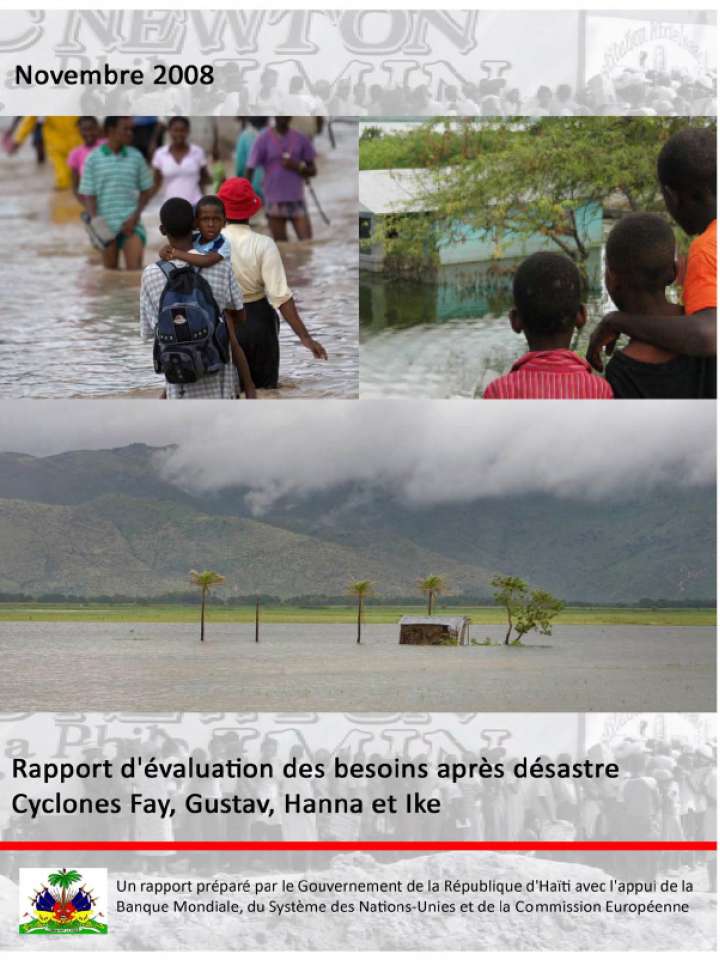
This Post Disaster Needs Assessment estimates the total damages and identifies immediate needs for rehabilitation and reconstruction in Haiti following the 2008 storms Gustav, Hanna, Ike and Fay.
Haiti - government
Global Facility for Disaster Reduction and Recovery, the (GFDRR)
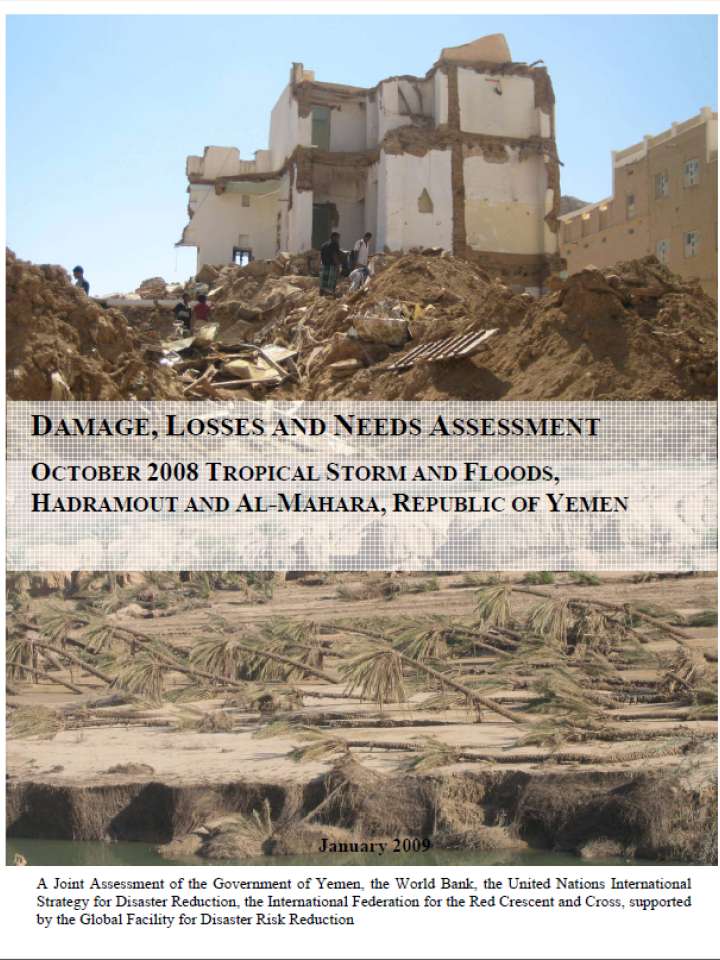
This report presents an estimation of the main effects of the disaster: the value of physical assets totally or partially destroyed; losses in economic flows from the absence of those assets; and the impact on economic development and social conditions.
Yemen - government
World Bank, the
Global Facility for Disaster Reduction and Recovery, the (GFDRR)
United Nations Office for Disaster Risk Reduction (UNDRR)
International Federation of Red Cross and Red Crescent Societies (IFRC)