This article reports on a decade of research undertaken by the author on the role of schools in disaster response and recovery across four different disaster types in five countries in the Asia-Pacific region.
International Journal of Disaster Risk Reduction (Elsevier)
This study empirically analyzes the effectiveness of the Caribbean Catastrophe Risk Insurance Facility (CCRIF) regarding the reduction of short-term fiscal effects.
Economics of Disasters and Climate Change (Springer)
This brief is based on an evidence gap map of interventions that aim to strengthen resilience against shocks, stressors, and recurring crises in low-and middle-income countries. This map was commissioned by USAID’s Bureau for Resilience and Food Security.
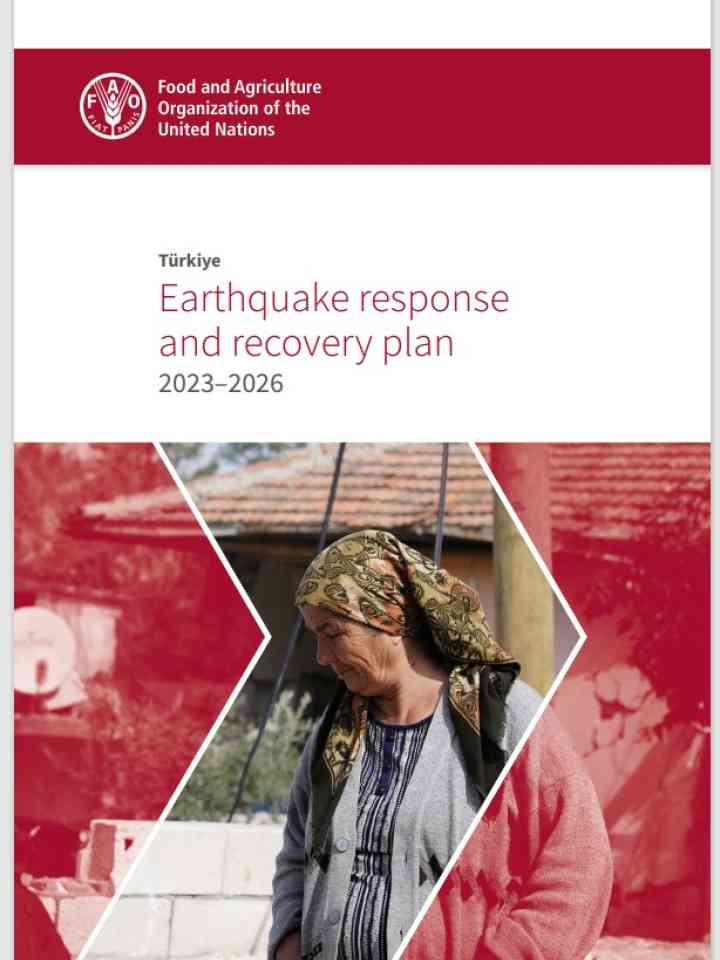
This document has been developed in partnership with the Government of Türkiye to address the devastating impact of the February 2023 earthquakes on the agriculture and rural sectors.
Food and Agriculture Organization of the United Nations (FAO)
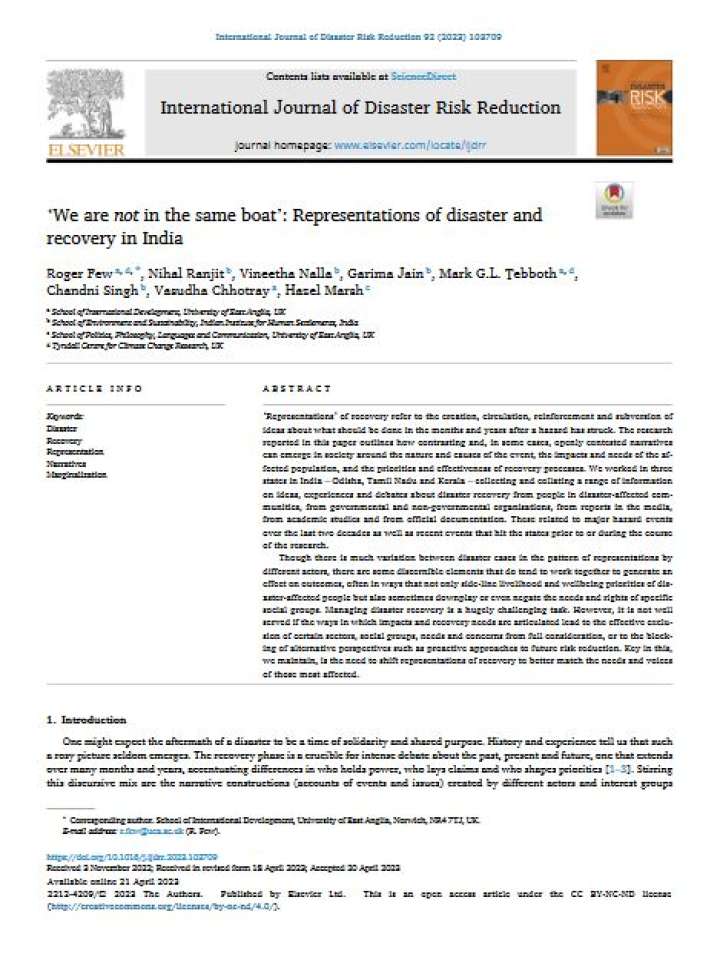
The research reported in this paper outlines how contrasting and, in some cases, openly contested narratives can emerge in society around the nature and causes of the event, the impacts and needs of the affected population.
International Journal of Disaster Risk Reduction (Elsevier)
In this working paper, researchers propose creating a global fund to pool climate and other debt relief funds from the World Bank and International Monetary Fund (IMF) to cover insurance premiums for low-income countries.
International Institute for Environment and Development (IIED)
In making decisions about reconstruction, the Ukrainian will face trade-offs regarding timelines, prioritization of efforts, leadership, and funding. This report aims to advance the understanding of these trade-offs and their ramifications.
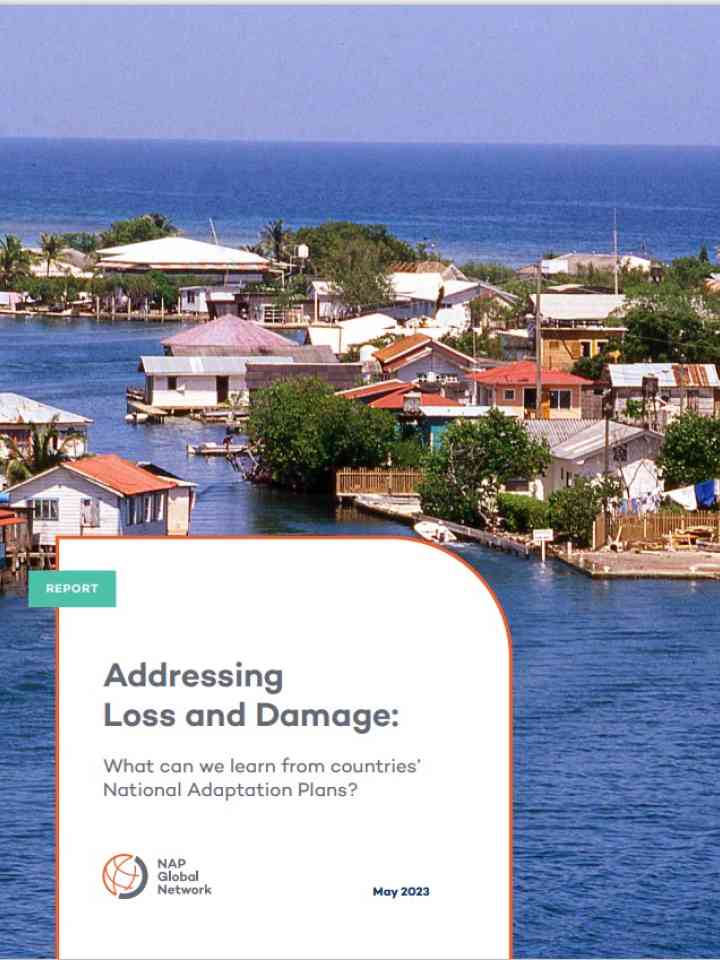
Through a systematic review of NAP documents and interviews with key informants, this report showcases the role of NAP processes in minimizing and addressing loss and damage.