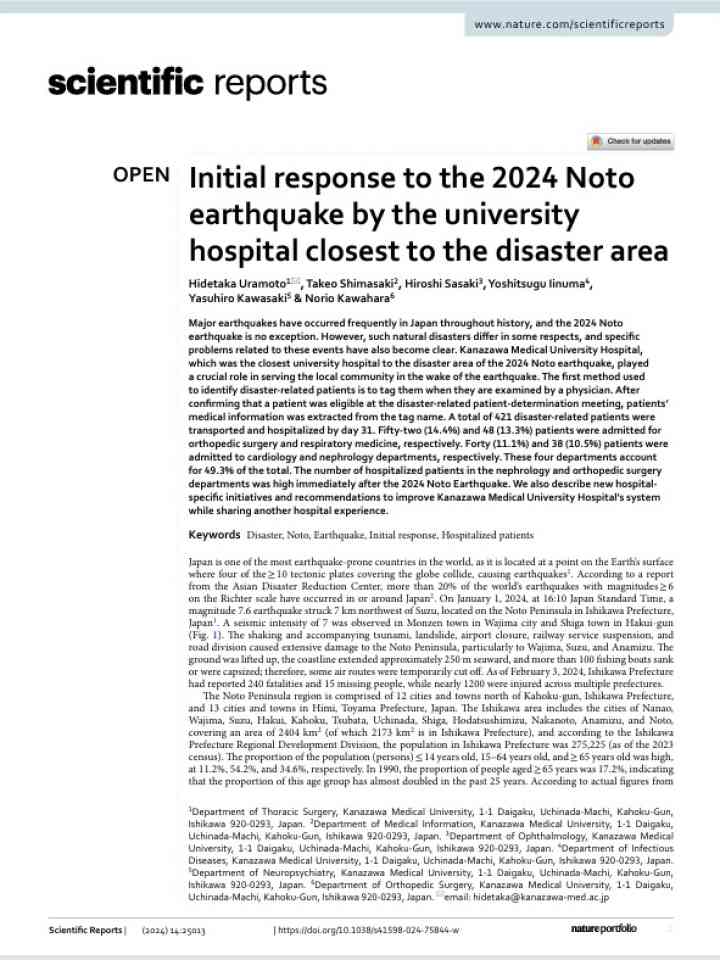
This report describes new hospital-specific initiatives and recommendations to improve Kanazawa Medical University Hospital's system, which was the closest university hospital to the disaster area of the 2024 Noto earthquake.
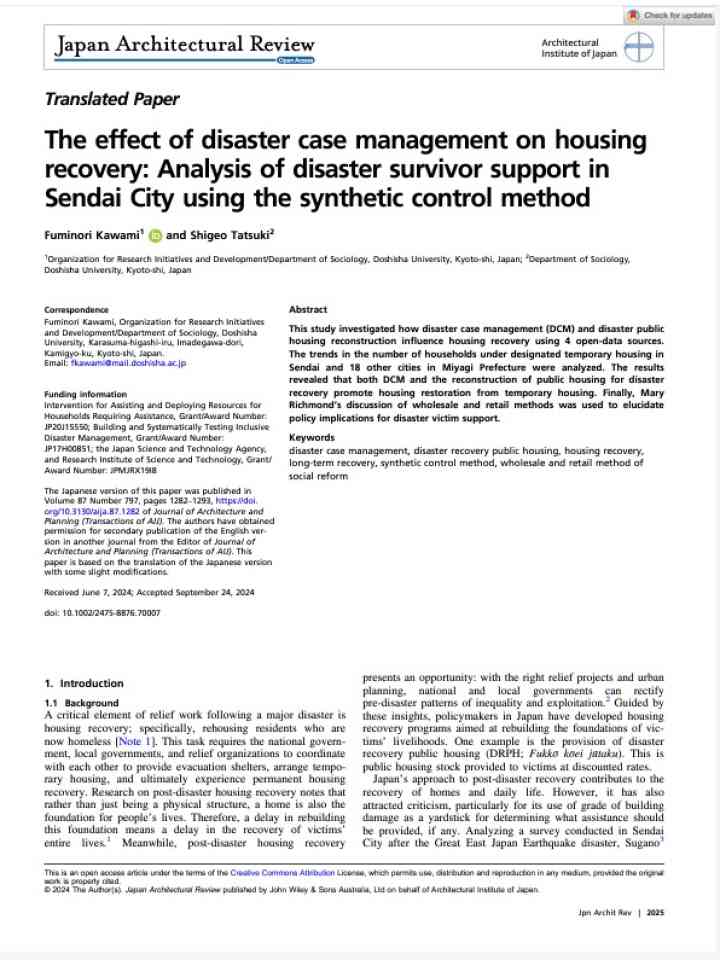
This study investigated how disaster case management (DCM) and disaster public housing reconstruction influence housing recovery using 4 open-data sources.
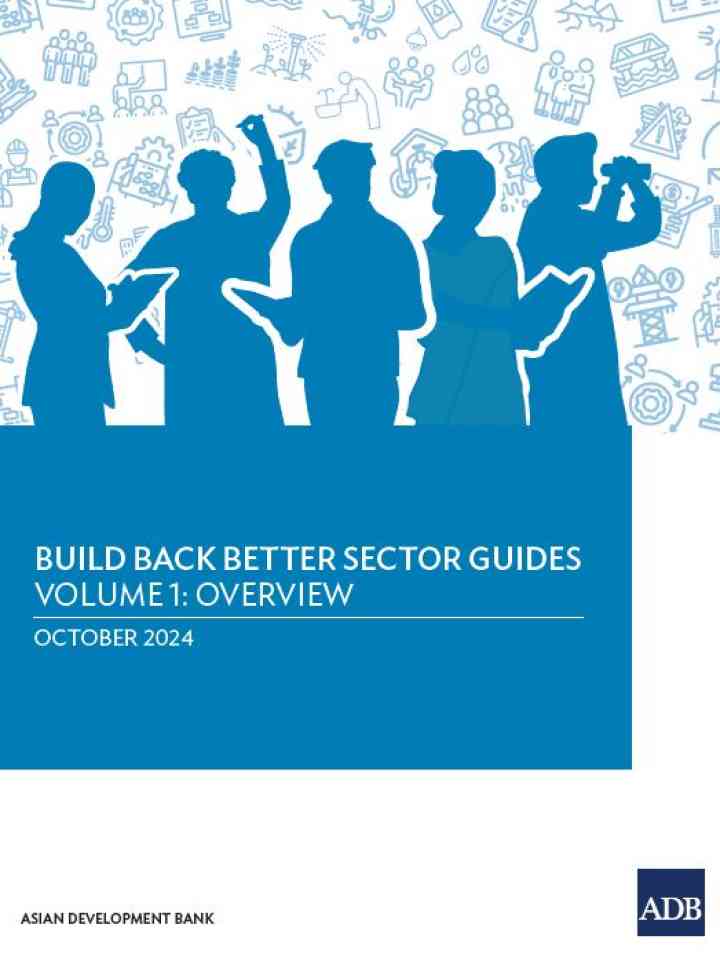
The Build Back Better Sector Guides provide practical resources to support clients, partners, and staff of the Asian Development Bank to enhance the climate and disaster resilience of communities, infrastructure and systems.
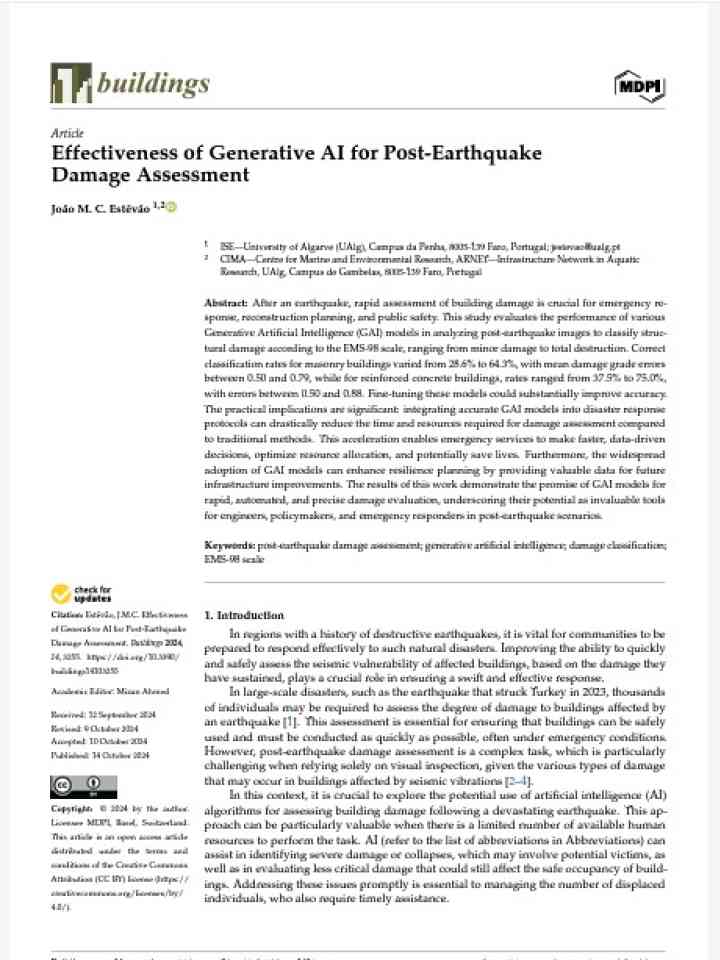
This study evaluates the performance of various Generative Artificial Intelligence (GAI) models in analyzing post-earthquake images to classify structural damage according to the EMS-98 scale, ranging from minor damage to total destruction.
This case series aimed to summarize the secondary problems and mortality risks in patients involved in relocation after disasters after Fukushima nuclear accident.
The 2023 report highlights severe disaster losses in China and Asia, as well as rising heat risks in South Asia and Africa. It calls for global collaboration, better early warning systems, resilient infrastructure, and sustainable planning.
Academy of Disaster Reduction and Emergency Management
International Federation of Red Cross and Red Crescent Societies (IFRC)
The State of Pre-arranged Financing for Disasters 2024 is a unique source of data and analysis on the level of effort of international development donors to support a shift towards arranging financing for disasters, before shocks happen.
This systematic review explored the psychosocial impacts of post-disaster compensation processes, including compensation sought through both litigation and government assistance programmes.