PreventionWeb
Menu

International Federation of Red Cross and Red Crescent Societies (IFRC)

IFRC
Switzerland
Non Governmental Organizations

Mission

IFRC is the world's largest humanitarian organization, providing assistance without discrimination as to nationality, race, religious beliefs, class or political opinions. Its mission is to improve the lives of vulnerable people by mobilizing the power of humanity. Often, these are victims of natural disasters, poverty brought about by socio-economic crises, refugees, and victims of health emergencies.


DRR activities

Disaster Reduction Goal

The sharp increase in the number of natural disasters worldwide in recent years has prompted IFRC to devote more attention to disaster preparedness activities. These aim to make National Societies and communities more aware of the risks they face, how to reduce their vulnerability, and how to cope when disaster strikes.

Making Cities Resilient Campaign Activities

IFRC is using a Vulnerability and Capacity Assessment Tool in rural areas, which will be extended to urban areas in the future as recommended in essential number 3 of the campaign. IFRC promotes cooperation between Red Cross societies and municipalities expanding the 10 Essentials message from the campaign.
Show more
Latest additions
Items: 57
Publication
Published on
16 October 2014
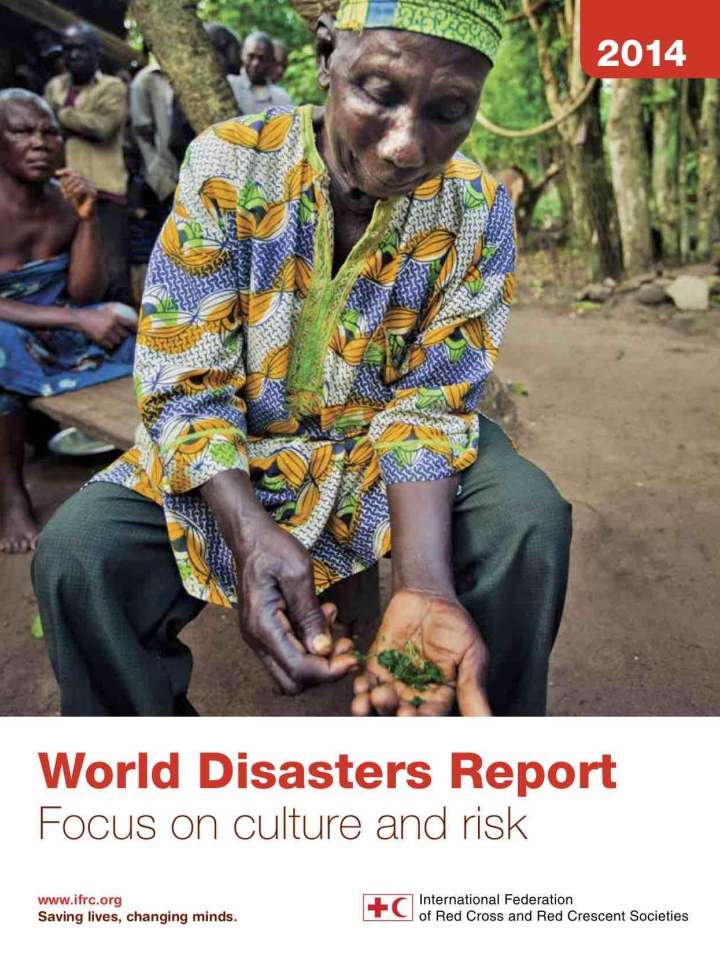
World disasters report 2014: focus on culture and risk
This year’s World Disasters Report focuses on culture and risk. It explores the different ways in which culture affects disaster risk reduction and climate change adaptation and how disasters and risk influence culture.
Publication
Published on
17 August 2014
Key determinants of a successful CBDRR programme: community based disaster risk reduction study
This report draws on the experience of the Tsunami Recovery Programme (TRP), Community Based Disaster Risk Reduction (CBDRR) programmes and current literature in order to identify ‘the key determinants of a successful CBDRR project, including iden
Publication
Published on
28 September 2013
Sustainable reconstruction in urban areas
This handbook seeks to unpack the problems that many organizations are confronted with, while providing step-by-step guidance on how to design and implement housing reconstruction programmes in cities. It describes the specific dimensions of reconstruction and rehousing strategies, providing context-based options that have proven successful in recent disasters. It also incorporates risk-reduction measures within reconstruction methodology in order to prepare for any future disaster.
Training event
In person
03 December 2013 - 07 December 2013
Sanremo
International course on law and legal protection in natural disasters
The Brookings-LSE Project on Internal Displacement, the IFRC and the Office of United Nations High Commissioner for Refugees (UNHCR) are pleased to announce the International Course on Law and Legal Protection in Natural Disasters.
Publication
Published on
8 November 2012
Understanding community resilience and program factors that strengthen them
This study documents IFRC’s response and recovery operation in the aftermath of the 2004 Indian Ocean tsunami. Over 4.8 million people benefited from a wide range of Red Cross Red Crescent support that included reconstruction of physical infrastructure such as homes, schools and health facilities as well as long-term recovery and disaster risk reduction programming. It reflects the scale of what is recorded as the deadliest tsunami in history – one that swept through coastal areas of Indonesia, Sri Lanka, the Maldives, Thailand, and ten other Indian Ocean countries.
Publication
Published on
30 April 2012
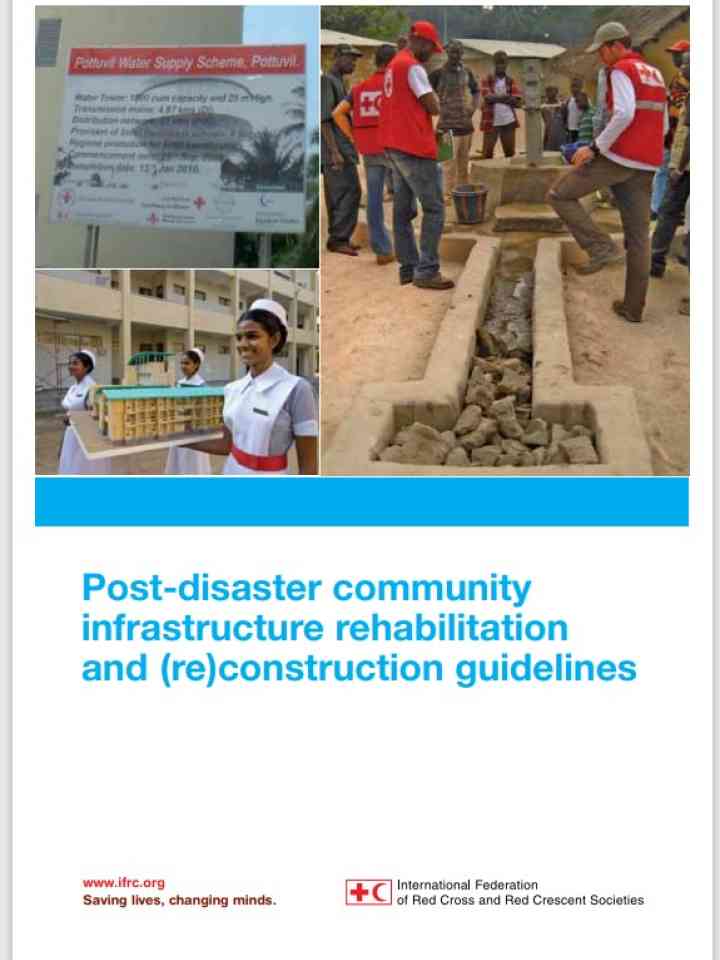
Post-Disaster Community Infrastructure Rehabilitation and Reconstruction Guidelines
The aim of these guidelines is to promote a change in the approach to community infrastructure, informed by emerging practices, capitalizing on the experiences and expertise in response to the 2004 Indian Ocean tsunami, and other recent events.
Publication
Published on
11 April 2012
Earthquakes: guidelines on preparing, responding and recovering
This document was developed based on reviews of preparedness measures in areas at risk of earthquakes and reviews and evaluations of response and recovery operations following recent earthquakes.
Publication
Published on
29 March 2012
IFRC Recovery programming guidance 2012
These guidelines help to describe the main elements of a recovery programming approach required to deliver high-quality, timely and accountable humanitarian assistance.

Pagination

  • Previous page ‹ Previous
  • Page 1
  • Page 2
  • Page 3
  • Current page 4
  • Page 5
  • Page 6
  • Page 7
  • Page 8
  • Next page Next ›

More content for this organization may be available on PreventionWeb or on the site search.

Voluntary Commitments

The organization has no registered commitments.

The Sendai Framework Voluntary Commitments (SFVC) online platform allows stakeholders to inform the public about their work on DRR. The SFVC online platform is a useful toolto know who is doing what and where for the implementation of the Sendai Framework, which could foster potential collaboration among stakeholders. All stakeholders (private sector, civil society organizations, academia, media, local governments, etc.) working on DRR can submit their commitments and report on their progress and deliverables.

Contact information

http://www.ifrc.org
[email protected]
+41 227304222
Fax:
+41 227330395

Is this page useful?

Yes No
Report an issue on this page

Thank you. If you have 2 minutes, we would benefit from additional feedback (link opens in a new window).

The International Recovery Platform (IRP) is a global partnership working to strengthen knowledge, and share experiences and lessons on building back better in recovery, rehabilitation, and reconstruction.

Latest IRP videos and photos: YouTube Flickr Contact IRP

Loading