United Nations Entity for Gender Equality and the Empowerment of Women (UN WOMEN)
Mission
Placing women’s rights at the centre of all its efforts, UN Women leads and coordinates the efforts of the United Nations system to ensure that commitments on gender equality and gender mainstreaming translate into action throughout the world.
UN Women is the United Nations entity dedicated to gender equality and the empowerment of women. A global champion for women and girls, UN Women was established to accelerate progress on meeting their needs worldwide.
UN Women supports UN Member States as they set global standards for achieving gender equality, and works with governments and civil society to design laws, policies, programmes and services needed to ensure that the standards are effectively implemented and truly benefit women and girls worldwide. It works globally to make the vision of the Sustainable Development Goals a reality for women and girls and stands behind women’s equal participation in all aspects of life, focusing on
- Women lead, participate in and benefit equally from governance systems
- Women have income security, decent work and economic autonomy
- All women and girls live a life free from all forms of violence
- Women and girls contribute to and have greater influence in building sustainable peace and resilience, and benefit equally from the prevention and mitigation of disasters and conflicts and humanitarian action
UN Women also coordinates and promotes the UN system’s work in advancing gender equality, and in all deliberations and agreements linked to the 2030 Agenda. The entity works to position gender equality as fundamental to the Sustainable Development Goals, and a more inclusive world.
Achievement 1
The launch of the Gender Action Plan to Support Implementation of the Sendai Framework for Disaster Risk Reduction 2015-2030 was a key UN Plan of Action for DRR achievement and significant milestone for the entire UN system, with UN Women, UNDRR and UNFPA coordinating. It is the first dedicated framework that outlines concrete actions to mainstream gender equality and women's leadership in DRR and climate change adaptation. The joint effort reflects UN Women's commitment to collective action from governments, civil society, academia and the UN system for reinforcing gender equality as a core principle in resiliencebuilding efforts.
Achievement 2
In 2024, 60 countries contributed to UN-Women's genderresponsive disaster risk reduction (DRR) and disaster and climate resilience objectives. Through provision of technical support and close cooperation with national governments, over 600 women's organizations, and 49 UN entities, 30 countries achieved genderresponsive DRR legislation, policies, strategies, plans, and assessments, covering 2.5 billion people.
Achievement 3
In 2024, UN Women extensively updated the Women's Resilience to Disasters Policy Tracker to now feature 266 frameworks from 101 countries, underscoring its expanding reach and impact in driving inclusive DRR/DRM policies. Analysis facilitated by the Policy Tracker and made available on the WRD Knowledge Hub shows that 101 Member States have at least one disaster, climate, or development framework that is inclusive of the Sendai Framework-designated high-risk groups as well as LGBTQIA+ populations. The Tracker monitors developments in gender-responsive and inclusive DRR/DRM and climate-related frameworks across Member States and regions. UN Women makes the Policy Tracker available to policy-makers, practitioners, and activists worldwide working on disaster risk reduction, climate change adaptation, gender, social inclusion and resilience. It serves as a centralized database of gender-responsive DRR/DRM and climate-related frameworks, enabling the showcasing and replication of good practices in integrating and advancing gender equality and women's empowerment.
Achievement 4
Through the Women's Resilience to Disaster Programme (WRD), UN Women facilitates an expert network on women's leadership and gender equality in disaster and climate risk reduction and resilience that provides greater access to peer-to-peer knowledge sharing and exchange on key topics in disaster and climate resilience and enables strategic localisation and contextualised support for increasing women's leadership and gender equality in disaster and climate risk reduction and resilience. In 2024, the WRD Expert Group has grown to include 79 gender, DRR and resilience experts covering 32 languages and 10 regions (Asia, West & Central Africa, Americas & Caribbean, Eastern & Southern Africa, Europe & Central Asia, Pacific, Northern Africa & Middle East, Southeast Asia (ASEAN), Arab States, Caribbean), increasing available expertise in gender-responsive and inclusive DRR in diverse regions and language accessibility. Women and girls are disproportionately impacted by disasters and threats, including climate change. Due to gender-specific barriers and inequalities, women experience higher loss of lives and livelihoods during disasters and a longer recovery time. Across the board, from life expectancy to education, housing, health, safety, job security, and nutrition, women and girls are impacted more severely than men. Yet, women are largely excluded from shaping disaster risk reduction and resilience policy, strategies, and programmes.
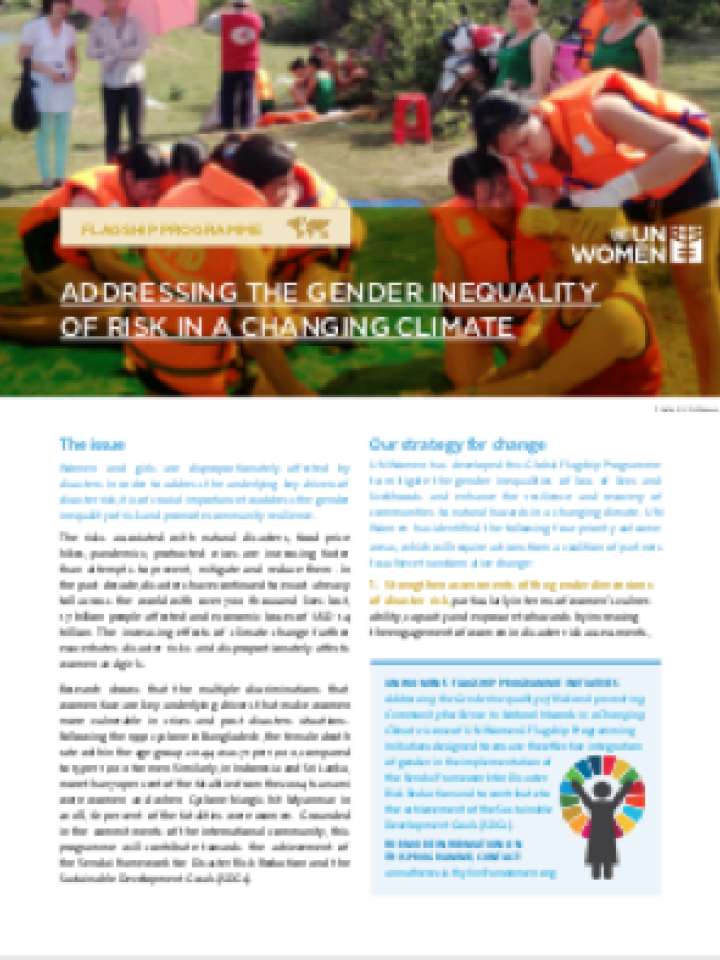
The overall goal of UN Women's disaster risk reduction (DRR) and resilience work is to save lives and livelihoods through gender-responsive-and thus better informed, targeted, and more effective-prevention, preparedness, and recovery.
In DRR and resilience, UN Women works to empower women as agents of change, leveraging their full potential for disaster prevention, preparedness and recovery to break down the gender-specific barriers which increase women's disaster vulnerability, exclude women from shaping DRR processes and strategies, and hamper women's and their communities' recovery in the aftermath of disasters.
UN Women promotes gender-responsive DRR and resilience across its triple mandate through technical and policy support, provision of gender expertise to DRR mechanisms and processes, and by implementing programmes and projects for gender-responsive DRR and resilience building, including the Women's Resilience to Disasters (WRD) programme, its signature DRR initiative.
UN Women supports gender-responsive and inclusive disaster risk reduction and resilience by:
- securing commitment for the gender-transformative disaster risk reduction and resilience;
- building an enabling environment and supporting system-wide change including strengthening normative frameworks, and women's leadership and empowerment at all levels, providing capacity development, strengthening the collection and use of gender data and gender analysis, and mobilising networks and partners for more coordinated approaches; and
- supporting targeted action for ensuring women and girls have voice and agency to withstand multiple hazards, recover from disasters, and increase their resilience to future disasters and threats.
DRR Focal point
Dr. Rahel Steinbach, Women's Resilience to Disasters Global Coordinator and Technical Lead for Disaster Risk Reduction and Resilience, Policy, Programme and Intergovernmental Division (PPID); [email protected]
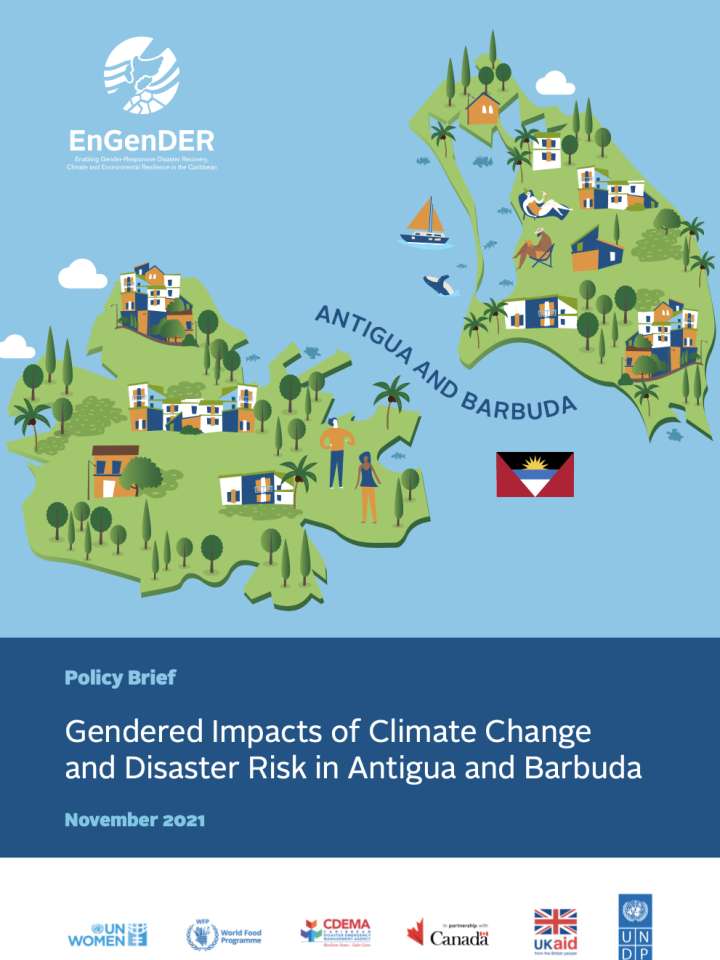
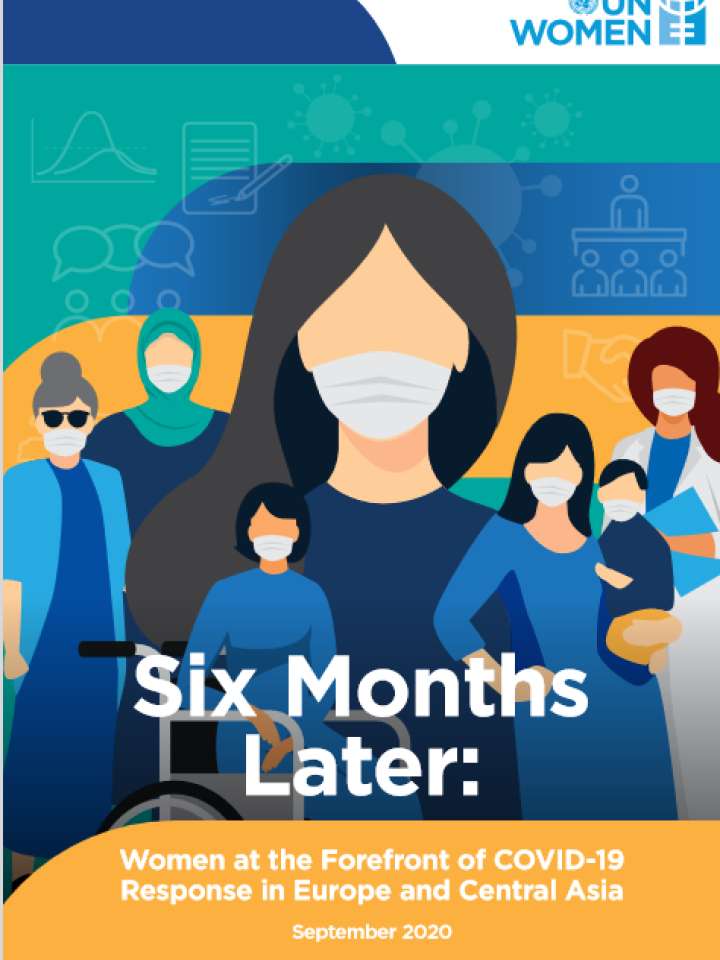
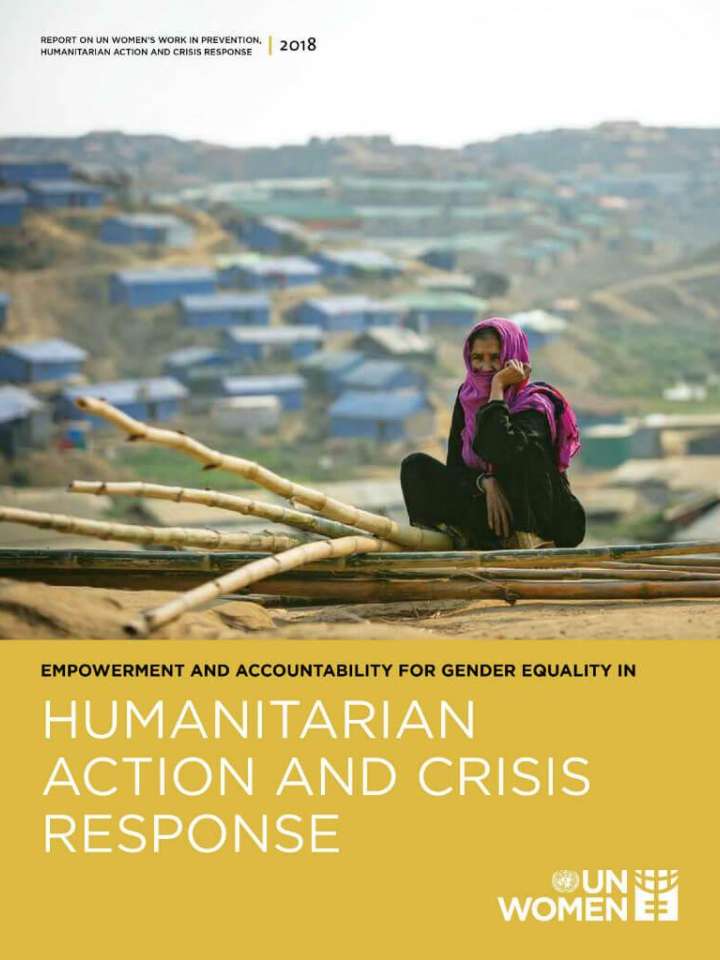
Voluntary Commitments
The Sendai Framework Voluntary Commitments (SFVC) online platform allows stakeholders to inform the public about their work on DRR. The SFVC online platform is a useful toolto know who is doing what and where for the implementation of the Sendai Framework, which could foster potential collaboration among stakeholders. All stakeholders (private sector, civil society organizations, academia, media, local governments, etc.) working on DRR can submit their commitments and report on their progress and deliverables.