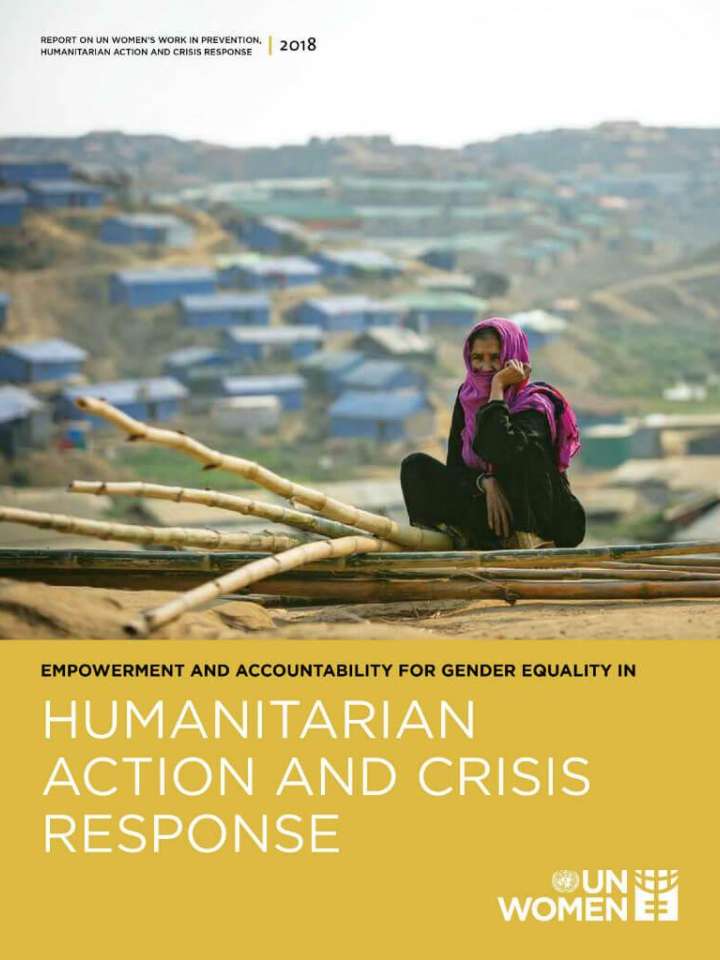
Empowerment and accountability for gender equality in humanitarian action and crisis response 2019
Humanitarian needs continue to grow with nearly 132 million people in need of assistance in 2018, due to conflict, persecution, and natural disasters. The average humanitarian crisis now lasts more than nine years, and periods of forced displacement more than seventeen. Women and girls who make up approximately half of this 132 million face daily discrimination and violence. The breakdown of protection mechanisms and destruction of essential services and economic structures in crises hits the already marginalized hardest.
Evidence and experience from 2018 suggest that humanitarian response, resilience, and risk-reduction strategies remain inadequate in identifying and addressing the rights and distinct needs of women, girls, men, and boys. Furthermore, the capacity and potential of women and girls to inform and contribute to the formulation and provision of the services and long-term solutions that they, their families, and wider communities need to survive and prosper remains grossly undervalued. This is the basic reality underpinning UN Women’s role in humanitarian action.
Against this background, this report details key results UN Women achieved in collaboration with its partners in 2018 by promoting accountability for gender globally and locally, addressing the immediate needs of crisis-affected women and girls, and strengthening the resilience of crisis-affected populations by empowering women and girls.