PreventionWeb
Menu

University of Melbourne

UniMelb
Australia
Academic & Scientific

Mission

Established in 1853, the University of Melbourne is a public-spirited institution that makes distinctive contributions to society in research, teaching and knowledge transfer.

Melbourne's teaching excellence has been rewarded two years in a row by grants from the Commonwealth Government's Learning and Teaching Performance Fund for Australian universities that demonstrate excellence in undergraduate teaching and learning.

Melbourne was also one of only three Australian universities to win ten citations-the maximum number of awards possible-under the Carrick Citations for Outstanding Contributions to Student Learning. The citations recognise commitment by university staff who have shown outstanding leadership and innovation in teaching, and dedication and enthusiasm for student learning.
Show more
Latest additions
Items: 4
Publication
Published on
25 August 2022
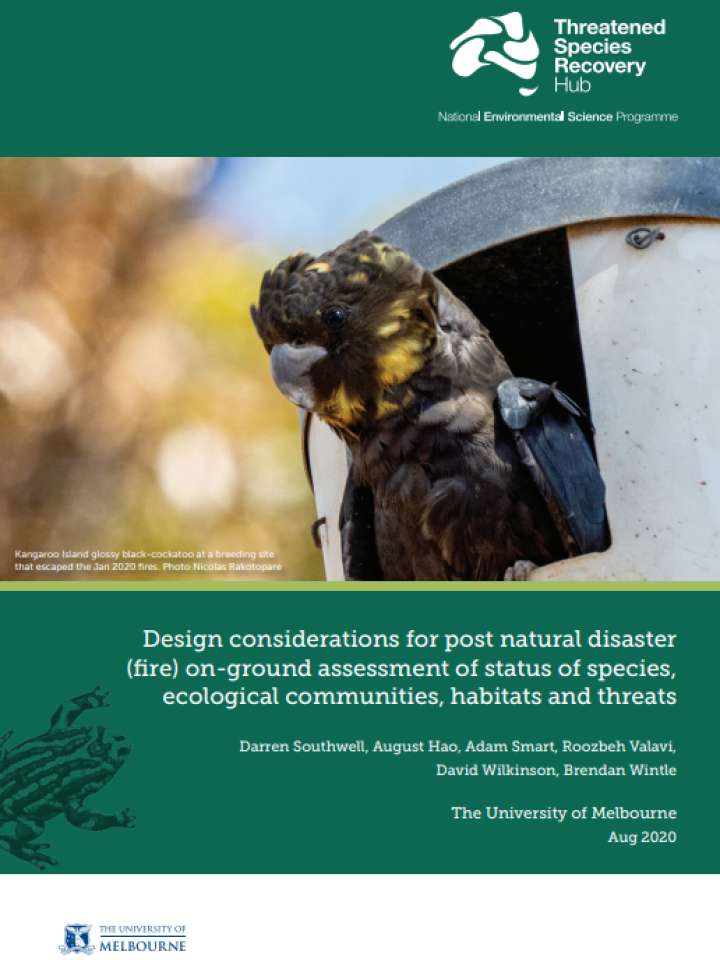
Design considerations for post natural disaster (fire) on-ground assessment of status of species, ecological communities, habitats and threats
This report aims to highlight design considerations for conducting surveys to assess fire severity, habitat condition, threats, and the status of priority threatened species and ecological communities listed as most vulnerable to the 2019-20 wildfires.
Publication
Published on
3 August 2020
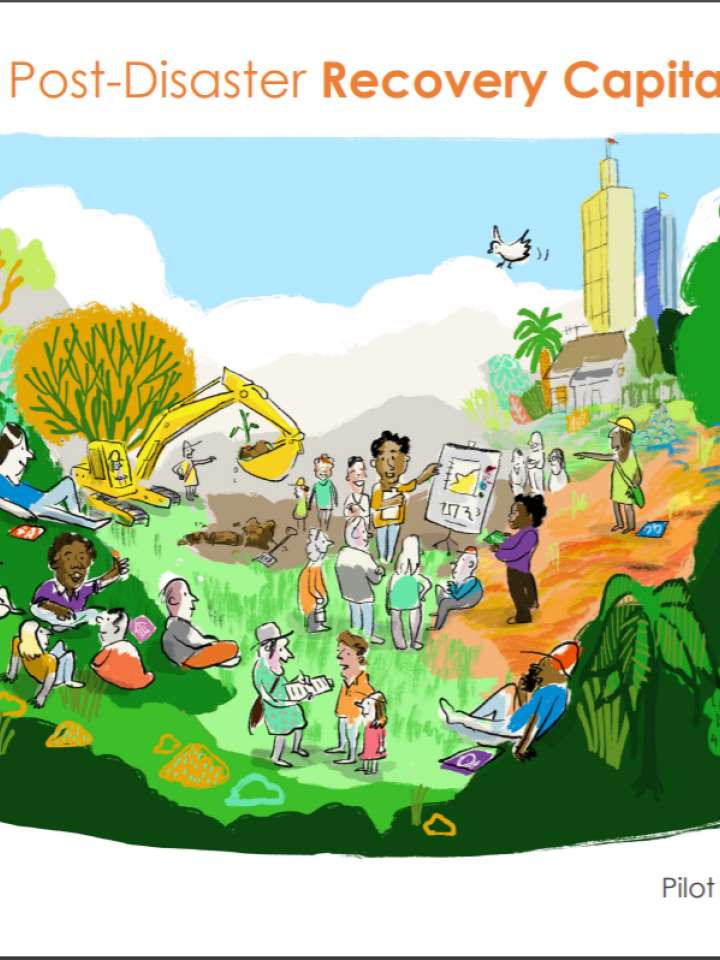
Guide to Post Disaster Recovery Capitals
The Recovery Capitals (ReCap) project applies a Community Capitals lens to disaster recovery to increase understanding about the interacting influences of social, built, financial, political, human, cultural, and natural capital on wellbeing outco
Publication
Published on
1 December 2016
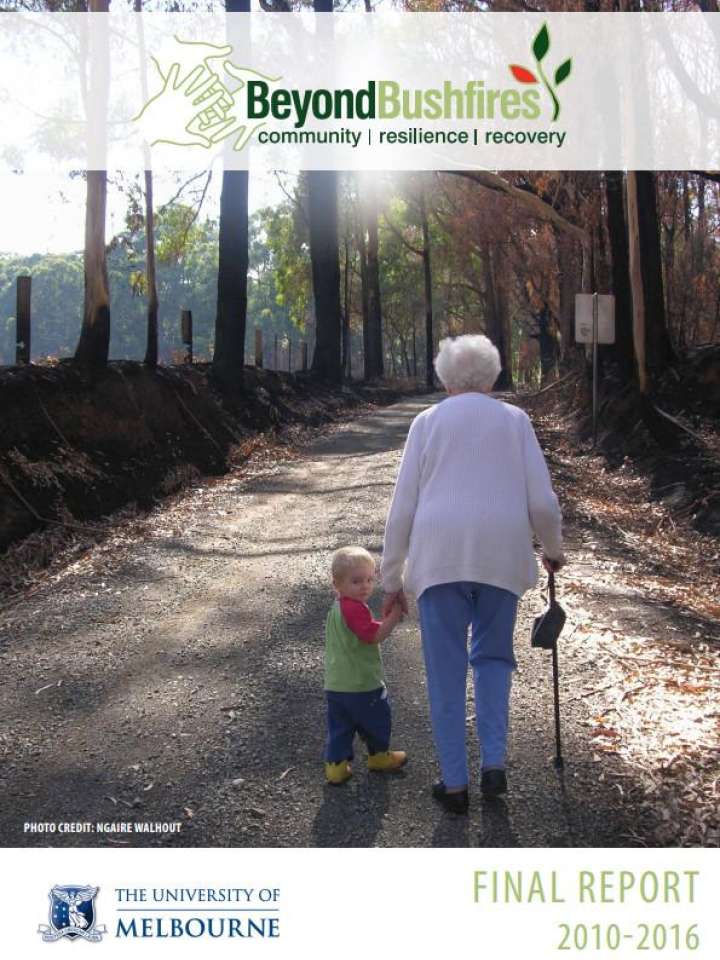
Beyond bushfires community resilience and recovery report
A five-year study analyzing the health and wellbeing impacts of the Black Saturday Bushfires in Australia tracked the interplay between mental health and social connections of natural disaster survivors.
News
Published on
2 February 2016
Dousing the flames: The new normal - People who overcome trauma following a disaster don’t always return to ‘normal’ and that can be a good thing - Opinion
Recovering from a traumatic event for some can mean finding a new appreciation of life – for others it is a slow process fraught with negativity. 'Having more close emotional ties is generally related to better mental health and personal wellbeing several years after a disaster. Involvement in local community groups and organisations is also associated with more positive outcomes,' says Associate Professor Gibbs, from the Centre of Health Equity, one of the chief investigators on the Beyond Bushfires project..,

More content for this organization may be available on PreventionWeb or on the site search.

Voluntary Commitments

The organization has no registered commitments.

The Sendai Framework Voluntary Commitments (SFVC) online platform allows stakeholders to inform the public about their work on DRR. The SFVC online platform is a useful toolto know who is doing what and where for the implementation of the Sendai Framework, which could foster potential collaboration among stakeholders. All stakeholders (private sector, civil society organizations, academia, media, local governments, etc.) working on DRR can submit their commitments and report on their progress and deliverables.

Contact information

http://www.unimelb.edu.au/
[email protected]
+32-25501241
Fax:
+32-25134856

Is this page useful?

Yes No
Report an issue on this page

Thank you. If you have 2 minutes, we would benefit from additional feedback (link opens in a new window).

The International Recovery Platform (IRP) is a global partnership working to strengthen knowledge, and share experiences and lessons on building back better in recovery, rehabilitation, and reconstruction.

Latest IRP videos and photos: YouTube Flickr Contact IRP

Loading