PreventionWeb
Menu
Author(s) Chatiza, Kudzai

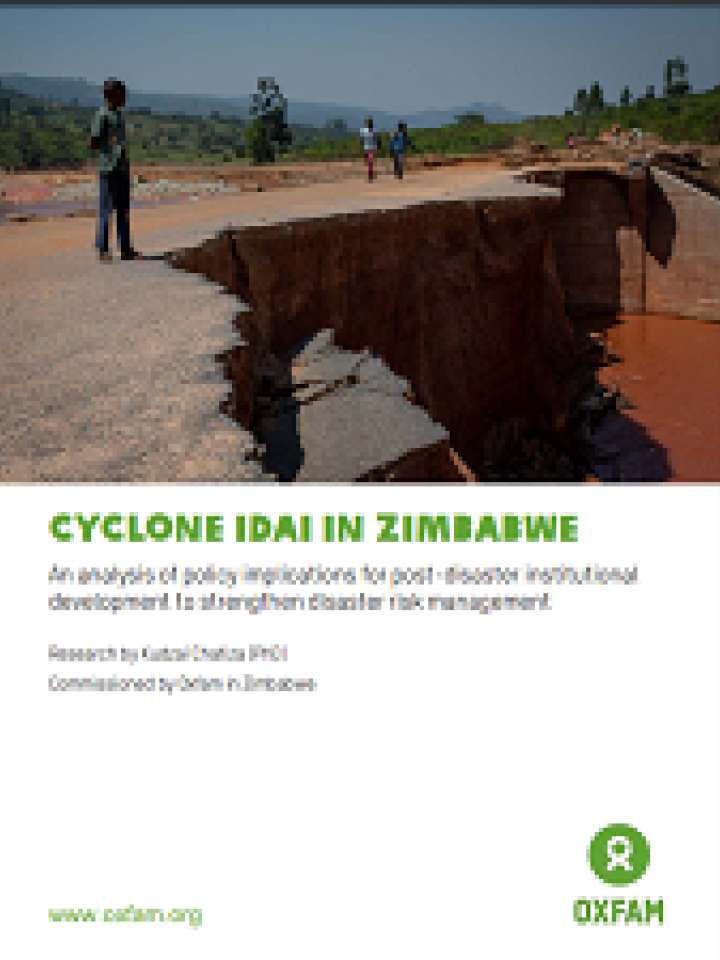
Cyclone Idai in Zimbabwe: An analysis of policy implications for post-disaster institutional development to strengthen disaster risk management

Source
Oxfam International Secretariat

This policy brief provides an analysis of the impacts and review of the disaster response to draw lessons and policy implications for post-disaster institutional development. Increased climate change-induced hazards will worsen national vulnerability. Key policies and agencies need urgent improvement to frame more proactive disaster risk management. Stronger social protection systems, enhanced disaster risk management funding, finalizing policy and devolved implementation structures, as well as better settlement systems regulation, are critical for Zimbabwe's ability to deal effectively with future climate-induced risks.

Download

Access View full document English

Last checked: 23 December 2019

Editors' recommendations

  • Rethinking disaster preparedness in Southern Africa after Cyclone Idai
  • Zimbabwe: Cyclone Idai surges malaria cases in Manicaland
  • Cyclone Idai is over – but its health effects will be felt for a long time
  • Responding to Cyclone Idai requires a more robust approach
  • More about Cyclone Idai 2019

Explore further

Hazards Cyclone, Hurricane and Typhoon Flood Landslide
Themes Preparedness Recovery
Country and region Zimbabwe
Number of pages
29 p.
Publication year
2019

Also featured on

PreventionWeb

Is this page useful?

Yes No
Report an issue on this page

Thank you. If you have 2 minutes, we would benefit from additional feedback (link opens in a new window).

The International Recovery Platform (IRP) is a global partnership working to strengthen knowledge, and share experiences and lessons on building back better in recovery, rehabilitation, and reconstruction.

Latest IRP videos and photos: YouTube Flickr Contact IRP

Loading