PreventionWeb
Menu
Case StudyPublications

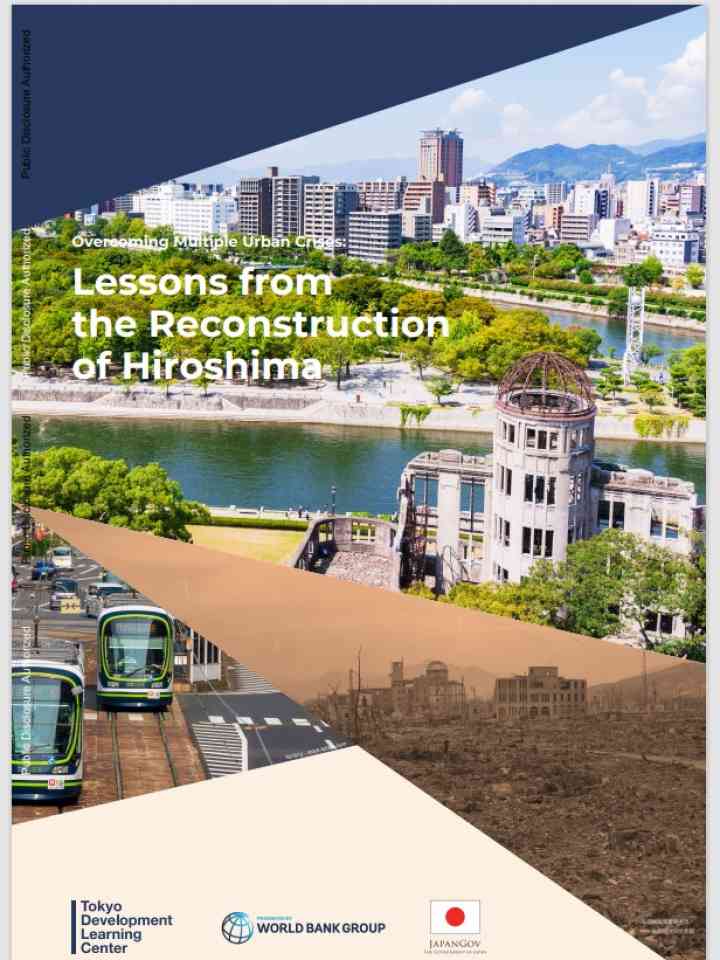
Overcoming Multiple Urban Crises: Lessons from the Reconstruction of Hiroshima

Source
Tokyo Development Learning Center
World Bank, the
Japan - government

This report examines multiple urban crises and their responses, using Hiroshima as a case study.

Hiroshima, which suffered tremendous damage from the atomic bombing at the end of World War II, faced a number of institutional and financial challenges but recovered to become an international city of peace and a core city in western Japan that attracts many people today.

This report analyzes the recovery process from short-, medium-, and long-term perspectives and draws lessons for other cities facing multiple crises.

Download

Overcoming Multiple Urban Crises: Lessons from the Reconstruction of Hiroshima PDF, 2.9 MB English

Last checked: 8 October 2024

Editors' recommendations

  • Resilient water supply and sanitation services: the case of Japan
  • Eight years after Fukushima nuclear accident - Community recovery and reconstruction from nuclear and radiological disasters – a case of Kawauchi village and Tomioka town in Fukushima
  • World Reconstruction Conference 5 Knowledge Report

Explore further

Hazards NBC - Nuclear, Biological, Chemical
Themes Fragility and conflict Recovery Urban risk and planning
Country and region Japan
Cover_World Bank
Number of pages
52 p.
Publication year
2024

Is this page useful?

Yes No
Report an issue on this page

Thank you. If you have 2 minutes, we would benefit from additional feedback (link opens in a new window).

The International Recovery Platform (IRP) is a global partnership working to strengthen knowledge, and share experiences and lessons on building back better in recovery, rehabilitation, and reconstruction.

Latest IRP videos and photos: YouTube Flickr Contact IRP

Loading