PreventionWeb
Menu
PDNA - Post Disaster Needs Assessments

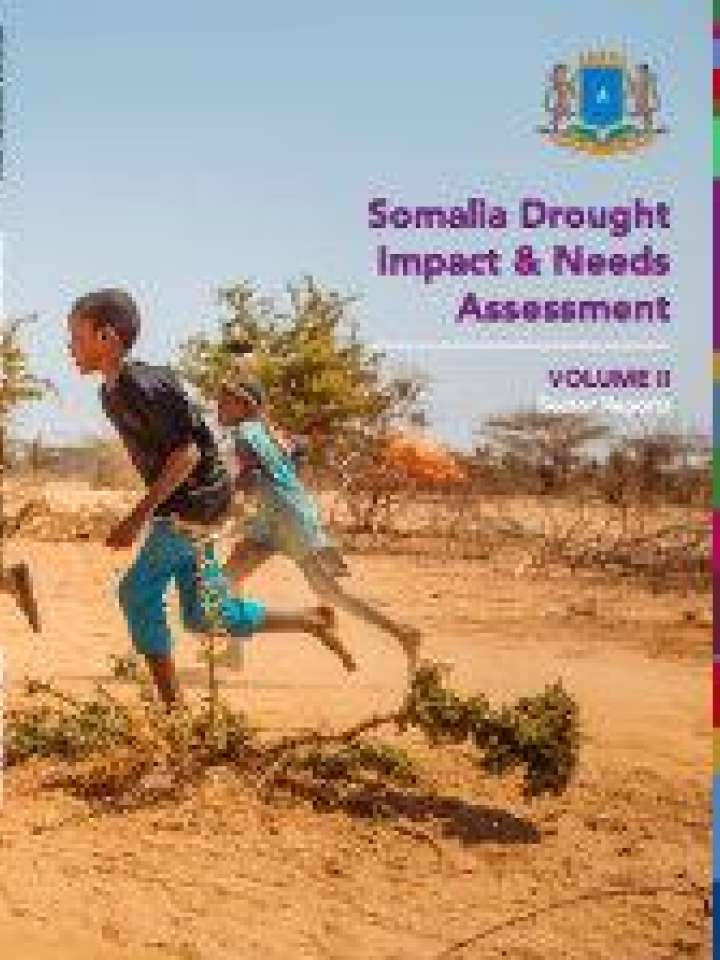
Somalia drought impact and needs assessment (Vol. 2): Sector reports

Source
World Bank, the
Global Facility for Disaster Reduction and Recovery, the (GFDRR)
Somalia - government

The Somalia Drought Impact and Needs Assessment (DINA), a process led by the Federal Government of Somalia (FGS) in partnership with the Federal Member States (FMS), the World Bank (WB), United Nations (UN) and European Union (EU), aims to reduce the country’s vulnerability to climate shocks, strengthen resilience and significantly reduce the future risk of famine in Somalia.

Volume II of the DINA presents in depth the data collected and analyzed for each of the 18 sectors and cross-cutting themes. These sectors include agriculture (crop production, livestock and fisheries); water supply and sanitation; transport; environment, clean energy and natural resource management; health; nutrition; education; food security; urban development and municipal services; livelihoods and employment; social protection and safety nets; gender; governance; conflict; displacement; and disaster risk reduction, risk financing and drought resilience.
Download

Access View document English

Last checked: 18 December 2019

Editors' recommendations

  • Somalia drought impact and needs assessment (Vol. 1): Synthesis report
  • Somalia drought impact and needs assessment (Vol. 3): Federal member state and administrative region reports

Explore further

Hazards Drought and Desertification
Themes Disaster losses Food security and agriculture Recovery Recovery planning Risk identification and assessment
Country and region Somalia
Number of pages
180 p.
Publication year
2018

Also featured on

PreventionWeb

Is this page useful?

Yes No
Report an issue on this page

Thank you. If you have 2 minutes, we would benefit from additional feedback (link opens in a new window).

The International Recovery Platform (IRP) is a global partnership working to strengthen knowledge, and share experiences and lessons on building back better in recovery, rehabilitation, and reconstruction.

Latest IRP videos and photos: YouTube Flickr Contact IRP

Loading