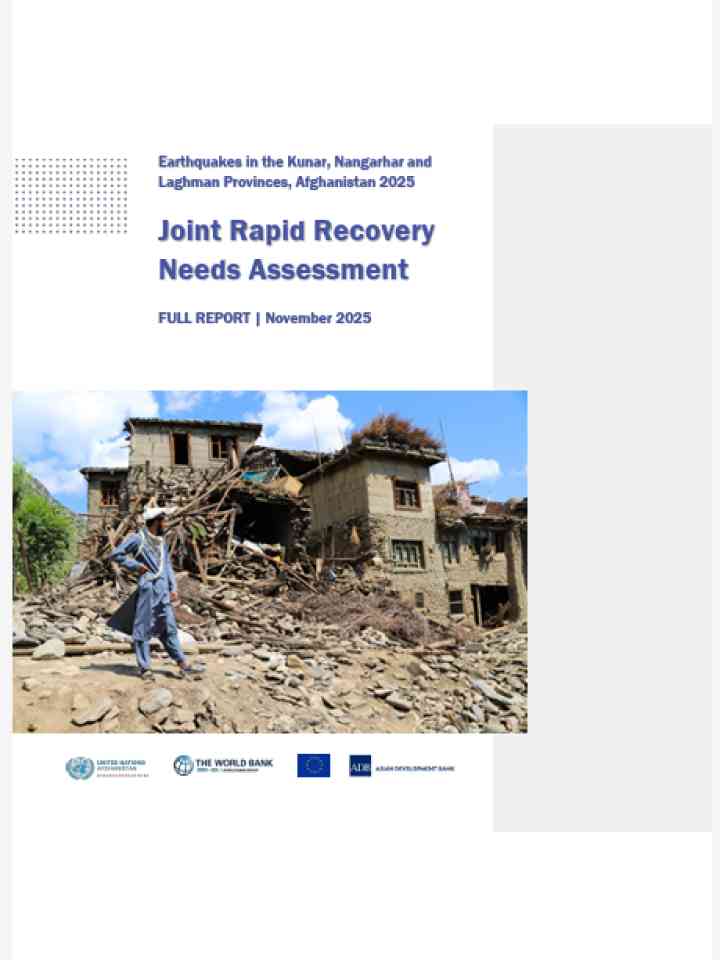
Earthquakes in the Kunar, Nangarhar and Laghman Provinces, Afghanistan 2025: Joint Rapid Recovery Needs Assessment
On 31 August 2025, a high-magnitude earthquake struck eastern Afghanistan near the Pakistan border, followed by major aftershocks in early September. The disaster caused extensive destruction to housing, infrastructure, and essential services, further worsening pre-existing socioeconomic vulnerabilities such as poverty, food insecurity, displacement, and gender inequality. Afghanistan was already facing a complex humanitarian crisis, with more than half of the population in need of assistance prior to the earthquake.
The Joint Rapid Recovery Needs Assessment (JRRNA) was conducted collaboratively by the United Nations, World Bank, European Union, and Asian Development Bank. The report analyzes impacts across multiple sectors including housing, health, education, agriculture, livelihoods, transport, energy, water and sanitation, protection, and gender equality. It pays particular attention to displacement, disability inclusion, and the heightened risks faced by women and girls, including early marriage and economic exclusion.
The assessment outlines recovery needs and strategies under a “Build Back Better” approach. It estimates financial requirements for restoring infrastructure, rebuilding housing, revitalizing livelihoods, and strengthening resilience. The report emphasizes inclusive recovery, protection of vulnerable groups, and coordination between humanitarian and development actors to support sustainable recovery in Afghanistan.
Explore further