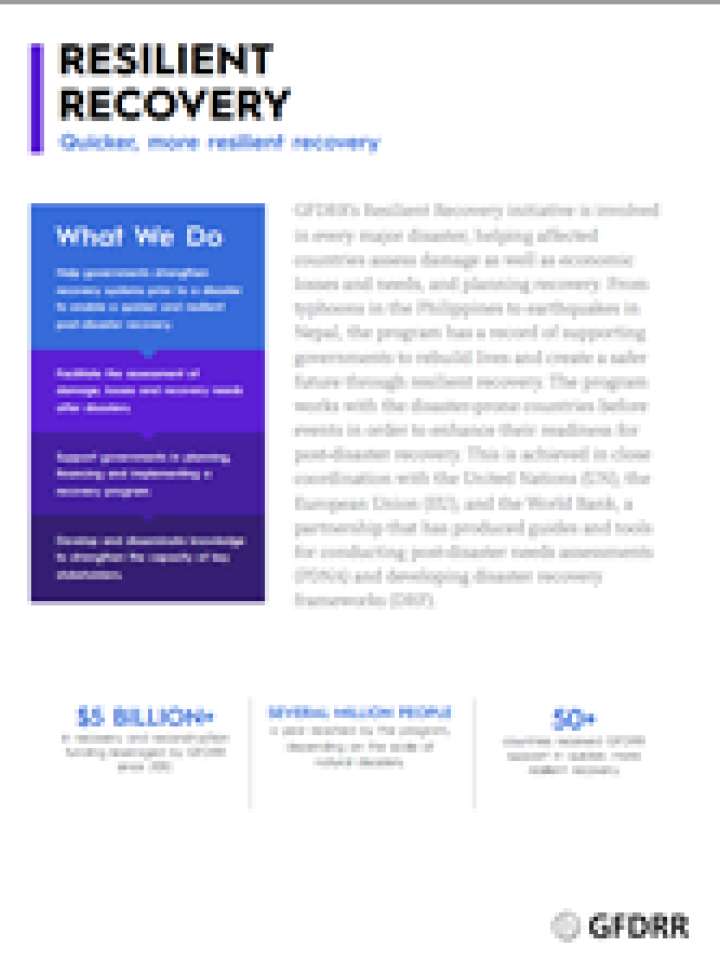
Resilient recovery: quicker, more resilient recovery
GFDRR’s Resilient Recovery initiative is involved in every major disaster, helping affected countries assess damage as well as economic losses and needs, and planning recovery. From typhoons in the Philippines to earthquakes in Nepal, the program has a record of supporting governments to rebuild lives and create a safer future through resilient recovery. The program works with the disaster-prone countries before events in order to enhance their readiness for post-disaster recovery. This is achieved in close coordination with the United Nations (UN), the European Union (EU), and the World Bank, a partnership that has produced guides and tools for conducting post-disaster needs assessments (PDNA) and developing disaster recovery frameworks (DRF).
In additional to a case study on recovery in Nepal, this report presents the GFDRR approach including the following aspects:
- Strengthen recovery systems;
- Assessing needs and planning recovery;
- Ensuring coordination;
- Leverage financing for recovery;
- Resilience through recovery.