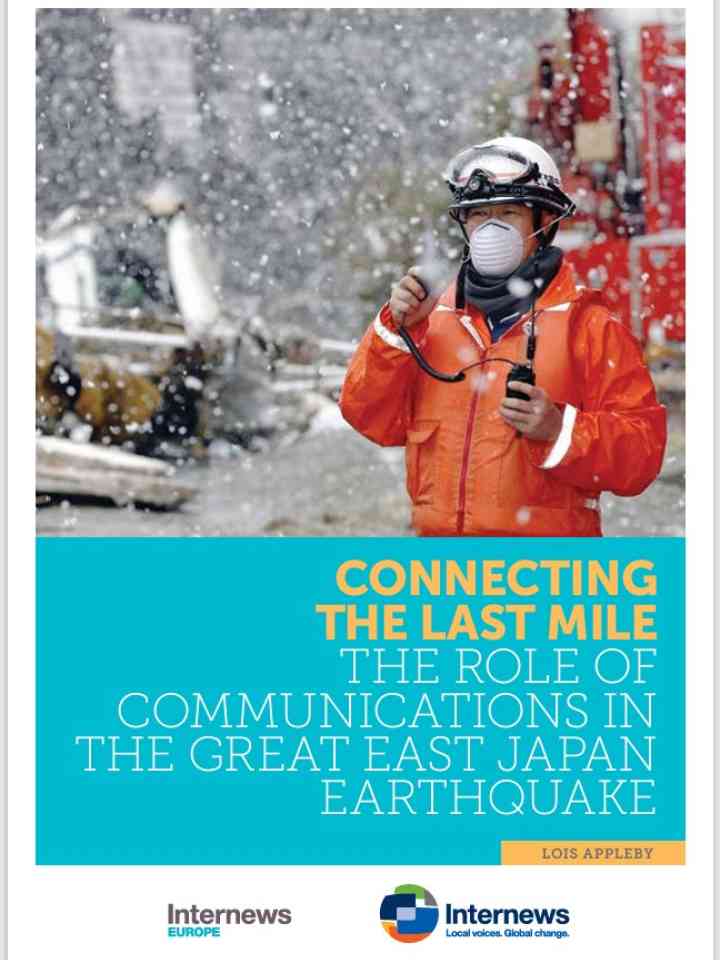
Connecting the Last Mile: The Role of Communications in the Great East Japan Earthquake
On 11 March 2011, Japan was hit by the most powerful earthquake it had experienced in a thousand years. Some of the worst affected areas were without power, mobile phone networks and internet access for months. The emergency became even more extreme when a radioactive leak was discovered at the Fukushima nuclear power plant, 150km south of the earthquake’s epicenter.
Japan ranks highly as a media and information-rich, digitally enabled society.
While the damage was catastrophic, it is generally acknowledged that the number of fatalities and damage could have been far greater had it not been for Japan’s advanced disaster preparedness measures. Billions of dollars had been invested in these measures in the country. In the 1995 devastating Kobe earthquake, 80 percent of deaths were a result of buildings collapsing. In the 2011 disaster, few died as a direct result of the earthquake itself. Rather, 90 percent of deaths were caused by drowning as a result of the tsunami. Japan possesses some of the most advanced media and telecommunications infrastructure in the world, and Japanese citizens are major users of the internet and social media networks. Japan ranks highly as a media and information-rich, digitally enabled society.
Explore further