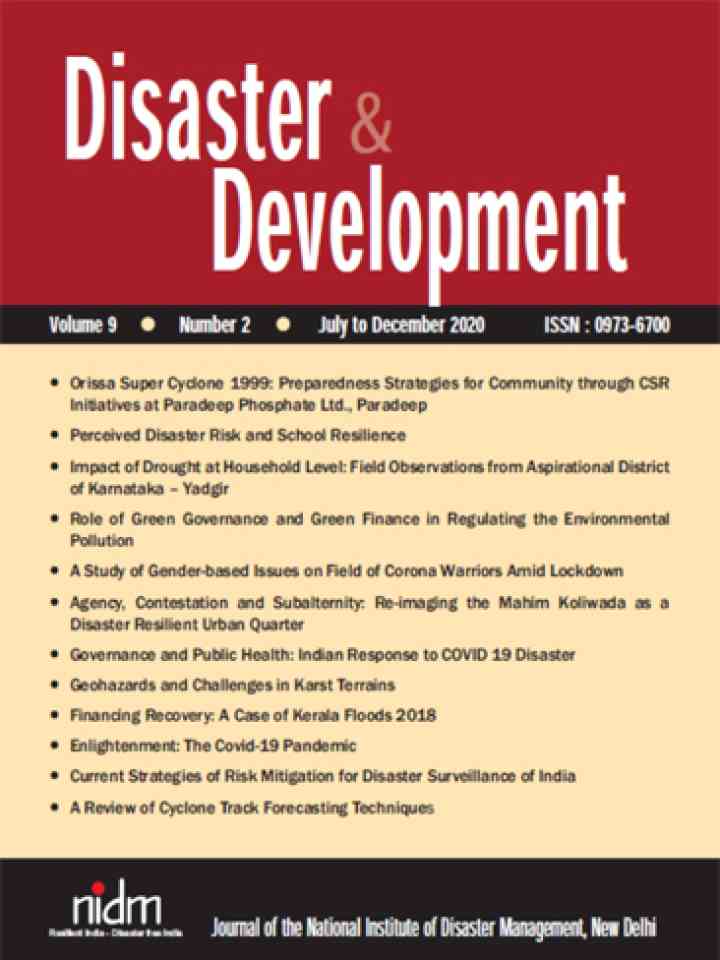
Financing Recovery: A Case of Kerala Floods 2018
The document reviews the financial challenges that arise in disaster recovery, focusing on how Kerala responded to the 2018 floods within India’s broader disaster financing framework. It outlines the constitutional and statutory provisions governing disaster funds, noting gaps between mandated structures and the actual availability of financing at national, state and district levels. The study uses a mixed-methods approach to explore how these provisions shape recovery outcomes.
It details how Kerala assessed damages, estimated recovery needs and mobilised resources through central assistance, state revenue measures, private contributions, market borrowings and external assistance. The discussion highlights constraints imposed by the Goods and Services Tax system, debates around masala bonds, limits of NDRF and SDRF for long-term recovery, and the state’s reliance on diverse channels such as loans, cess, diaspora contributions and insurance mechanisms.
The document shows how financial arrangements influence the state’s ability to rebuild and manage long-term recovery risks. It illustrates tensions between central and state authority, the limited penetration of insurance, and the growing need for innovative financing instruments. The analysis helps readers understand how institutional structures, fiscal federalism and market-based options shape recovery pathways and the capacity to meet reconstruction needs.
Explore further