PreventionWeb
Navigation loading…

Navigation failed to load. If you are on the UNDRR office network, your browser may be blocking access to external resources. Learn how to allow access.

Menu
Last updated 1 Mar 2024

Recovery Collection: 2004 Indian Ocean Earthquake and Tsunami
Image
Indian Ocean Tsunami
Frans Delian / Shutterstock

Introduction

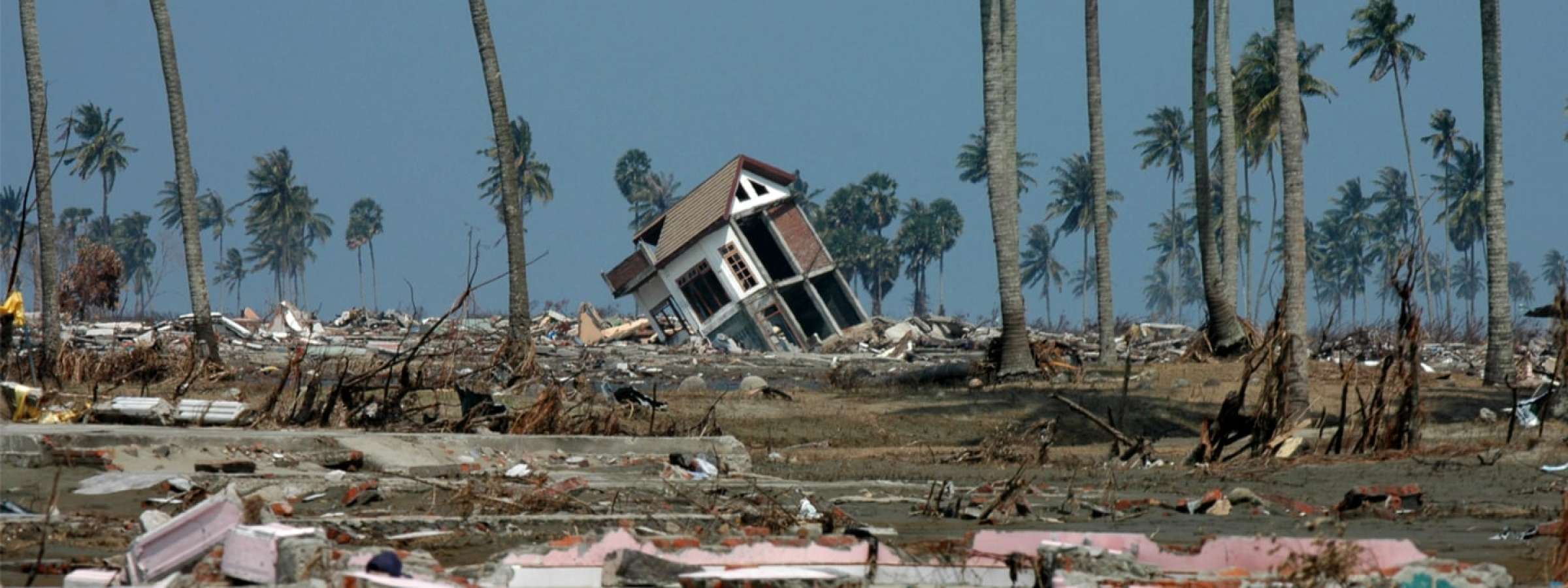
The morning of December 26, 2004 saw the worst disaster in Indonesia’s history. A magnitude (M) 9.1 submarine earthquake occurred along the Indian Ocean subduction zone triggering a massive tsunami that destroyed 800 km of the coastal areas of Aceh Province with inundation observed as far as 6 km inland. Post disaster damage and loss assessment revealed staggering numbers on the calamity that include over 220,000 human fatalities and the destruction of 139,000 houses, 73,869 hectares of agricultural lands, 2,618 kilometers of roads, 3,415 schools, 104,500 small-medium enterprises, 13,828 fishing boats, 119 bridges, 669 government buildings, 517 health facilities, 1,089 worship places, 22 seaports, and 8 airports and airstrips (BRR-Agency for the Rehabilitation and Reconstruction of Aceh and Nias, 2009). Added to these statistics, more than half a million tsunami survivors were internally displaced and hundreds of thousands more lost their livelihoods.

Almost within hours, news on the tsunami devastation of Aceh spread quickly around the world eventually sparking an unprecedented massive global community emergency response and relief effort. Given the extremely urgent situation on the grounds, the Government of Indonesia agreed to allow international military personnel coming from Asian and European countries, the United States, and Australia, among others, to participate in the disaster response operations that also included more than 600 local, national, and international non-governmental, community-based, civil society, multi-lateral, and UN organizations. Some of these organizations continued to be involved in the post-tsunami reconstruction and recovery phase. The reconstruction costs were estimated to be US $4.9 billion while committed funds from various sources including the international community donors and the Government of Indonesia amounted to US$ 6.7 billion (BRR, 2009).

Before embarking on a painstaking reconstruction effort, the Government of Indonesia created a “Master Plan for the Rehabilitation and Reconstruction of Aceh and Nias, North Sumatra”. Parallel to this effort, the government also established the Agency for the Rehabilitation and Reconstruction of Aceh and Nias (BRR), an ad-hoc agency, first of its kind, mandated to implement and coordinate government-funded projects and coordinate donor- and NGO- funded projects from April 2005 to April 2009. The “Build Back Better” philosophy was adopted in the reconstruction effort. This guiding principle seeks to ensure that every reconstruction effort shall integrate the concept of Disaster Risk Reduction that would help reduce future disaster risk and build resilience. By the end of the project period, BRR had implemented and coordinated a total of roughly 12,000 projects.

Post-tsunami recovery and reconstruction efforts generally resulted in significant achievements in terms of housing, infrastructure, environment, agriculture, livelihood, health, local economy, education, and disaster management sectors. The enactment of Law of the Republic of Indonesia Number 24/ 2007 concerning Disaster Management and the subsequent transformation of disaster management entities marked a major shift in disaster management paradigm in Indonesia which should help prepare Indonesia in responding more effectively to future disaster events.
Hazards
Earthquake Tsunami
Themes
Critical infrastructure Preparedness Education and school safety Food security and agriculture Livelihood Recovery Shelter and housing
Country and region
Indonesia

Knowledge base

Items: 64
Training Manual: Learning Workshop on Recovery and Reconstruction
Documents and publications
Tools and guidelines
Training
1 January 2015
Training Manual-Learning Workshop on Recovery and Reconstruction

The Training Manual – Learning Workshop on Recovery and Reconstruction is one of the final outputs of the Tsunami Global Lessons (TGLL) Initiative.

Asian Disaster Preparedness Center
Documents and publications
30 December 2014
Tsunami ten years on, stories of change: 2004–2014 - Community perceptions of the Indian Ocean tsunami response and recovery

The objective of this study is to analyse the strengths, weaknesses, sustainability and impact of the 26th of December 2004 tsunami response in 2 countries, Sri Lanka and Indonesia (Aceh Province). Cutting across these themes is an assessment of whether communities are now better prepared to respond to and cope with disaster.

Save the Children International
Documents and publications
23 December 2013
Disaster as opportunity? Building back better in Aceh, Myanmar and Haiti

This paper seeks to contribute to the analytical base around build back better through an examination of its application in three disaster responses, the Indian Ocean tsunami in Aceh, Cyclone Nargis in Myanmar and the earthquake in Haiti.

ODI Global
Documents and publications
13 September 2013
Tsunami 2004

This publication attempts to fill the gaps in documentation following the earthquake and tsunami of 26 December 2004 by collating all relevant information and analyses to see how the parts fit together.

World Health Organization (WHO)
Documents and publications
25 June 2013
Turning around the tsunami

This document relates the experiences of the United Nations Human Settlements Programme (UN-HABITAT) in the wake of the 2004 tsunami in Sri Lanka.

United Nations Human Settlements Programme (UN-HABITAT)
Documents and publications
8 November 2012
Understanding community resilience and program factors that strengthen them

This study documents IFRC’s response and recovery operation in the aftermath of the 2004 Indian Ocean tsunami. Over 4.8 million people benefited from a wide range of Red Cross Red Crescent support that included reconstruction of physical infrastructure such as homes, schools and health facilities as well as long-term recovery and disaster risk reduction programming. It reflects the scale of what is recorded as the deadliest tsunami in history – one that swept through coastal areas of Indonesia, Sri Lanka, the Maldives, Thailand, and ten other Indian Ocean countries.

International Federation of Red Cross and Red Crescent Societies (IFRC)
Documents and publications
17 September 2012
Post disaster governance, complexity and network theory: evidence from Aceh, Indonesia after the Indian Ocean Tsunami 2004

This research aims to understand the inter-organizational network typology of large scale disaster intervention in developing countries and to understand complexity of post disaster intervention through the use of network theory based on empirical data from post tsunami reconstruction in Aceh, Indonesia, during 2005-2007. It addresses the ‘poly-centric’ features of emergency and reconstruction management, which promotes the notion that there are many overlapping centers of authority and responsibility for disaster risk reduction and post disaster intervention.

Institute of Resource Governance and Social Change
Documents and publications
29 May 2012
Sri Lanka: teaching disaster risk management in Sri Lanka's schools - experience since the 2004 tsunami

This publication outlines Sri Lanka's new approach to dealing with natural hazards in the context of disaster risk management. Issues addressed: (i) the need for education in disaster risk management and Sri Lanka's policy of teaching disaster safety in schools; (ii) the 'Disaster Risk Management & Psycho-social Care' project; (iii) results from the project, including educational facilities being better prepared for emergencies; and (iv) factors for success, including motivating political decision-makers, coordinating inter- and intra-ministerial cooperation, and utilising existing structures and processes to integrate disaster safety integration.

Deutsche Gesellschaft für Internationale Zusammenarbeit (GIZ)
Rebuilding Lives and Homes in Aceh and Nias, Indonesia
Documents and publications
Publications
10 September 2010
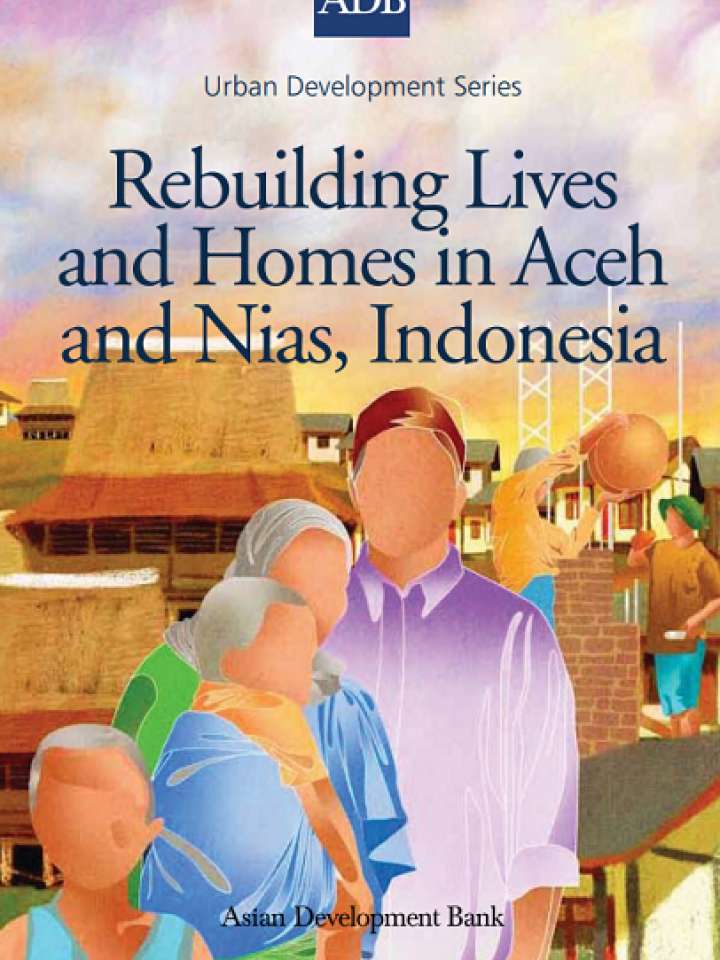
Rebuilding lives and homes in Aceh and Nias, Indonesia

This document presents the experience and lessons learned from the implementation of the Earthquake and Tsunami Emergency Support Project (ETESP) housing program carried out by the Asian Development Bank in Indonesia.

Asian Development Bank (ADB)
Documents and publications
Publications
5 July 2010
Building back better for next time

This document reports on an initiative which objective is to build the resilience of communities and nations to disasters by strengthening national and local institutions, mechanisms and capacities for disaster risk reduction.

European Union
United Nations Office for Disaster Risk Reduction - Regional Office for Asia and Pacific

Pagination

Showing results 11–20 on this page

  • Previous
  • 1
  • 2
  • 3
  • Next

Is this page useful?

Yes No
Report an issue on this page

Thank you. If you have 2 minutes, we would benefit from additional feedback (link opens in a new window).

The International Recovery Platform (IRP) is a global partnership working to strengthen knowledge, and share experiences and lessons on building back better in recovery, rehabilitation, and reconstruction.

Latest IRP videos and photos: YouTube Flickr Contact IRP

Loading