PreventionWeb
Navigation loading…

Navigation failed to load. If you are on the UNDRR office network, your browser may be blocking access to external resources. Learn how to allow access.

Menu
Last updated 27 Nov 2025

Recovery Collection: Nepal: Gorkha Earthquake 2015
Image

Introduction

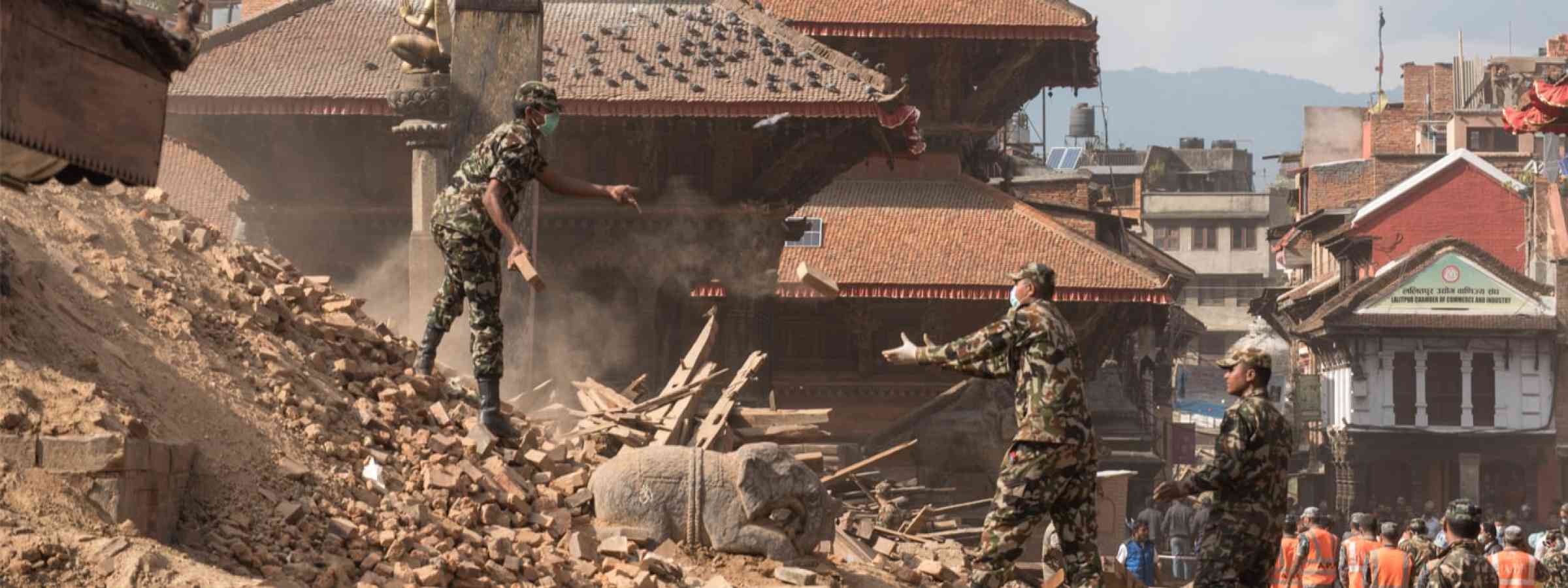
The Gorkha Earthquake in Nepal occurred on 25 April 2015 and had a magnitude of 7.6. Its epicentre was about 76km northwest of the capital Kathmandu. It was followed by more than 300 aftershocks. Around 9,000 people were killed, of whom approximately 55 per cent were female, and over 100,000 people were injured. Overall eight million people have been impacted, which is almost one-third of the population of Nepal.

The housing sector was by far the most affected, also given that numerous houses in poorer rural areas did not have any seismic-resistant features. Over 500,000 houses were destroyed and another 269,000 damaged, which included historical and cultural monuments recognized as UNESCO World Heritage Sites. In addition to destroyed or damaged key infrastructure livelihoods, e.g. in the agriculture and tourism sector, have been also critically impacted. According to the Post Disaster Needs Assessment by the UN, World Bank and the EU the total value of the damages and losses of the disaster was estimated at US$7.1 billion, while the estimated needs for recovery were US$ 6.7 billion. The damages and losses of the housing sub-sector and the resulting recovery needs accounted for almost half of the total amount respectively.

According to the latest Independent Impacts and Recovery Monitoring by the Asia Foundation around five years after the earthquake the large majority of the affected people live again in their own houses. Out of all households with damaged houses three-quarters now live in either a rebuilt or repaired house or another house not damaged by the earthquake. However, others continue to occupy damaged houses or those without seismic-resistant features. For many households the recovery from the earthquake remains a financial burden, demonstrated by prevalent borrowing. Four per cent who are still living in temporary shelters are in particular need of support.
 

Hazards
Earthquake
Themes
Governance Inclusion Recovery Recovery planning Shelter and housing
Country and region
Nepal

Knowledge base

Items: 93
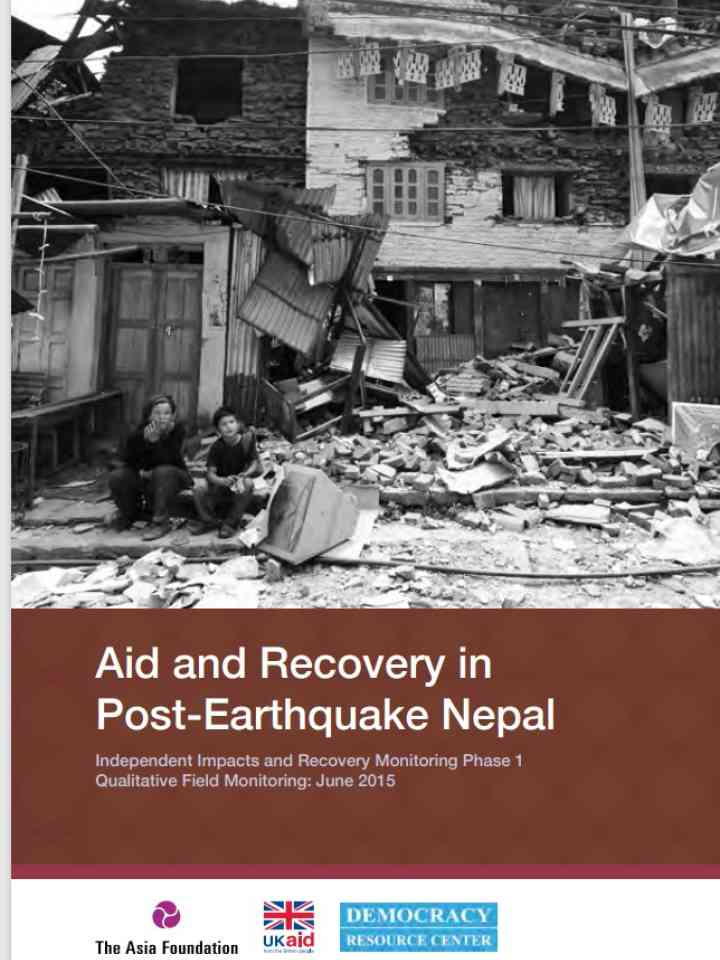
Aid and Recovery in Post-Earthquake Nepal: Qualitative Field Monitoring June 2015
Documents and publications
Publications
Reports and analysis
28 October 2015
Aid and Recovery in Post-Earthquake Nepal: Qualitative Field Monitoring June 2015 (Phase 1)

The IRM project contributes by assessing longitudinally five issues—aid delivery and effectiveness; politics and leadership; social relations and conflict; protection and vulnerability; and economy and livelihoods, through two research components.

The Asia Foundation
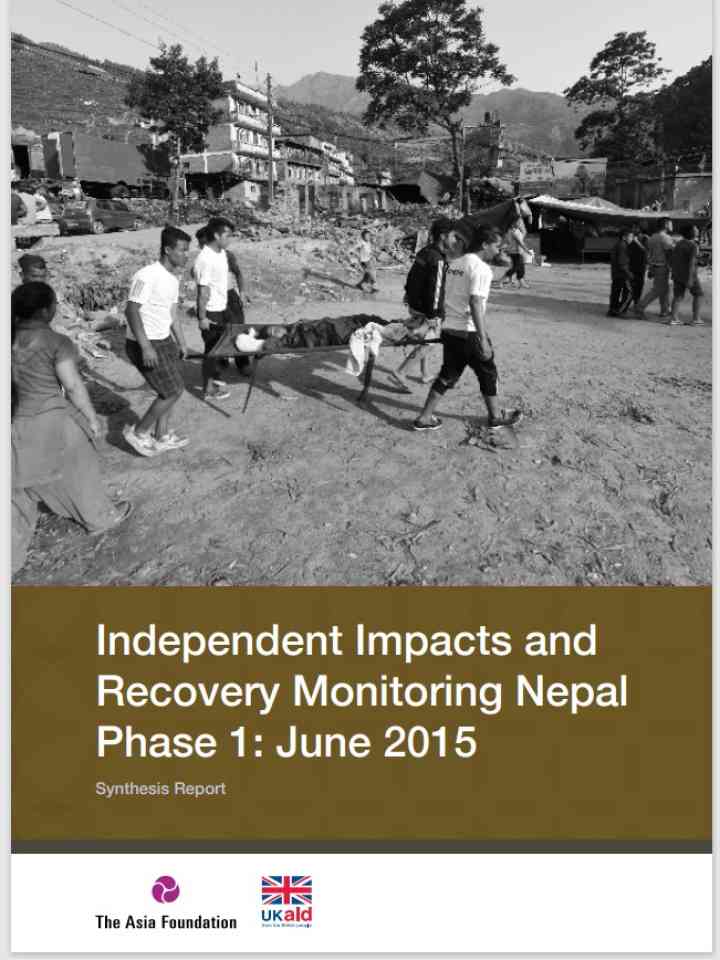
Independent Impacts and  Recovery Monitoring Nepal Phase 1: June 2015
Documents and publications
Publications
Reports and analysis
28 October 2015
Independent Impacts and Recovery Monitoring Nepal Phase 1: June 2015

The IRM project contributes by assessing longitudinally five issues—aid delivery and effectiveness; politics and leadership; social relations and conflict; protection and vulnerability; and economy and livelihoods, through two research components.

The Asia Foundation
Documents and publications
22 October 2015
Nepal earthquake 2015: six month report

This report presents the work carried out by CBM together with Nepalese Disabled People's Organisations (DPOs), in some of the worst-hit districts by the 2015 earthquakes.

CBM International
Documents and publications
16 October 2015
Building resilience in Nepal through public-private partnerships

This last use case from the Global Agenda Council on Risk and Resilience highlights tangible examples from Nepal of where multi-stakeholder partnerships between the public and private sectors and civil society organisations made a difference, and where they could be scaled up to be more effective in future.

World Economic Forum (WEF)
Documents and publications
Case Study
1 October 2015
M7.6 Gorkha earthquake: response and early recovery case study: first five months

This report focuses on the first five months after the Nepal Earthquakes of 2015 and reviews the current legal and institutional framework for disaster risk management in Nepal and highlights its gaps and limitations in the context of the recent disaster.

Earthquakes and Megacities Initiative
Housing Subsector Report Mercy Corps Intervention Areas 2015 Gorkha Earthquake, Nepal
Documents and publications
Publications
Reports and analysis
30 September 2015
Housing Subsector Report Mercy Corps Intervention Areas 2015 Gorkha Earthquake, Nepal

This Housing Subsector study was performed in order to collect and analyze important information regarding the housing-related needs and priorities of the people affected by the 2015 Gorkha earthquake in Mercy Corps’ areas of intervention.

Build Change
Shelter Cluster Nepal Position Paper
Documents and publications
Publications
8 September 2015
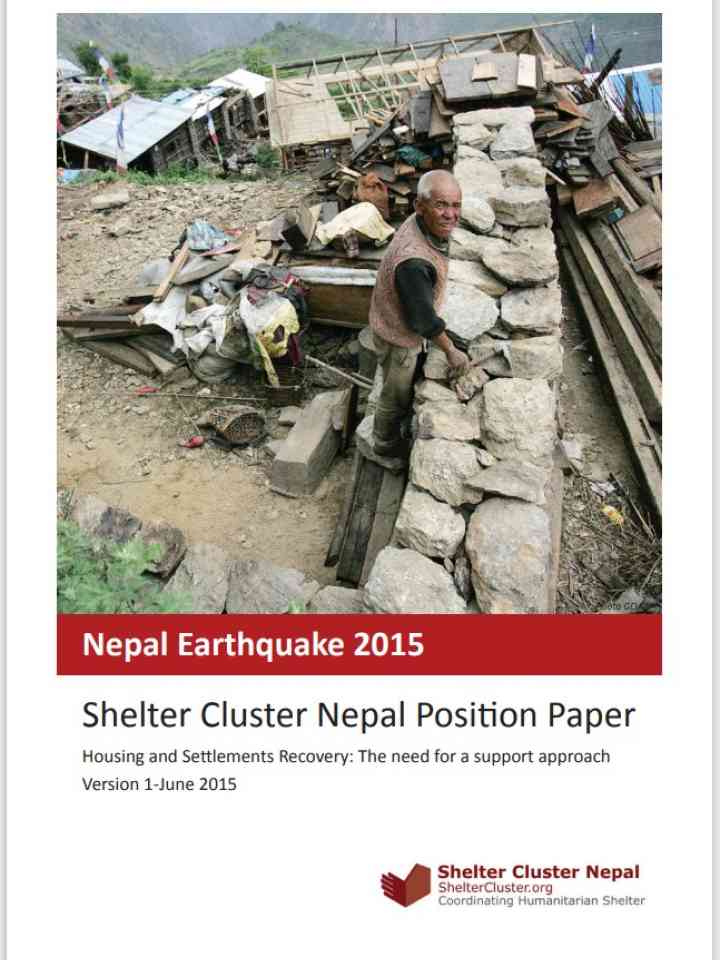
Nepal Earthquake 2015-Shelter Cluster Nepal Position Paper-Housing and Settlements Recovery: The need for a support approach Version 1-June 2015

This document was prepared to consolidate discussions to date among shelter and housing actors, on emerging issues, shared concerns and priorities for recovery and reconstruction.

Global Shelter Cluster
Documents and publications
3 September 2015
Rebuilding Nepal by implementing SFDRR

This issue of Southasiadisasters.net tries to highlight the different perspectives on what the nature of the recovery and reconstruction should be three months after the Nepal earthquake.

All India Disaster Mitigation Institute
Documents and publications
14 August 2015
Safer schools, resilient communities: a comparative assessment of school safety after the 2015 Nepal (Gorkha) earthquakes

This study looks at whether interventions to improve building practices, combined with community engagement, have resulted in safer schools and communities in view of the effects of the earthquake on Nepal’s educational infrastructure.

Risk Reduction Education for Disasters
Documents and publications
13 August 2015
Strategic framework for resilient livelihoods in earthquake-affected areas of Nepal

This working paper aims to complement the post disaster needs assessment of the Government of Nepal by providing insights into the livelihood dimensions of the earthquake and its socioeconomic and livelihood impacts.

International Centre for Integrated Mountain Development (ICIMOD)

Pagination

Showing results 81–90 on this page

  • Previous
  • 1
  • …
  • 4
  • …
  • 8
  • 9
  • 10
  • Next

Is this page useful?

Yes No
Report an issue on this page

Thank you. If you have 2 minutes, we would benefit from additional feedback (link opens in a new window).

The International Recovery Platform (IRP) is a global partnership working to strengthen knowledge, and share experiences and lessons on building back better in recovery, rehabilitation, and reconstruction.

Latest IRP videos and photos: YouTube Flickr Contact IRP

Loading