PreventionWeb
Navigation loading…

Navigation failed to load. If you are on the UNDRR office network, your browser may be blocking access to external resources. Learn how to allow access.

Menu
Last updated 22 Jun 2022

Recovery Collection: New Zealand: Christchurch and Canterbury earthquakes 2010-2011
Image
christchurch and canterbury earthquakes
tmpr / Shutterstock

Introduction

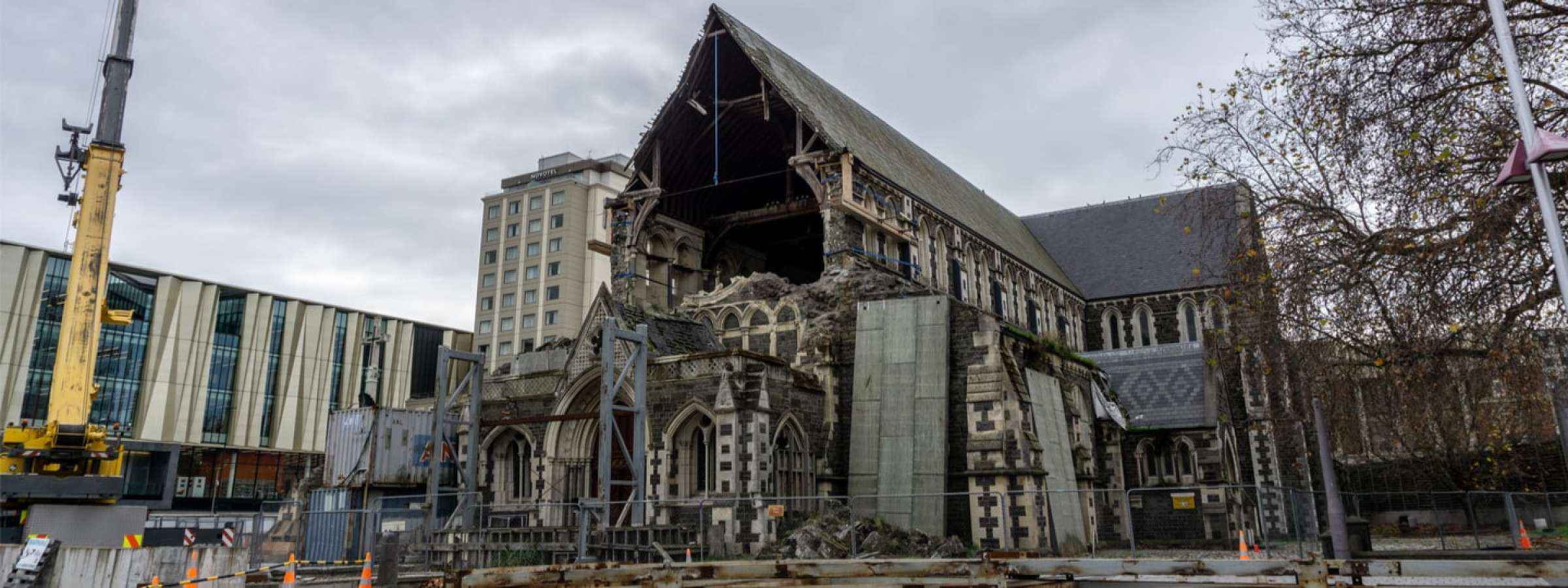
On 4 September 2010, a magnitude 7.1 earthquake struck 40 kilometers west of Christchurch in the Canterbury region of the South Island. This marked the beginning of a series of earthquakes that generated over 7,000 aftershocks in the same area, including the Christchurch Earthquake which occurred on 22 February 2011 at a depth of 5 kilometers beneath Christchurch City causing 185 deaths and injuries to over 7,000 people [1]. The damage to land, housing, businesses, and infrastructure, including heritage buildings, as well as to air and water quality across the area, was widespread.


While legal frameworks such as the Civil Defence Emergency Management (CDEM) Act 2002 and recovery guidance such as the Recovery Management: Director’s Guidelines for CDEM Groups (2005) and Focus on Recovery: A Holistic Framework for Recovery in New Zealand (2005) were available at the time of the disaster, recovery limitations were determined that required a special legislation to be put in place, the Canterbury Earthquake Recovery Act 2011. The act established the Canterbury Earthquake Recovery Authority (CERA) for five years (2011-2016), which was headquartered in Christchurch and tasked with (i) identifying the appropriate institutions (i.e., Christchurch City Council, Environment Canterbury, Waimakariri District Council, Selwyn District Council, and Te Rūnanga o Ngāi Tahu) and providing the support to enable Christchurch to recover as quickly as possible; (ii) engaging communities in the recovery decisions in their area; and (iii) restoring the well-being of the population of Christchurch [2]. CERA was the central decision-making authority and responsible for developing the Canterbury Recovery Strategy, which was approved in May 2012, provided a broad, long-term and multi-stakeholder approach for the recovery of Christchurch, and identified specific issues in the economic, social, built, cultural, and natural dimensions to be addressed through the recovery plans developed by local authorities.


Very early on, CERA demonstrated success in delegating responsibility for critical activities, particularly to the private sector, and rebuilding infrastructure and completing small projects quickly and less costly, showing early wins that bolstered the confidence of the communities [3]. The Stronger Christchurch Infrastructure Rebuild Team, an alliance among CERA, the Christchurch City Council, the New Zealand Transport Agency, and five private construction firms, oversaw the rebuilding of the city’s roads, and fresh water, wastewater, and stormwater networks with resilience in mind. In 2013, the Land Use Recovery Plan was approved, which integrated land use policies in recovery, and facilitated changes to the Canterbury Council’s district plans, the Canterbury Regional Policy Statement, and other regulations. A purchase offer scheme was put in place by CERA, which enabled residents to relocate to areas of low risk. After the expiry of the Canterbury Earthquake Recovery Act, the Greater Christchurch Regeneration Act was approved in April 2016 to support the regeneration of greater Christchurch over the next five years (April 2016 to June 2021).


The Canterbury earthquakes led to a range of reviews on disaster risk reduction institutional practices, and the findings later incorporated into policy and planning from the national to local levels in New Zealand. It was determined that the CDEM Act 2002 lacked provisions for planning and implementing recovery thus, the need for a legislative framework to enhance New Zealand’s ability to manage disaster recovery was put forward. The learnings from the Canterbury Earthquakes are shared by the Government of New Zealand through this recovery learning website: https://quakestudies.canterbury.ac.nz/store/collection/22109.


References
[1] S.H. Potter, J.S. Becker, D.M. Johnston, K.P. Rossiter (2015) An overview of the impacts of the 2010-2011 Canterbury earthquakes, International Journal of Disaster Risk Reduction, Volume 14, Part 1, pp: 6-14, https://doi.org/10.1016/j.ijdrr.2015.01.014.
[2] ADB. (2018). Institutional Arrangements for Post-Disaster Recovery Case Studies. Manila: ADB.
[3] UNDP. (2021). Handbook on Recovery Institutions: A Guidebook for Recovery Leaders and Practitioners. New York: UNDP.
 

Hazards
Earthquake
Themes
Recovery
Country and region
Australia

Knowledge base

Items: 19
Documents and publications
18 February 2016
Monitoring wellbeing during recovery from the 2010–2011 Canterbury earthquakes: the CERA wellbeing survey

This paper outlines the process and outcomes of a multi-agency, multi-sector research collaboration, led by the Canterbury Earthquake Recovery Authority (CERA). It begins with an outline of both the Canterbury earthquake sequence, and the research context informing this collaborative project, before reporting on the methodology and significant results to date. It concludes with a discussion of both the survey results, and the collaborative process through which it was developed.

Elsevier
Documents and publications
Case Study
7 August 2015
Comparing the direct human impact of natural disasters for two (surprisingly similar) cases: the Christchurch earthquake and Bangkok flood of 2011

The paper implements a novel way to aggregate the separate measures of disaster impact - the number of fatalities, of injuries, of people otherwise affected, and the financial damage that natural disasters cause.

Victoria University of Wellington
Documents and publications
7 May 2015
Leading in disaster recovery: a companion through the chaos

This pocket book shares important messages of 100 recovery leaders in which they share their experiences in early recovery from disasters. The pocket book explains the role of leadership in disaster recovery and its different shapes. The book also underlines the value of connecting with other leaders when recovering from disasters. At last, the book shares practical strategies for disaster recovery.

New Zealand Red Cross
Documents and publications
24 September 2013
Rebuilding for resilience: fortifying infrastructure to withstand disaster

This report extends the focus of the UNISDR-PwC initiative, looking specifically at the long-term opportunity for public-private sector collaboration in building or rebuilding risk-resilient infrastructure. It describes why building disaster-resilient infrastructure is critical for a region’s competitiveness, both nationally and globally. It also illustrates how the private sector can offer innovative solutions to help communities build or rebuild disaster-resilient infrastructure.

PricewaterhouseCoopers - Switzerland
Documents and publications
15 May 2012
Perspectives from New Zealand small firms: crisis management and the impact of the Canterbury earthquakes

The specific objectives for this study are: to assess the extent and nature of crisis experience in small firms; to identify planning and preparedness mechanisms and to assess how small firms have adapted; to assess the impact of Canterbury earthquakes on small firms’ operations inside and outside the ‘impact zone’; to assess the awareness of potential threats to business continuity planning for future events.

New Zealand Centre for Research into Small and Medium-Sized Enterprises
Documents and publications
27 March 2012
The year that shook the rich: a review of natural disasters in 2011

This review analyses some of the major events and trends related to natural disasters and humanitarian disaster response and looks at the experience of developed countries with natural disasters in 2011.

Brookings Institution, the
Reconstruction in New Zealand Post 2010-11 Christchurch Earthquakes
Documents and publications
Reports and analysis
1 March 2012
Reconstruction in New Zealand post 2010-11 Christchurch Earthquakes

This is report of a field trip to New Zealand to study recovery and reconstruction after the 2010-11 earthquakes. The aim was to learn lessons about the process to help improve information for decision-making in other places.

University of Cambridge
Recovery Strategy for Greater Christchurch
Documents and publications
DRF - Disaster Recovery Frameworks
1 January 2012
Recovery Strategy for Greater Christchurch

This presentation from CERA outlines the recovery strategy for the recovery and rebuilding of Greater Christchurch after the Canterbury earthquakes, focusing on sustainable, resilient, and inclusive efforts across multiple sectors.

Canterbury Earthquake Recovery Authority
Documents and publications
26 July 2011
TorqAid diagrammatic framework for disaster risk management

This article summarises diagrams which are used to discuss the key elements of disaster risk management (DRM). These include the Disaster Risk Management Cycle (DRMC), and the Effective Disaster Risk Reduction (DRR) diagram. The DRMC outlines the key initiatives carried out both in the Emergency Response and the Recovery Stages of a disaster; the effective DRR diagram suggests that there are five complementary factors which constitute DRR, one of these being DRM initiatives. The paper also includes a DRM planning diagram, which illustrates how government DRM plans, particularly at lowest levels, are complemented by NGO community Based Disaster Risk Management (CBDRM) initiatives.

TorqAid

Pagination

Showing results 11–19 on this page

  • Previous
  • 1
  • 2

Is this page useful?

Yes No
Report an issue on this page

Thank you. If you have 2 minutes, we would benefit from additional feedback (link opens in a new window).

The International Recovery Platform (IRP) is a global partnership working to strengthen knowledge, and share experiences and lessons on building back better in recovery, rehabilitation, and reconstruction.

Latest IRP videos and photos: YouTube Flickr Contact IRP

Loading