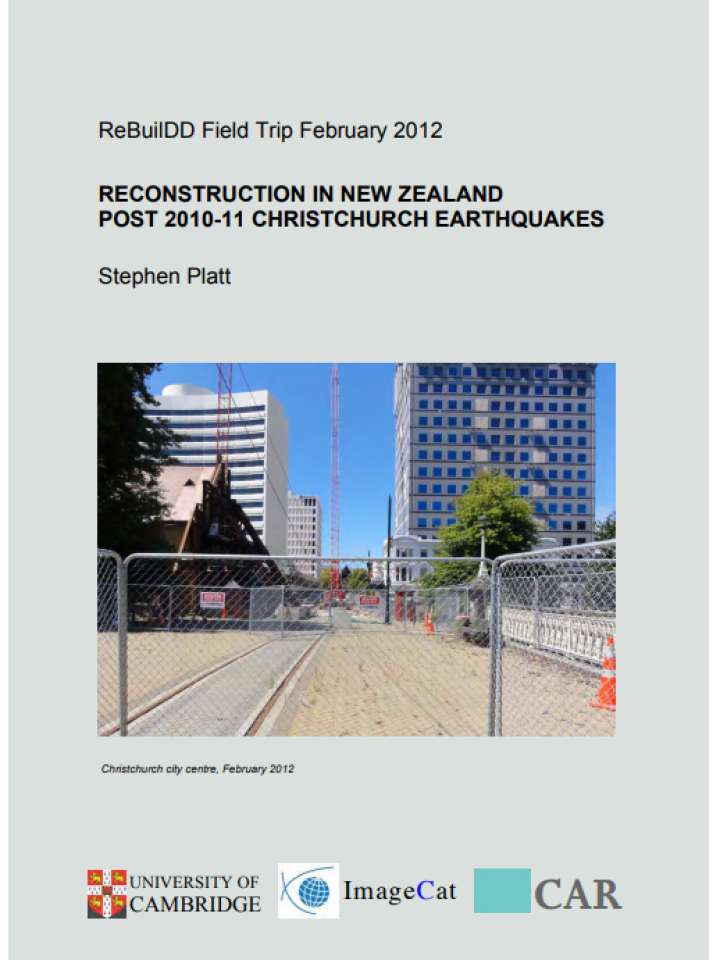
Reconstruction in New Zealand post 2010-11 Christchurch Earthquakes
This is a report of a field trip, 14-29 February 2012, to the areas affected by the Christchurch earthquakes. The trip was part of a University of Cambridge research project funded by the Engineering and Physical Sciences Research Council (EPSRC) aimed at operationalising a method we devised of using satellite imagery analysis to track recovery after major natural disasters.
Christchurch faced an unprecedented series of earthquakes and aftershocks and an unanticipated degree of building damage and land deformation. Despite criticism of the City Council in deciding on a business as usual policy after the first event and leaving people exposed to the second earthquake, the civil defence response and subsequent recovery and reconstruction planning has been efficient and effective. And despite tensions between the existing local authorities and CERA, the special earthquake authority imposed for five years after the second earthquake, there has been good coordination of regional and local plan making