PreventionWeb
Navigation loading…

Navigation failed to load. If you are on the UNDRR office network, your browser may be blocking access to external resources. Learn how to allow access.

Menu
Last updated 11 Aug 2025

Recovery Collection: Typhoon Haiyan (Yolanda) 2013
Image
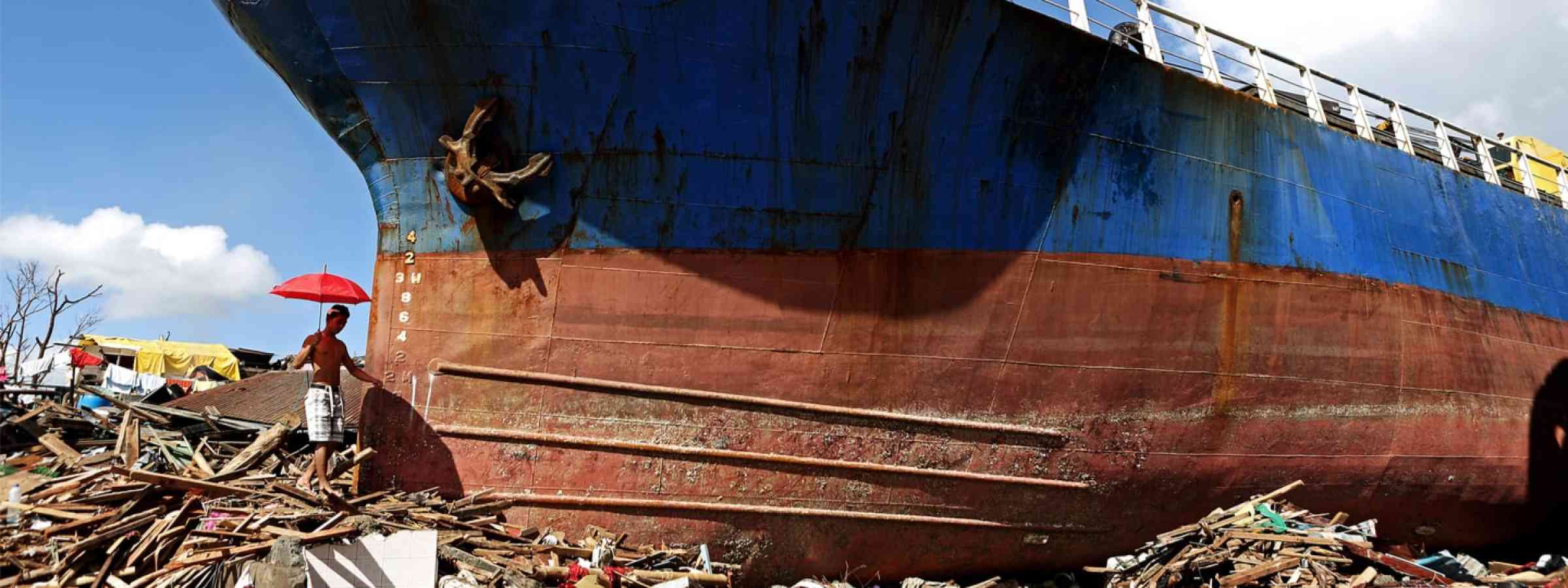
A beached boat and debris.
ymphotos/Shutterstock

Introduction

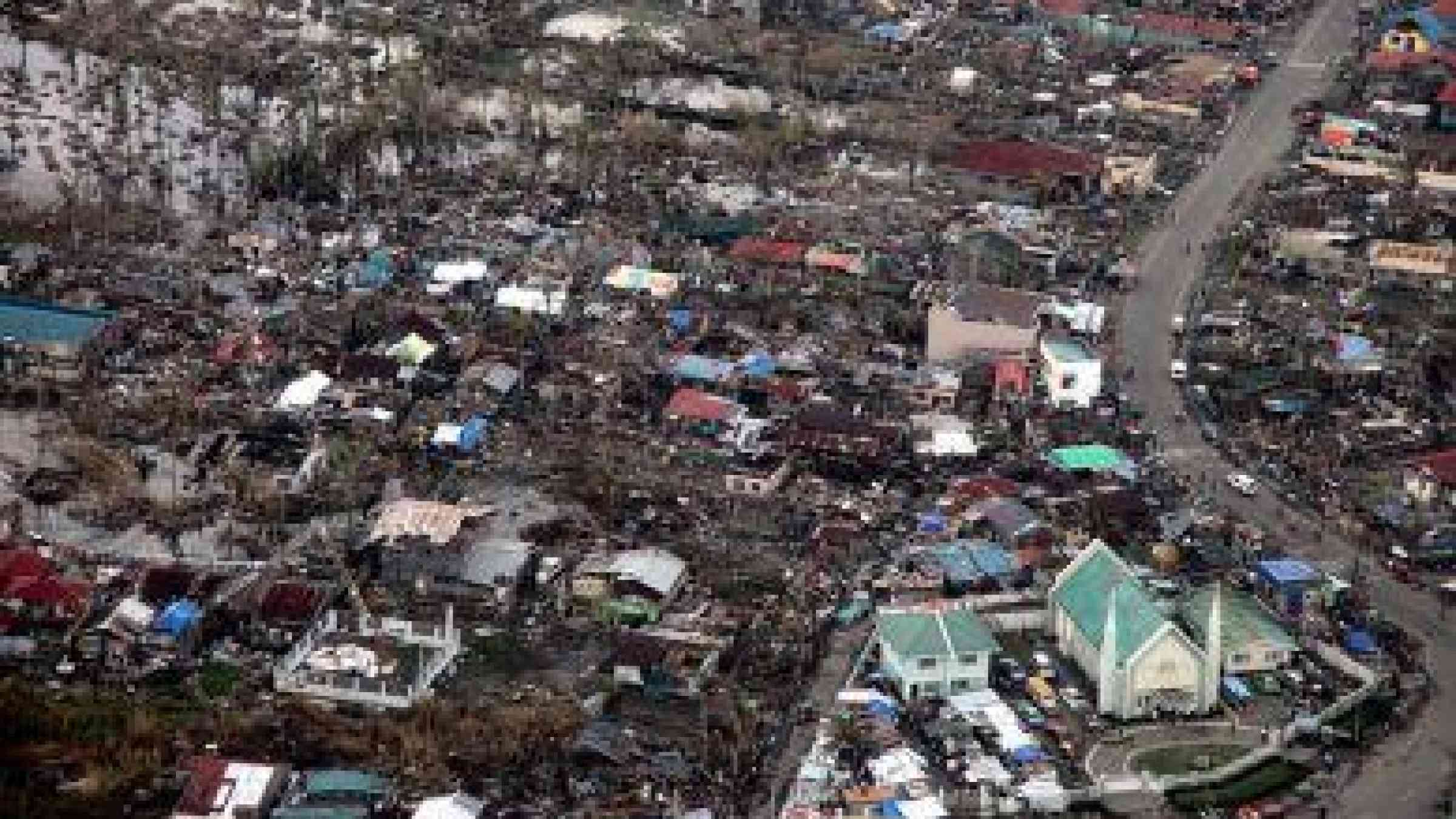
Typhoon Haiyan, locally known as Super Typhoon Yolanda, was one of the most powerful tropical cyclones on record and made landfall at the Eastern part of the Philippines on 17 November 2013. The most affected islands were Leyte and Samar. The typhoon killed over 6,000 people and affected in around 590 municipalities approximately 16 million people, including 4 million who were displaced. The typhoon also caused widespread damage to housing, livelihoods and infrastructure across nine of the poorest provinces of the country. Almost 1.1 million houses were damaged or destroyed.

The National Disaster Risk Reduction and Management Council (NDRRMC) of the Government of Philippines evacuated over 125,00 people to over 109 evacuation centres before the arrival of typhoon. Initially, the Government developed a document “Reconstruction Assistance on Yolanda”, in which the overall damages and losses from the typhoon were estimated at US$12.9 billion and the needs for recovery and reconstruction were estimated at US$8.2 billion. Subsequently, the Government developed a “Comprehensive Rehabilitation and Recovery Plan”, for the implementation of which the following five clusters were established: Food and water distribution, peace and order, shelter and reconstruction, social services as well as livelihood, employment and commerce.

The World Bank proposed as lessons learned from the typhoon to reform the NDRRMC, to create a disaster rehabilitation and recovery framework as well as effective coordination mechanisms, to develop implementation modalities and strategies for faster rehabilitation and recovery interventions, an effective emergency procurement manual as well as standards for disaster rehabilitation and recovery communications and to explore further channels of funding for disaster rehabilitation and recovery.
Hazards
Cyclone, Hurricane and Typhoon
Country and region
Philippines

Knowledge base

Items: 60
Photo by Flickr user DFID - UK Department for International Development CC BY 2.0 https://www.flickr.com/photos/dfid/11043346434
Update
11 May 2015
Noul hits, but Philippines learns the lessons of Haiyan

'Hopefully, the timely preparations and warnings by the state forecasters contributed to the fact that minimal damage was sustained,' presidential spokeswoman Abigail Valte told IRIN. 'The government’s performance in past typhoons shows that we have the capability to keep doing better in terms of disaster risk management and reduction'...

The New Humanitarian
Update
23 April 2015
Helping communities survive the next storm in the Philippines

In addition to the creation of the shelters themselves, the projects promote a wider understanding of how communities can best protect themselves in the future by passing on, and training carpenters in, techniques to rebuild safer shelters. In this way, communities are taking an active role in the recovery process and helping themselves to become more resilient to future disasters...

Thomson Reuters Foundation, trust.org
Documents and publications
1 April 2015
Urban opportunities: perspectives on climate change, resilience, and inclusion

This publication critically examines urban policies and projects from the perspective of climate change adaptation and disaster risk reduction, urban resiliency, inclusive cities, and the impacts of the informal economy.

United States Agency for International Development (USAID)
Woodrow Wilson International Center for Scholars, the
Documents and publications
Publications
6 March 2015
Humanitarian exchange, number 63, January 2015: the Typhoon Haiyan response

This document addresses disaster risk reduction in the context of the Typhoon Haiyan, presents lessons from the humanitarian response to the disaster and highlights the important coordination role of the Philippines government in it.

ODI Global
Humanitarian Practice Network
Documents and publications
Case Study
23 February 2015
Recovery framework case study: Philippines - Typhoon Yolanda ongoing recovery

This case study documents ongoing recovery since the occurrence of Typhoon Yolanda in November 2013, which caused unprecedented damage to nine regions, including 591 municipalities and 56 cities spread across 44 provinces.

World Bank, the
Global Facility for Disaster Reduction and Recovery, the (GFDRR)
Documents and publications
18 February 2015
Recovery and reconstruction planning in the aftermath of typhoon Haiyan

This report summarizes the “just-in-time” advice provided by the World Bank to the government of the Philippines (GoP) immediately after Typhoon Haiyan.

World Bank, the
Global Facility for Disaster Reduction and Recovery, the (GFDRR)
Documents and publications
9 January 2015
Community-level assistance for risk reduction management (CARRM): before, during, after the storm

This strategy paper continues IOM’s planned strategies for disasters risk reduction and management (DRRM) for the year 2015 and onwards.

International Organization for Migration (IOM)
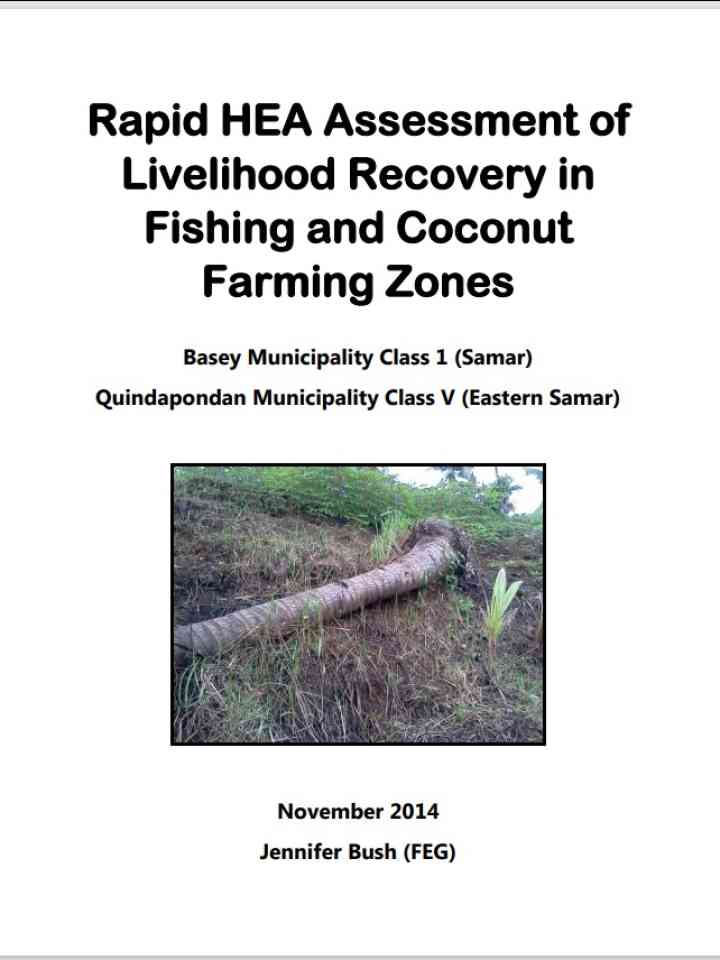
Rapid HEA Assessment of Livelihood Recovery in Fishing and Coconut Farming Zones
Documents and publications
Publications
Reports and analysis
30 November 2014
Rapid HEA Assessment of Livelihood Recovery in Fishing and Coconut Farming Zones

This is a Household Economic Approach (HEA) to explore and evaluate livelihood recovery in fishing and coconut farming sones in the Philippines following the devastating effects of Typhoon Yolanda.

Save the Children International
Update
7 November 2014
Philippines: What slows Haiyan recovery - Politics or practicality?

President Aquino signed a US$3.73 billion, 8,000-page, eight-volume rehabilitation and recovery master plan in late October, nearly one week before the one year anniversary. The plan, among others, is to build nearly 200,000 homes that can resist storms with 250km per hour winds, and rehabilitate damaged irrigation systems, roads, bridges and sea- and airports...

The New Humanitarian
Documents and publications
6 November 2014
In the shadow of the storm: getting recovery right one year after typhoon Haiyan

This briefing paper examines the recovery process one year after typhoon Haiyan hit 171 municipalities in the central Philippines and displaced more than 4 million people. It provides recommendations for the national government, the local government units, the international donors and the national and local NGOs and civil society organizations to ensure recovery strengthens the rights and resilience of affected communities and calls for clear focus on integrating disaster risk reduction and management into local governance processes.

Oxfam International Secretariat

Pagination

Showing results 41–50 on this page

  • Previous
  • 1
  • …
  • 4
  • 5
  • 6
  • Next

Is this page useful?

Yes No
Report an issue on this page

Thank you. If you have 2 minutes, we would benefit from additional feedback (link opens in a new window).

The International Recovery Platform (IRP) is a global partnership working to strengthen knowledge, and share experiences and lessons on building back better in recovery, rehabilitation, and reconstruction.

Latest IRP videos and photos: YouTube Flickr Contact IRP

Loading