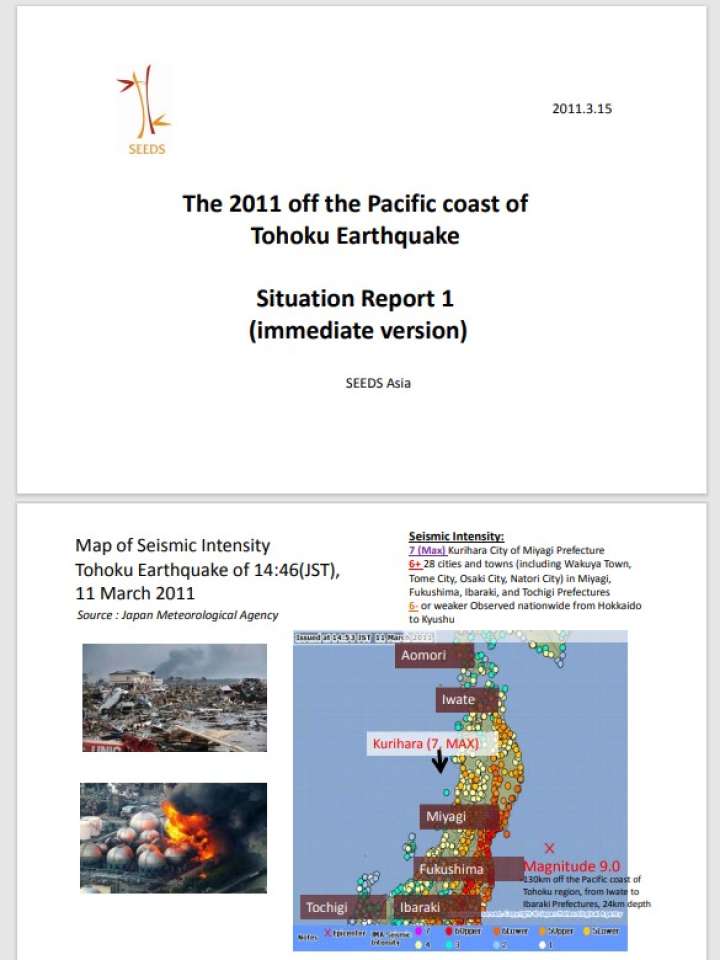
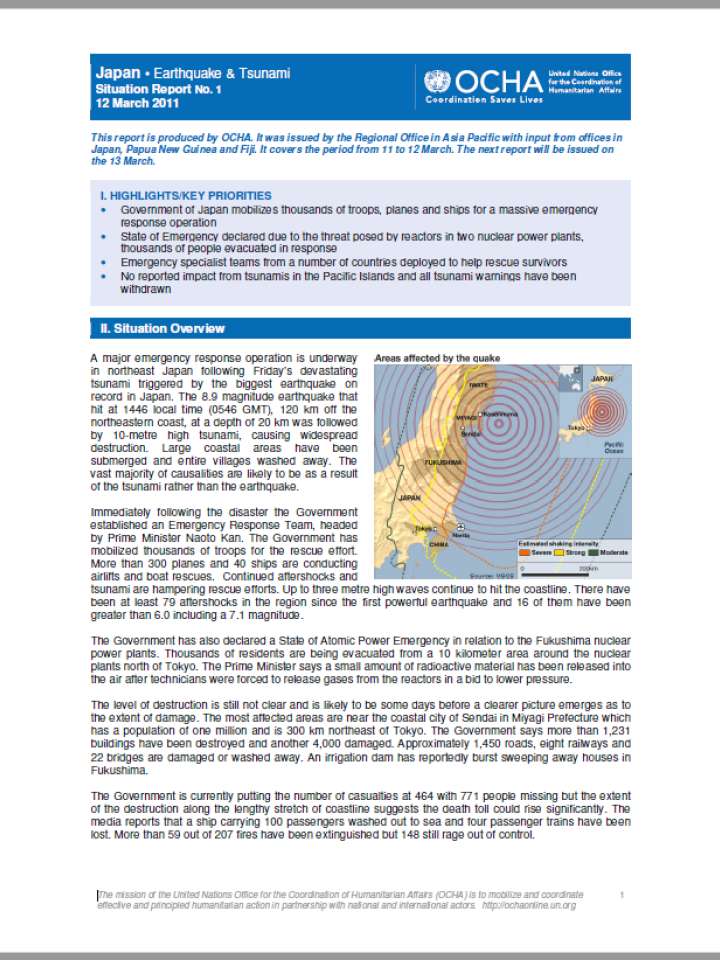
This report, published two weeks after the Great East Japan (Tohoku-Kanto) earthquake and tsunami, provides a synthesis of certain existing data and a basic situation analysis of the situation. It considers the major challenge posed to the disaster risk reduction community by: (i) the earthquake; (ii) the tsunami; (ii) the ongoing nuclear emergency; and (iv) the fires, in terms of damage to (v) human life and (vi) infrastructure. It then focuses on the after event period, especially on the search and rescue operation, as well as on shelters. It also considers the economic impact and the work of volunteers.
Graduate School of Global Environmental Studies, Kyoto University 地球環境学堂・地球環境学舎・三才学林
This article, from a Professor of Harvard University's John F. Kennedy School of Government, assesses the impacts of the recent earthquake and tsunami that struck Japan, highlighting the success of the seismic damage mitigation efforts through strong
John F. Kennedy School of Government, Harvard University
This special report analyses the situation in Japan following the 8.9 earthquake which spawned one of the most powerful tsunamis on record. It states that Japan is among the best prepared countries in the world regarding earthquakes with quake-resistant buildings, drills for school children and households equipped with survival kits. It specifically addresses the attempt to avert a meltdown at a stricken nuclear reactor and the expected colossal economic damage.
Study of member agencies' responses to the earthquake in Port au Prince, Haiti, January 2010:
This report provides a context analysis and a commentary on the effectiveness of Disasters Emergency Committee (DEC) agencies' response to the Haiti earthquake
This synthesis provides key lessons drawn from evaluations and completion reports of the Asian Development Bank (ADB)-supported emergency response and rehabilitation efforts in developing member countries affected by natural disasters, particularly floods