Navigation failed to load. If you are on the UNDRR office network, your browser may be blocking access to external resources. Learn how to allow access.
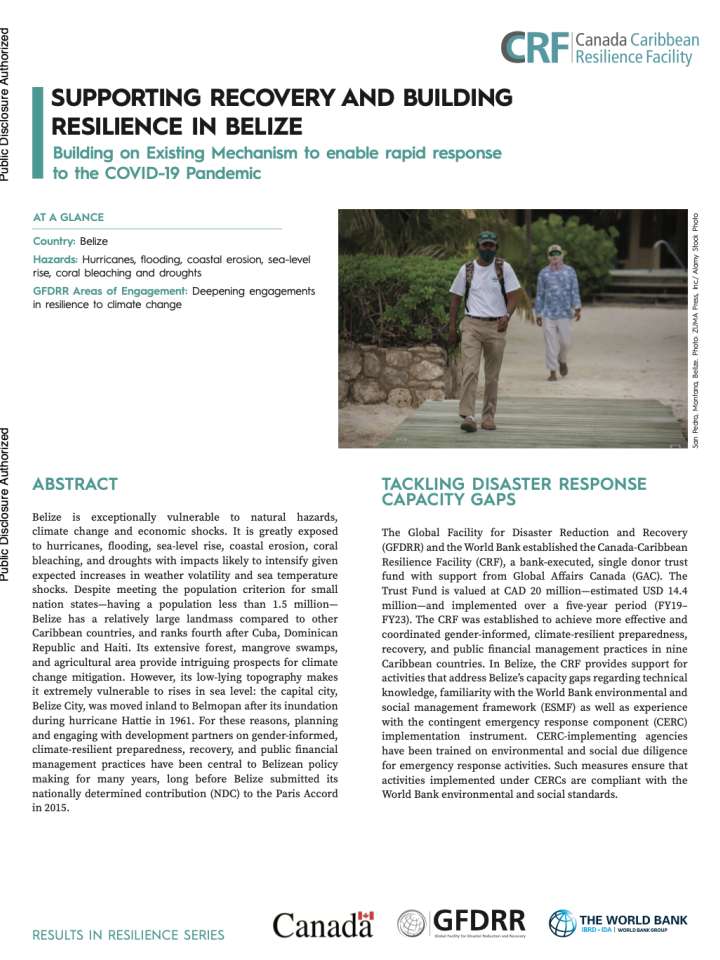
This paper covers the scopes of recovery and resilience in Belize aiming to build on existing mechanism to enable rapid response to the COVID-19 pandemic.
This paper systematically reviewed the literature on temporary housing built after sudden natural hazards, from a decision-making perspective, using reflexive thematic analysis methods. This enabled the identification of critical decision-making
International Journal of Disaster Risk Reduction (Elsevier)
This study investigates the latent variables influencing a host community's decision to accept or reject disaster-induced resettlements. The study employed a survey approach utilising a questionnaire that contained 70 factors influencing host communities'
International Journal of Disaster Risk Reduction (Elsevier)
The disaster risk reduction (DRR) status report provides a snapshot of the state of DRR in Indonesia under the four priorities of the Sendai Framework for Disaster Risk Reduction 2015-2030.
Asian Disaster Preparedness Center
United Nations Office for Disaster Risk Reduction (UNDRR)
This dataset proposes a method that combines different drought indices (SPI, soil moisture anomalies and fAPAR anomalies) in order to identify areas affected by agricultural drought and also areas with the potential to be affected. Drought monitoring is
This article focuses on decision making for retrofit investment of road networks in order to alleviate severe consequences of roadside tree blowdown during tropical cyclones. The consequences include both the physical damage associated with roadside trees
International Journal of Disaster Risk Reduction (Elsevier)
This report, the first in a series, examines in detail the intertwined effects of the pandemic and climate change, and analyzes how these affect the prospects and ability of countries to recover better. In particular, the report highlights how smart adaptation strategies can contribute to better health outcomes, environmental benefits, and economic recoveries, and strengthen resilience against future systemic shocks.