PreventionWeb
Menu

The Asia Foundation

United States of America
Non Governmental Organizations

Mission

The Asia Foundation is a nonprofit international development organization committed to improving lives across a dynamic and developing Asia. Informed by six decades of experience and deep local expertise, our work across the region addresses five overarching goals—strengthen governance, empower women, expand economic opportunity, increase environmental resilience, and promote regional cooperation.

Headquartered in San Francisco, The Asia Foundation works through a network of offices in 18 Asian countries and in Washington, DC. Working with public and private partners, the Foundation receives funding from a diverse group of bilateral and multilateral development agencies, foundations, corporations, and individuals. In 2016, we provided $87.8 million in direct program support and distributed textbooks and other educational materials valued at $9.5 million.
Show more
Latest additions
Items: 11
Publication
Published on
30 November 2019
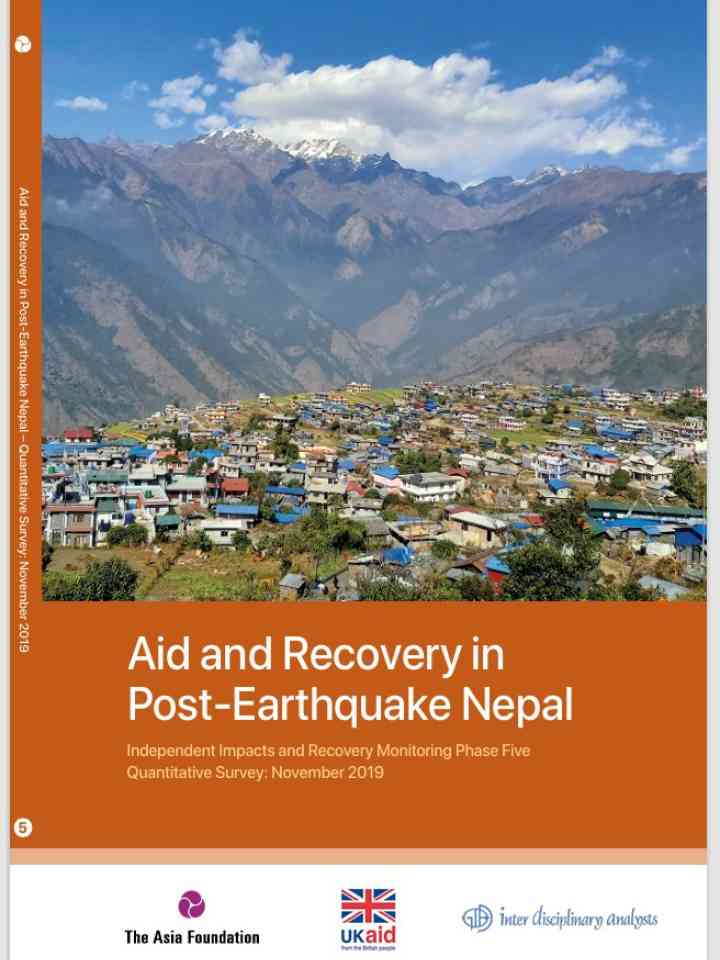
Aid and Recovery in Post-Earthquake Nepal - Independent Impacts and Recovery Monitoring Phase 5: November 2019
This report provides findings from a large-scale survey conducted in 11 earthquake-affected districts in September and October 2019, four and a half years after two devastating earthquakes hit Nepal in April and May 2015.
Publication
Published on
8 April 2019
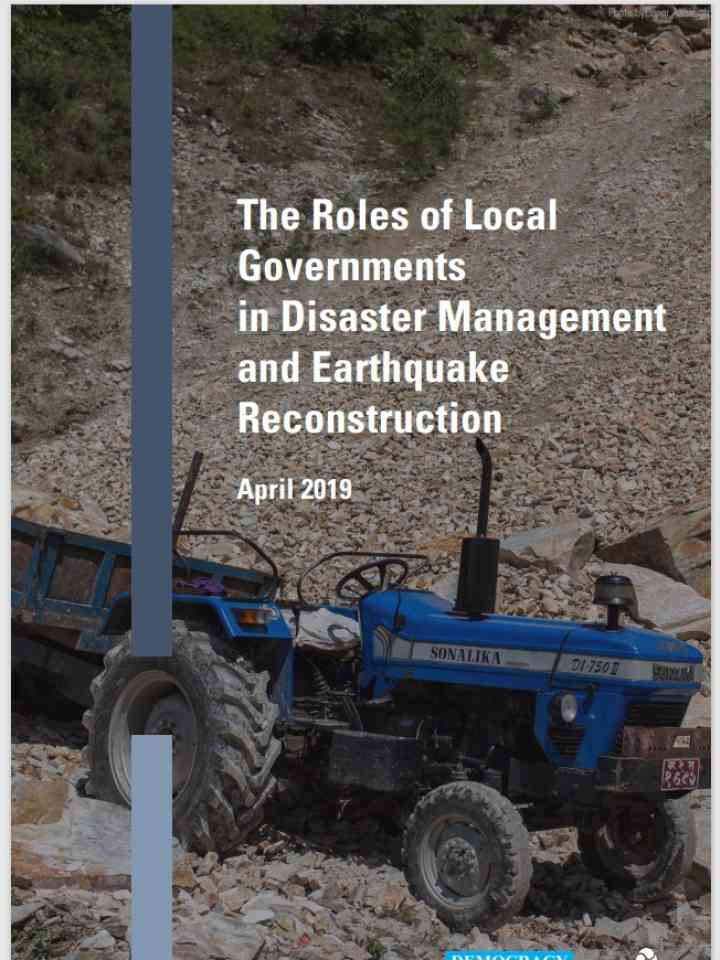
The Roles of Local Governments in Disaster Management and Earthquake Reconstruction
The objective of this research was to document the perspectives, experiences, and needs of local governments to highlight challenges and opportunities and contribute to improved disaster preparedness and future responses at the local level.
Publication
Published on
22 February 2019
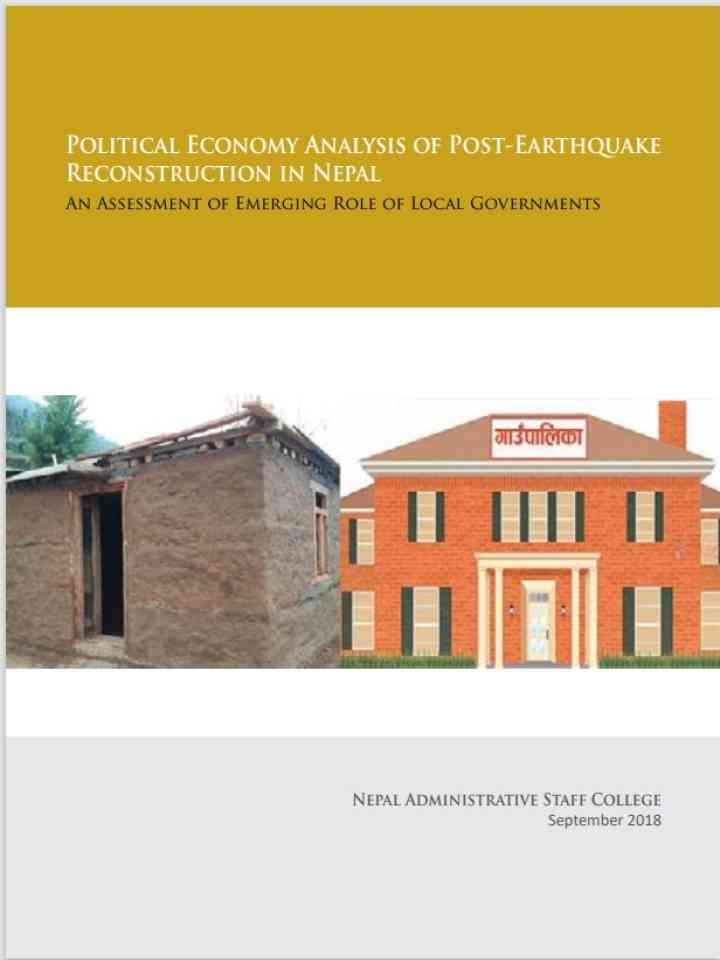
Political economy analysis of post-earthquake reconstruction in Nepal
This document analyzes the challenges and complexities of Nepal's post-2015 earthquake reconstruction, focusing on preparedness, decision-making, and the role of local governments.
Publication
Published on
25 October 2017
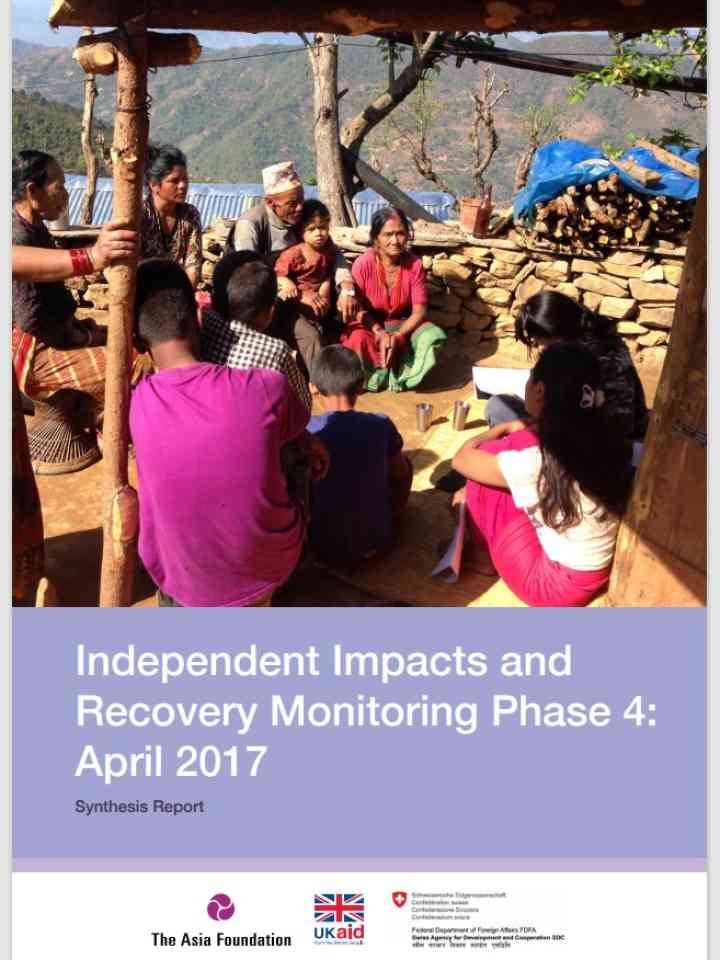
Independent Impacts and Recovery Monitoring Phase 4: April 2017 Synthesis Report
2 years after earthquakes hit Nepal in 2015, the IRM completed its 4th round of research to track how people are recovering, what aid has been provided and how effective it has been, and which groups are being left behind.
Publication
Published on
5 May 2017
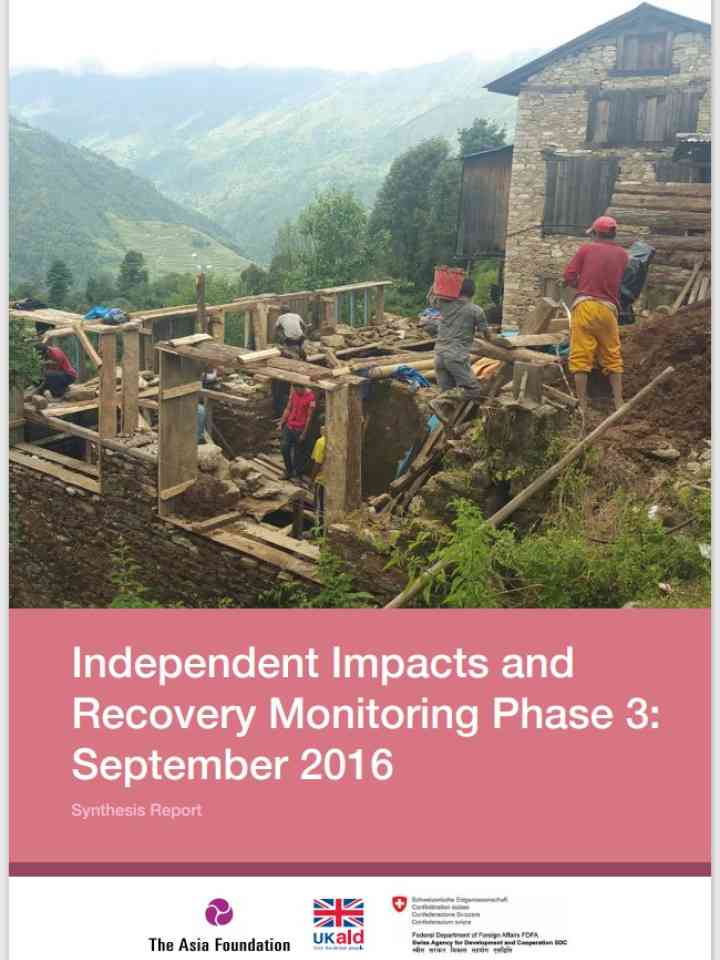
Independent Impacts and Recovery Monitoring Phase 3: September 2016 Synthesis Report
18 months from the earthquakes hit Nepal in 2015, the third wave of the IRM tracks the extent to which people have recovered, what coping strategies they are using and how effective they are, how aid is helping and which groups are being left behind.
Publication
Published on
30 April 2017
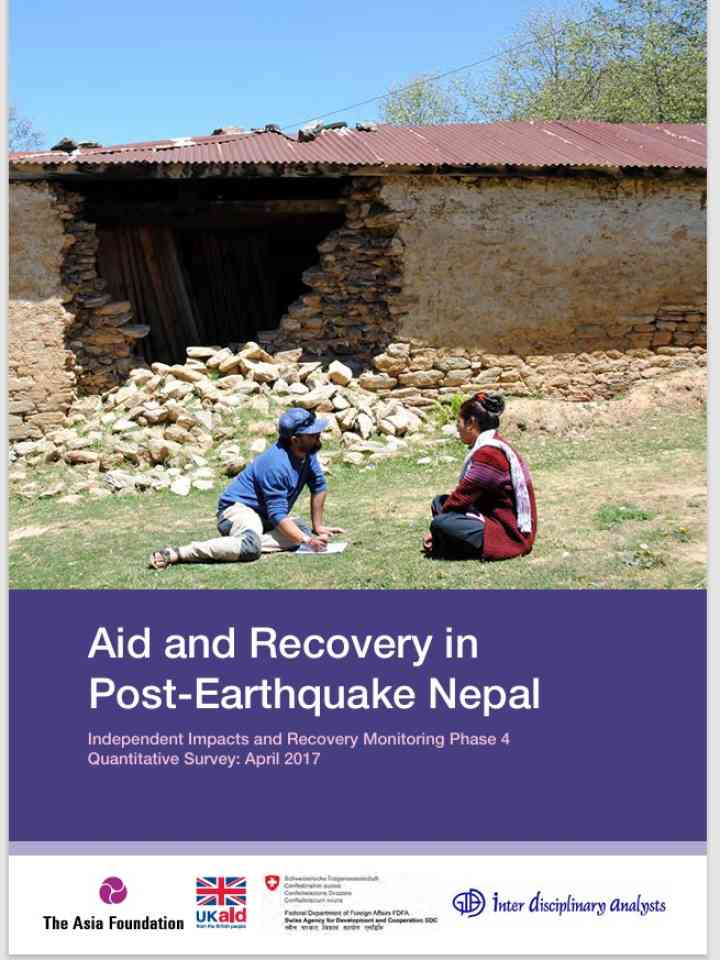
Aid and Recovery in Post-Earthquake Nepal - Independent Impacts and Recovery Monitoring Phase 4 Quantitative Survey: April 2017
This report provides findings from the fourth in a series of large-scale surveys, conducted in April 2017, two years on from the devastating earthquakes that hit Nepal.
Publication
Published on
27 December 2016
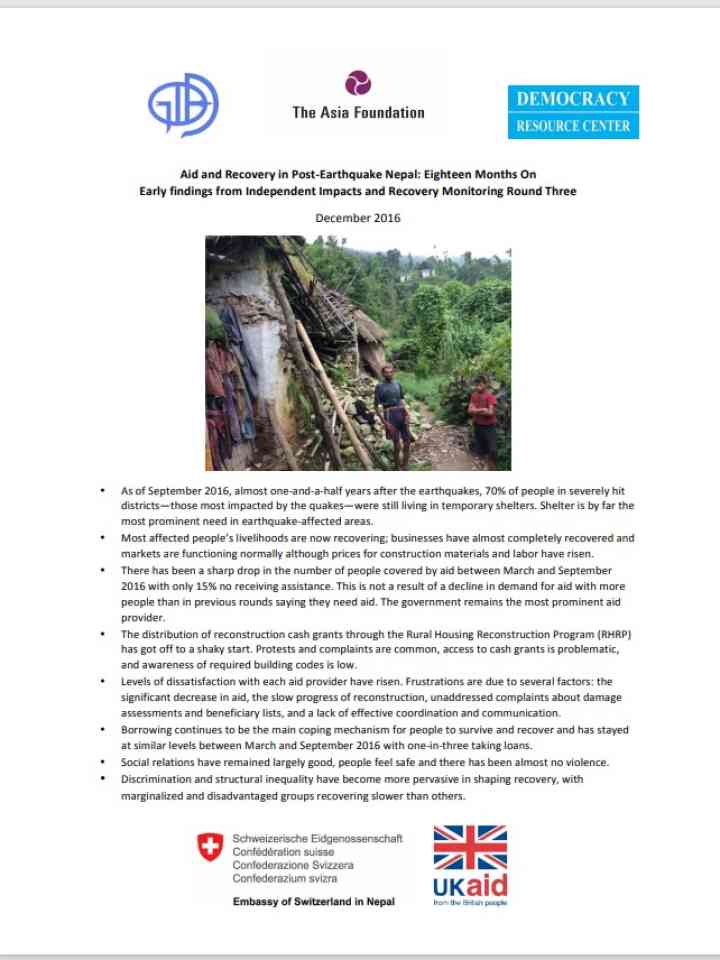
Aid and Recovery in Post‐Earthquake Nepal: Eighteen Months On
This brief provides preliminary findings from the third round of Independent Impacts and Recovery Monitoring Nepal (IRM) project, which was conducted after one and half year of Nepal eatthquake.
Publication
Published on
14 December 2016
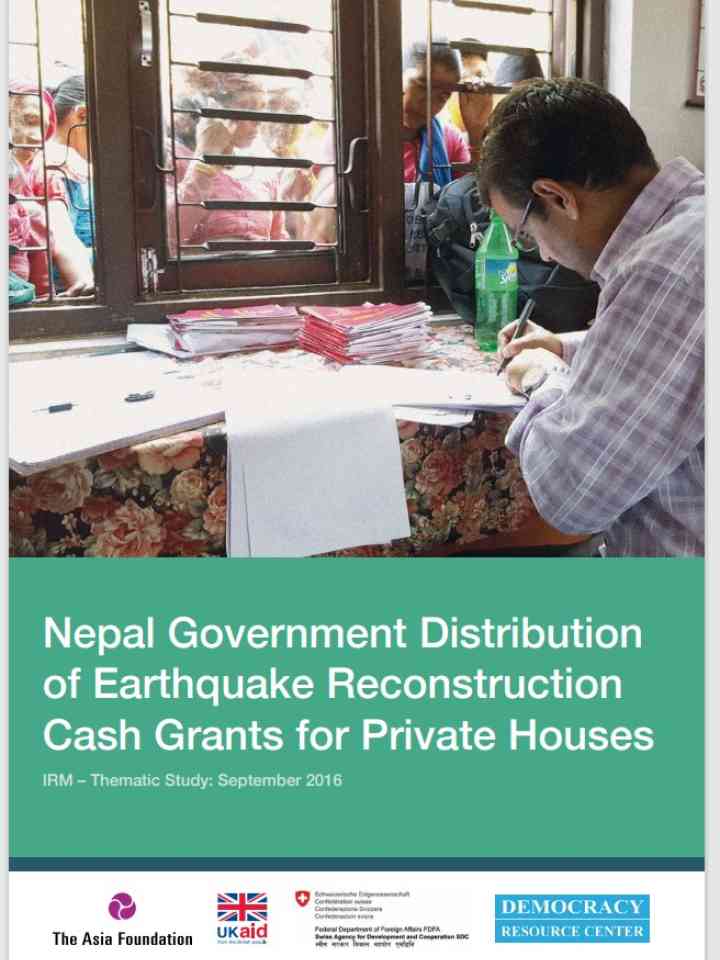
Nepal government distribution of earthquake reconstruction cash grants for private houses
This report examines the implementation process as well as local awareness and reception of the program and provides recommendations on how it can be improved. It also outlines the policy background of the cash grant program.

Pagination

  • Previous page ‹ Previous
  • Current page 1
  • Page 2
  • Next page Next ›

More content for this organization may be available on PreventionWeb or on the site search.

Voluntary Commitments

The organization has no registered commitments.

The Sendai Framework Voluntary Commitments (SFVC) online platform allows stakeholders to inform the public about their work on DRR. The SFVC online platform is a useful toolto know who is doing what and where for the implementation of the Sendai Framework, which could foster potential collaboration among stakeholders. All stakeholders (private sector, civil society organizations, academia, media, local governments, etc.) working on DRR can submit their commitments and report on their progress and deliverables.

Contact information

http://asiafoundation.org/

Is this page useful?

Yes No
Report an issue on this page

Thank you. If you have 2 minutes, we would benefit from additional feedback (link opens in a new window).

The International Recovery Platform (IRP) is a global partnership working to strengthen knowledge, and share experiences and lessons on building back better in recovery, rehabilitation, and reconstruction.

Latest IRP videos and photos: YouTube Flickr Contact IRP

Loading